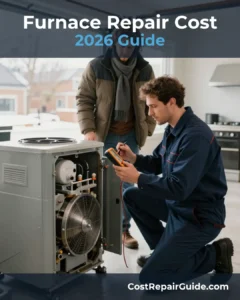
Furnace Repair Cost: What Homeowners Should Expect in 2026
It was the kind of cold that made the silence inside the house feel heavier than usual. The thermostat said 68, but the air said something else entirely. The furnace had been making a soft clicking sound for a few days before that. Then the clicking stopped, and so did the heat.
The HVAC company had a two-hour window available the next morning. By the time the technician packed up and handed over the paperwork, the number on the invoice felt somewhere between confusing and uncomfortable. Not because it was clearly wrong. But because there was no way to tell if it was right.
According to Angi data, about 41 percent of gas furnace and forced air heating calls are no-heat complaints. That makes the furnace one of the most common home repair calls of the winter season. And yet most homeowners walk into that call without a clear picture of what a reasonable repair bill actually looks like.
This guide breaks down furnace repair costs in clear, plain English by repair type, part, fuel type, and timing. Use it before you call a technician, so the quote feels less like a number pulled out of thin air.
Quick Answer
The average furnace repair cost in 2026 ranges from $150 to $600 for the most common repairs, with a national average of $350 to $400. Minor fixes like flame sensor cleaning or ignitor replacement fall on the lower end. Major component failures, such as blower motors, control boards, or heat exchangers, push the total higher. Emergency furnace repair cost can add $100 to $400 or more on top of the standard repair, especially for after-hours or weekend service during cold snaps.
A service call or diagnostic fee runs $75 to $200 in most markets and is separate from the repair itself. Always ask whether the furnace repair service call cost is applied toward the repair total or billed separately.
Furnace Repair Cost by Part 2026 Data
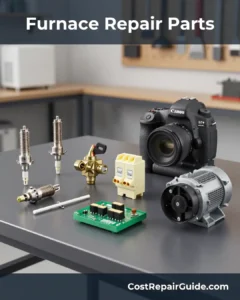
Most furnace repair costs come down to which specific part failed. Here is a current breakdown based on contractor pricing data from eight sources.
Part prices vary by brand, OEM versus universal spec, and local labor rates. Always ask the technician to break down the part cost and labor cost separately so you can see exactly where the total is coming from.
Part or Repair Type | Installed Cost Range | Notes |
Ignitor replacement | $100 to $250 | Most common repair: avg $175; OEM parts cost more than universal |
Flame sensor/thermocouple | $75 to $250 | Often cleaned first; replaced if cleaning fails |
Thermostat repair or replacement | $100 to $300 | Smart thermostat upgrade adds $600+ |
Pressure switch | $100 to $375 | Shuts off the furnace if venting fails |
Limit switch | $100 to $375 | Safety switch: prevents overheating |
Blower motor repair | $150 to $1,500 | Depends on the fault; full replacement $350 to $1,150 |
Burner repair | $150 to $450 | Cleaning vs full burner repair differs significantly |
Draft inducer motor | $400 to $1,100 | Carbon monoxide risk if not repaired promptly |
Control board/circuit board | $300 to $650 | Brain of the system; wiring repairs add $90 to $200 |
Gas valve | $200 to $800 | OEM part $300-$600; generic $75-$150 |
Flue pipe repair | $150 to $500 | Critical for safe combustion gas venting |
Condensate/water leak repair | $75 to $350 | Common on high-efficiency furnaces |
Electric heating element (per coil) | $125 to $400 per coil | Electric furnaces have 2 to 5 coils |
Heat exchanger | $1,000 to $3,000 | Most techs recommend full replacement at this cost |
Gas Furnace Repair Cost vs Electric Furnace Repair Cost
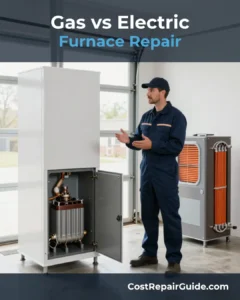
Gas furnace repair cost and electric furnace repair cost differ because the systems have different components and different safety risks.
Oil furnace repair cost is similar to gas in the $125 to $500 range, but oil systems require specialists who understand burner combustion, nozzle replacement, and oil filter servicing. These technicians may be harder to find in some markets, which can affect scheduling and pricing.
Factor | Gas Furnace | Electric Furnace |
Typical repair range | $100 to $480 | $100 to $380 |
Most common repair | Ignitor, flame sensor, gas valve | Heating element, sequencer, relay |
Safety complexity | Higher — gas, CO risk, flue | Lower — no combustion gas risk |
Emergency risk level | High — gas leaks and CO are immediate dangers | Moderate — electrical hazards only |
Part availability | Wide range — most parts are common | Good — electric parts standardized |
Who repairs it | Licensed HVAC technician only | HVAC or licensed electrician |
Common Furnace Problems and What They Cost to Fix
Furnace Not Heating No Heat at All
This is the most stressful scenario and the most common winter service call. The cause could be as simple as a tripped breaker, a dirty filter blocking airflow, or a dead battery in the thermostat. Or it could be a failed furnace ignitor, a faulty flame sensor, or a gas supply issue. Repair cost range from $100 for simple fixes to $400 for ignitor or flame sensor replacement.
Furnace Short Cycling Turning On and Off Too Quickly
Furnace short cycling repair cost depends on the cause. The most common causes are a clogged filter causing overheating, an oversized system, a failing thermostat, or a faulty limit switch. Repairs typically run $100 to $375 for switch and thermostat issues, or $0 if the fix is simply a filter replacement. Ignoring short cycling strains the heat exchanger over time and leads to more expensive repairs.
Furnace Leaking Water
Furnace water leak repair cost typically runs $75 to $350. High-efficiency condensing furnaces produce condensate as a byproduct of combustion. A blocked drain line, cracked condensate pan, or failed condensate pump can all cause water to appear near the unit. Standard furnaces may also leak from a humidifier connection or from a secondary heat exchanger. The fix is usually straightforward once the source is confirmed.
Furnace Making Loud or Unusual Sounds
Banging on startup often means delayed ignition gas is building up before the ignitor fires, creating a small pop or bang. Squealing or rattling usually comes from the blower motor. Grinding can mean bearing failure. Each point points to a different part and a different cost. Do not run a furnace that is making grinding or banging sounds. Continued operation can escalate a moderate repair into a major one.
Weak Heat or Uneven Heating
Weak or uneven heat from the furnace usually points to a failing blower motor, dirty burners, or duct issues. Blower motor repairs run $150 to $1,500 depending on severity. Burner cleaning costs $150 to $300. Duct problems are separate and vary by access and location. These symptoms are easy to ignore in the fall but become expensive in deep winter if left unaddressed.
Emergency Furnace Repair Cost When It Cannot Wait
Emergency furnace repair cost is one of the questions homeowners search for most when they are already in a stressful situation. Here is what to expect.
If the system is unsafe, a furnace gas leak is suspected, a burning smell, CO alarm is going off, do not wait for morning. These are emergencies where safety comes before price. See: furnace gas leak repair cost and what to do before calling.
GAS SAFETY: If you smell gas near the furnace, do not touch any switches, do not use your phone inside the house, leave immediately, and call the gas company from outside. This is not an HVAC technician call; this is a 911 or gas emergency line call first.
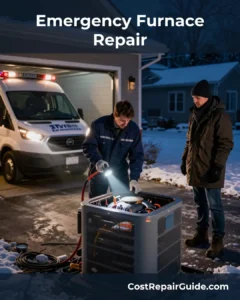
Service Type | Typical Added Cost | Notes |
After-hours weekday | $140 to $210 per hour | vs. $75-$150 standard rate |
Weekend service | $150 to $250 per hour | Premium for weekend dispatch |
Emergency dispatch fee | $50 to $200 flat | On top of the labor rate |
Ignitor replacement after hours | $350 to $500 | vs. $100 to $250 during normal hours |
Total emergency bill range | $300 to $1,200+ | Depends on the part, timing, and complexity |
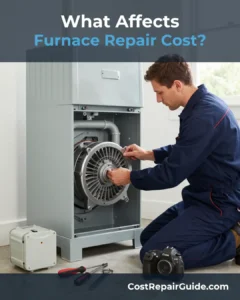
What Affects Furnace Repair Cost?
Furnace Repair Cost Per Hour vs Flat Quote
Furnace repair cost per hour typically runs $75 to $150 for standard service and $140 to $210 for emergency calls. However, most HVAC companies do not quote purely by the hour; they quote a flat rate for the diagnosed repair. That flat rate is more predictable for homeowners. If a company quotes only by the hour with no ceiling, ask for a maximum estimate in writing before approving the work.
Fuel Type
Gas furnaces cost slightly more to repair because they require licensed gas-handling work and carry safety risks from combustion byproducts. Electric furnaces tend to be simpler and slightly less expensive to repair per component, though heating element failures on systems with multiple coils can add up quickly.
System Age
Older furnaces can cost more to repair because parts are harder to source, multiple components may be failing simultaneously, and labor time increases when access is difficult. A furnace showing its age is also a candidate for the repair-versus-replace conversation that every technician should have with you before starting major work.
System Efficiency Rating
High-efficiency condensing furnaces (90% AFUE and above) have more components than standard furnaces, including a secondary heat exchanger and condensate system. These systems produce more condensate, have pressure switches, and can develop more specific failure points. Repairs on high-efficiency systems tend to run slightly higher on average.
Warranty Coverage
Most furnace manufacturer warranties cover parts for 5 to 10 years but do not cover labor. An extended service contract may cover labor as well. Always check your warranty status before paying out of pocket for parts on a system under ten years old. OEM parts tend to cost more than universal replacements but are sometimes required to maintain warranty validity.
Emergency Timing and Season
Winter is peak season for furnace repairs, and demand pushes prices up. The same ignitor that costs $150 to $250 during a fall tune-up season can run $350 to $500 when the house is cold on a December night. Scheduling non-emergency maintenance in spring and fall is the single most effective way to avoid peak-season pricing.
Repair or Replace the Furnace?
This question comes up more with furnace bills than almost any other home repair category. Here is a clean way to think through it.
The 50% Rule: If the repair cost is more than 50 percent of what a new furnace costs, replacement is usually the smarter long-term investment. A new mid-range furnace installed typically runs $2,800 to $5,500. If a single repair is going to cost $1,500 to $2,000 on a system that is already 12 years old, replacement math starts to make sense.
Before approving any repair that costs more than a few hundred dollars, ask the technician directly: given the age and condition of this system, does repairing this part or replacing the whole furnace make more financial sense? A good technician gives you an honest comparison, not a default recommendation to repair.
Your Situation | Better Choice | Why |
Furnace under 8 years old, minor part failed | Repair | Most useful life remains ahead |
Ignitor, flame sensor, and thermostat failed | Repair | Affordable, isolated repairs, very common |
The furnace is 10 to 12 years old | Compare both | Other components approaching the end of life |
Blower motor or control board failed | Compare both | Bill rises quickly; compare vs. the new system |
The heat exchanger cracked | Strongly consider replacement | The cost of repair often exceeds the value of the old system |
The furnace is 15 or more years old | Replacement | New system saves on energy and future repairs |
Repair cost is over 50% of the new system cost | Replacement | Long-term math favors a new unit |
Heat Exchanger Repair Cost: The One Repair That Changes Everything
Furnace heat exchanger repair cost typically runs $1,000 to $3,000, and most HVAC technicians will recommend full furnace replacement at that price point rather than a repair.
Here is why this repair is different from every other one on this page.
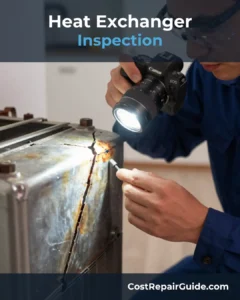
A cracked heat exchanger is not just an expensive part problem. It is a carbon monoxide safety issue. The heat exchanger separates combustion gases from the air that circulates through your home. When it cracks, those gases, including carbon monoxide, which is odorless and colorless, can enter the air supply. Carbon monoxide poisoning kills hundreds of Americans each year.
If a technician finds a cracked heat exchanger, do not run the furnace until the problem is resolved. Install a carbon monoxide detector on every level of the home if you do not already have one. This is a safety priority, not a cost-guide situation.
For most homeowners with a heat exchanger failure on a furnace over 10 years old, full replacement is the standard recommendation. The repair cost alone often exceeds the value of continuing to run an aging system.
See: HVAC Maintenance Cost for how annual service can catch heat exchanger cracks before they become emergencies.
Questions to Ask Before Approving Furnace Repair Work
A technician who hesitates to answer the warranty and refrigerant pricing questions specifically is worth getting a second opinion on.
A Confession About Furnace Repair Bills
Nobody wants to deal with a furnace problem in the middle of winter. The discomfort is immediate, the family is cold, and the repair company is the only person who can fix it right now. That combination makes the furnace repair call one of the worst situations for clear financial thinking.
Most people approve the first quote. Not because the number is obviously fair, but because the alternative is another night without heat. Nobody takes time to read about average costs, ask about the service call fee structure, or wonder whether the technician even tested the blower motor while they were already there.
That is exactly the moment this guide exists for. Even five minutes of context, knowing that ignitor replacement typically runs $100 to $250 or that emergency service is expected to cost double the normal rate, changes how you enter that conversation. You do not need to become an HVAC expert. You just need enough to ask one better question before you sign the work order.
How to Reduce Furnace Repair Costs
Frequently Asked Questions
Final Thought
Furnace repair cost in 2026 runs $150 to $600 for most common repairs, with a national average around $350 to $400. Emergency furnace repair cost can push that total to $1,200 or more for after-hours service.
The part matters most. An ignitor or flame sensor runs a few hundred dollars all-in. A blower motor or control board can run into the higher hundreds. A heat exchanger failure is a conversation about full replacement, not just a repair.
Gas furnace repair cost and electric furnace repair cost fall in a similar range, but gas systems carry higher safety stakes around combustion gas, flue venting, and carbon monoxide risk.
Get the itemized quote before approving any work. Ask about your warranty status before paying for parts. And if a technician recommends a major repair on an aging system, ask directly whether full replacement would be the smarter financial decision.