
HVAC Refrigerant Leak Repair Cost in 2026: What Homeowners Actually Pay
Your AC has been running for an hour, but your house still feels warm. You check the vents and the air feels weak, almost lukewarm. Outside, you notice a faint hissing sound near the copper lines. These are classic signs of a refrigerant leak, one of the most misunderstood AC problems homeowners face. It is not like a low battery you can just refill and forget.
A refrigerant leak means your system is losing the chemical that actually makes cold air possible. Every day you run the AC without fixing it, the compressor works harder and wears out faster. That turns a moderate repair into a much larger one.
This guide breaks down real HVAC refrigerant leak repair cost numbers for 2026. We also cover a pricing trick some companies use on the refrigerant itself. Knowing it can help you avoid overpaying for the fix.
Quick Answer
HVAC refrigerant leak repair cost typically runs $200 to $1,500, with most homeowners paying around $800 total. A simple valve or line leak on the low end can cost $150 to $500. A major leak in the evaporator or condenser coil can push costs to $1,000 to $2,500 or more. Refrigerant itself should cost $40 to $120 per pound for modern R-410A. Yet some homeowners get charged $200 to $300 per pound. Before you approve any repair, ask what refrigerant type your system uses. Also ask what price per pound you are being charged. We explain why below.
Typical Range
$200 to $1,500
Most Homeowners Pay
~ $800
Refrigerant (R-410A)
$40 to $120/lb

What This Guide Covers
In this guide, you will find a full breakdown of HVAC refrigerant leak repair cost. We break it down by leak location, from a simple valve to a full coil replacement. We also cover what different refrigerant types actually cost per pound. This single number can make or break your total bill.
You will learn how technicians actually find a leak, and what a typical repair visit looks like. You will also learn when a leak means you should consider replacing the whole system instead. We cover the specific math contractors use for that decision, not just a vague rule of thumb.
We also explain why refrigerant pricing is where many homeowners get overcharged. We give you the exact question to ask that can save you hundreds of dollars. Beyond pricing, we cover the warning signs of a leak and the legal reason you cannot fix this yourself. We also cover how climate and season affect your price. We close with answers to the questions homeowners ask most about this repair.
By the end, you will know what a fair quote looks like for your refrigerant type and leak location. You will also know how to spot a padded one.

What Determines Your HVAC Refrigerant Leak Repair Cost
Several factors combine to set your final price. Understanding each one helps you judge whether your quote is fair.
Leak Detection Cost
Finding the leak comes before fixing it, and this step costs $100 to $450 on its own. Technicians use electronic detectors, UV dye, or nitrogen pressure tests to locate the exact spot. Some companies apply this fee toward your repair if you move forward with them.
Labor Cost
HVAC labor runs $75 to $250 per hour for this kind of repair. Refrigerant work takes longer than a simple part swap, since the system must be evacuated, repaired, and recharged. A straightforward valve fix might take one to two hours. A coil replacement can take most of a day.
Refrigerant Cost
The refrigerant itself is often the biggest swing factor in your bill. Pricing depends heavily on which type your system uses, and we break this down in detail in the next section.
Diagnostic and Service Call Fees
Most companies charge $50 to $250 to send a technician out for an initial visit. Ask upfront whether this fee applies toward the repair cost if you proceed. Getting multiple quotes usually means paying this fee more than once.
System Size
Larger AC systems hold more refrigerant. A leak on a 4-ton unit costs more to recharge than one on a 2-ton unit. A small system might need 2 to 4 pounds of refrigerant. A larger home system can need 8 to 12 pounds or more. At $80 per pound for R-410A, that difference alone can add several hundred dollars to your bill.
Accessibility
A leak in an easy to reach line set costs less to fix than one buried behind finished walls or in a tight attic. If a technician needs to open drywall or access a crawl space, expect added labor time and cost. Ask whether your quote already accounts for this before work begins.
Emergency and After Hours Service
A refrigerant leak rarely announces itself during business hours. Emergency and after hours calls typically add $40 to $100 per hour on top of standard labor. If your AC is still cooling somewhat, a next day appointment can save you real money over a same night emergency call.
Warranty Coverage
Your warranty status has a major effect on your final bill.
| Warranty Status | Typical Cost |
|---|---|
| Under manufacturer warranty, coil covered | $300 to $800, labor and refrigerant only |
| Extended or home warranty | $400 to $900 |
| Out of warranty, minor leak | $500 to $1,200 |
| Out of warranty, major coil leak | $1,200 to $3,000 or more |
Coils are often covered under a five to ten year manufacturer warranty, but labor and refrigerant rarely are. Check your paperwork before assuming a leak repair will be free.
Refrigerant Price by Type: What Is Fair to Pay Per Pound
This is where a lot of homeowners get overcharged, so it deserves its own section. The type of refrigerant your system uses changes your price dramatically. Knowing the fair range protects you from a padded bill.
| Refrigerant Type | Typical Fair Price Per Pound |
|---|---|
| R-22, older systems before 2010 | $100 to $200, sometimes higher |
| R-410A, most systems since 2010 | $40 to $120 |
| R-32 or R-454B, newest systems | $50 to $80 |
R-22 is being phased out and is genuinely expensive because supply is shrinking. R-410A is still widely available and should not cost anywhere near R-22 pricing. If a technician quotes $250 to $300 per pound for standard R-410A, that price is well above typical wholesale range.
One homeowner reported being quoted $300 per pound for refrigerant. Industry contacts later told them the wholesale price was closer to $30 per pound. A reasonable markup covers the technician’s certification, handling, and business costs. A markup that large is worth questioning before you approve the repair.
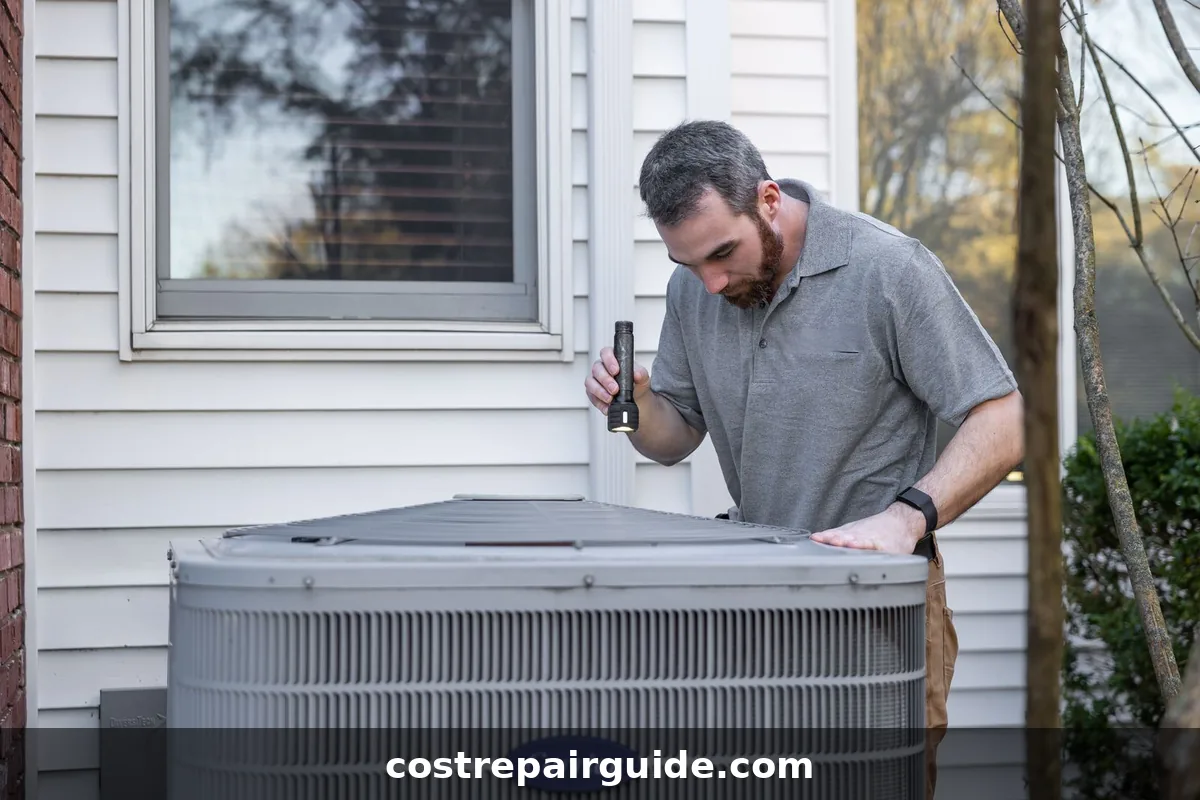
HVAC Refrigerant Leak Repair Cost by Leak Location
Where the leak is located changes both the difficulty and the price of the fix.
| Leak Location | Typical Repair Cost |
|---|---|
| Valve or seal | $150 to $500 |
| Refrigerant line | $200 to $1,500 |
| Evaporator coil | $1,000 to $2,500, more if out of warranty |
| Condenser coil | $900 to $2,400 |
| Compressor damage from prolonged leak | $800 to $3,000 |
Valve and seal leaks are the cheapest to fix, since the part itself is small and inexpensive. Coil leaks cost more because the coil usually needs full replacement rather than a patch. If your compressor was already stressed by low refrigerant, that repair adds to the total.
What a Typical Itemized Quote Looks Like
Ranges are useful, but an actual sample makes it easier to judge your own quote. Here is a fair, out of warranty repair for a moderate refrigerant line leak.
| Line Item | Typical Amount |
|---|---|
| Diagnostic and leak detection | $150 |
| Line repair and brazing, 2 hours labor | $300 |
| Refrigerant recharge, 3 lbs of R-410A at $80 per lb | $240 |
| Total | $690 |
If your quote does not break out the refrigerant price per pound separately from labor, ask for that number. It is the easiest place for a padded bill to hide.
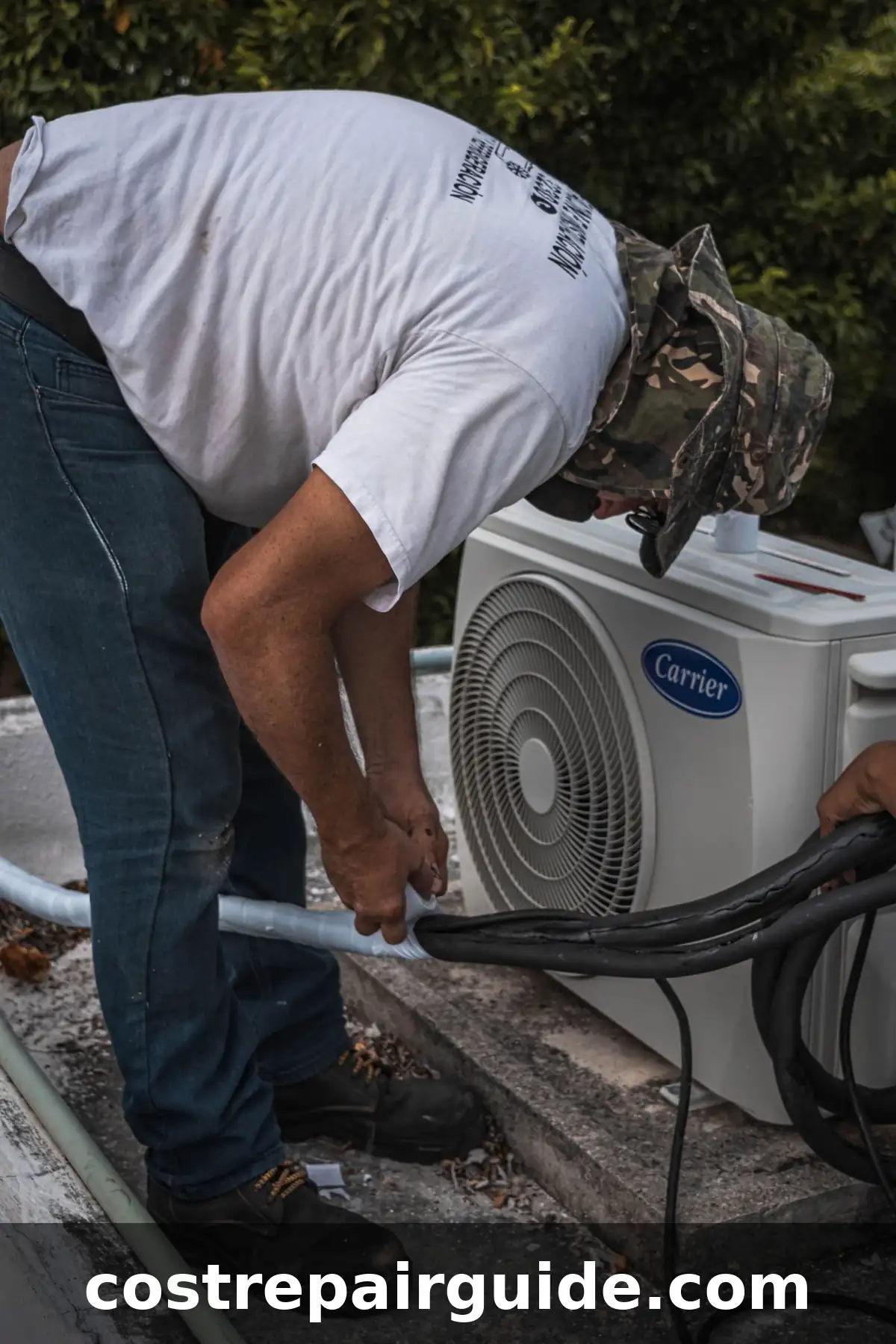
Signs You Have a Refrigerant Leak
Catching a leak early protects your compressor from expensive damage. Watch for:
- Vents blowing warm or barely cool air
- The AC running constantly without reaching your set temperature
- Hissing or bubbling sounds near the indoor or outdoor unit
- Ice or frost forming on the indoor coil or refrigerant lines
- A sudden jump in your energy bill with no change in usage
- Higher indoor humidity than usual
If you see ice on the coil, turn the system off immediately. Running it in that condition can damage the compressor.
How Technicians Find a Refrigerant Leak
Knowing the detection process helps you judge whether your technician is being thorough.
- Electronic detection uses a handheld sensor that reacts to refrigerant in the air near a leak point
- Dye testing adds a UV dye to the system, which glows under a blacklight at the leak site after a few days
- Nitrogen pressure testing pressurizes the system with nitrogen and listens for the sound of escaping gas
- A soap bubble test applies a soap solution to suspected spots and watches for bubbles forming
Most technicians combine two or more of these methods for an accurate result. A tech who guesses at the leak location without any of these tools is worth a second opinion.

Step by Step: What Happens During a Refrigerant Leak Repair
Knowing the process helps you follow along and ask good questions.
1. Detection. The technician locates the exact leak point using one or more of the methods above.
2. Quote. You should get a written estimate covering labor, parts, and the refrigerant price per pound before work begins.
3. Recovery. Remaining refrigerant is safely recovered from the system, which is required by law.
4. Repair. The valve, line, or coil is repaired or replaced depending on the leak location.
5. Pressure test. The system is pressurized to confirm the leak is fully sealed before recharging.
6. Recharge. The correct amount of refrigerant is added back into the system.
7. Final check. The technician confirms proper cooling and checks for any other early warning signs.
A simple valve repair might finish in an hour or two. A coil replacement often takes most of a day.
Repair vs. Replace: When a Leak Means You Need a New AC
A refrigerant leak is sometimes a small fix, but it can also be a sign your system is near the end of its life. Consider replacing the entire AC instead of repairing the leak if:
- Your system is more than 10 years old and uses R-22, since that refrigerant is being phased out
- The repair cost is more than 50% of the price of a new
- Your repair cost multiplied by your system’s age in years is more than $5,000
- You have already had more than one refrigerant leak in the past few years
If your system is newer, uses current refrigerant, and this is your first leak, repair is the smarter choice.
Regional and Seasonal Price Differences
Climate plays a bigger role in refrigerant leaks than most homeowners expect. In hot, humid regions like Charlotte, North Carolina, AC systems run longer each year. They also face more corrosion from constant moisture. That extra wear leads to more frequent coil and line leaks over a system’s lifetime, compared to drier climates.
Timing your repair also matters. Scheduling non-emergency leak repairs in fall or winter can save you money. HVAC companies have more availability and lower demand during those months. If your system shows early leak signs, do not wait for a heat wave to force an emergency call.
Can You Fix a Refrigerant Leak Yourself?
No, not legally, and this is worth understanding clearly. Federal law requires an EPA Section 608 certification to purchase or handle most refrigerants. A homeowner without that certification cannot legally buy replacement refrigerant for their system.
DIY leak sealant kits are sold online for $70 to $160. They promise a quick fix without a technician. Most HVAC professionals do not recommend them. The sealant can clog small components and cause damage that costs more than the original leak. Refrigerant is also a health hazard if inhaled or if it contacts skin. That is another reason this repair belongs to a licensed technician.
How to Avoid Overpaying for Refrigerant Leak Repair
Refrigerant pricing is the single easiest place for a repair bill to get padded. Most homeowners have no idea what a fair price per pound looks like. A few habits protect you.
- Ask exactly which refrigerant type your system uses and the price per pound you are being charged
- Compare that price against the typical ranges in this guide before you approve the work
- Get the leak location and detection method explained in writing, not just a total price
- Get a second quote for any repair over $500, especially for coil replacement
- Check your before agreeing to pay for parts that might already be covered
- Ask whether the diagnostic fee applies toward the repair if you move forward
A technician who is confident in their pricing will answer these questions without hesitation. One who avoids a direct answer about refrigerant cost per pound is worth a second opinion.
Related HVAC Cost Guides
Compare this repair against other common HVAC costs on CostRepairGuide.com:
You can also browse every category from the .
For the official rules see the EPA Section 608 refrigerant guide, and for system efficiency the Energy.gov heating and cooling guide.
Frequently Asked Questions
How much does HVAC refrigerant leak repair cost?
Most homeowners pay $200 to $1,500, with a typical total around $800. Simple valve or line leaks cost less, while coil leaks and compressor damage push costs higher.
Why is refrigerant so expensive?
Older R-22 refrigerant is being phased out, which pushes its price up to $100 to $200 or more per pound. Modern R-410A should cost $40 to $120 per pound, so a much higher quote is worth questioning.
How do I know if my AC has a refrigerant leak?
Common signs include warm air from the vents, hissing sounds, ice on the indoor coil, and a sudden rise in your energy bill. A professional leak test can confirm the exact cause.
Is refrigerant leak repair covered by warranty?
Often the coil itself is covered under a five to ten year manufacturer warranty, but labor and refrigerant usually are not. Check your paperwork or call your installer to confirm.
Can I add refrigerant to my AC myself?
No. Federal law requires an EPA Section 608 certification to purchase or handle refrigerant, so this repair legally requires a licensed technician.
Should I repair the leak or replace my AC?
Repair usually makes sense if your system is newer and uses current refrigerant. Replacement often makes more sense if your system is over 10 years old, uses R-22, or the repair cost multiplied by system age exceeds $5,000.
How long does a refrigerant leak repair take?
A simple valve or line repair can take one to two hours. A full coil replacement often takes most of a day, especially if the part needs to be ordered.
Can a refrigerant leak damage my compressor?
Yes. Low refrigerant forces the compressor to work harder and overheat, which can lead to a compressor replacement costing $800 to $3,000 if the leak goes unfixed.
Are DIY leak sealant kits worth using?
Most HVAC professionals do not recommend them. The sealant can clog small system components and cause damage that costs more to fix than the original leak.
What is a fair price per pound for refrigerant?
For R-410A, the most common current refrigerant, $40 to $120 per pound is a fair range. Prices well above that, especially $200 or more, are worth questioning before you approve the repair.
Final Thoughts
HVAC refrigerant leak repair cost typically lands between $200 and $1,500. The exact number depends on leak location and refrigerant type. Knowing the fair price per pound for your refrigerant type is the best way to avoid overpaying.
Watch for warm air, hissing sounds, and ice on the coil. Act on those signs before they strain your compressor. Ask your technician for the refrigerant type, the price per pound, and the leak location in writing. A confident, straightforward answer to those questions is usually a good sign you are working with the right company.
Have you had a refrigerant leak repaired recently? Share what you were quoted, including the price per pound, in the comments below. It helps other homeowners know what a fair price actually looks like. It also turns the comment section into a useful price check for anyone reading it later.