
Low water pressure can mean anything from a single clogged shower repairhead to a failing regulator affecting the entire house. The repair cost swings widely depending on which of those two situations you are actually dealing with. Before paying for a plumber, it helps to know the most common causes, since some of the cheapest fixes are also the most common ones.
Quick Answer: Low water pressure repair cost typically runs $125 to $800, depending on the cause. A clogged aerator or showerhead costs almost nothing to fix, while a failed pressure regulator replacement averages $400, within a typical range of $200 to $700.

Low Water Pressure Repair Cost by Cause
| Cause | Typical Cost Range |
|---|---|
| Clogged aerator or showerhead | $0 – $75 (often a DIY fix) |
| Partially closed shutoff valve | $0 – $100 (service call only) |
| Clogged or corroded pipe section | $150 – $500 |
| Water pressure regulator replacement | $200 – $700 |
| Main line restriction or leak | $400 – $2,000 |
Start Here: Common, Cheap Causes
Clogged Aerator or Showerhead
Mineral buildup inside the small screen at the tip of a faucet repair or showerhead is one of the most common causes of low pressure at a single fixture. Soaking it in vinegar or replacing it outright often solves the problem for under $20.
Partially Closed Shutoff Valve
If pressure dropped suddenly after any plumbing work, check that the main shutoff valve or the valve under a specific fixture is fully open.
One Fixture Affected vs. the Whole House
Low pressure at a single faucet or shower points to a local clog. Low pressure throughout the entire house points to a bigger issue, like the main line or the pressure regulator.
Water Pressure Regulator: What It Does and When It Fails
Most homes connected to a municipal water supply have a pressure-reducing valve, often called a regulator, that controls incoming water pressure to a safe range for household plumbing. When this valve fails, it can cause pressure to drop suddenly throughout the house, or in some cases spike dangerously high instead. A regulator typically lasts 10 to 15 years. Replacement, including labor, averages $400 and usually takes one to two hours for a plumber to complete, longer if the regulator is in a hard-to-reach spot.

Other Causes of Low Water Pressure
Corroded or Clogged Pipes
Older galvanized pipes can corrode on the inside over decades, narrowing the space water flows through and reducing pressure throughout the home.
Leak Somewhere in the System
A hidden leak reduces the pressure available at your fixtures, since water is escaping before it reaches the tap.
Municipal Supply Issues
Sometimes low pressure originates outside the home entirely, from municipal main work or supply issues in the neighborhood. This no amount of home repair will fix.
Single-Fixture Problem vs. Whole-House Problem: Cost Comparison
| Situation | Likely Cause | Typical Cost |
|---|---|---|
| One faucet or shower only | Clogged aerator or showerhead | $0 – $75 |
| One fixture, pressure fine elsewhere | Partially closed fixture valve | $0 – $100 |
| Whole house, sudden drop | Failed pressure regulator | $200 – $700 |
| Whole house, gradual decline over years | Corroded pipe sections | $150 – $500 per section |
| Whole house, affects neighbors too | Municipal supply issue | $0 (not a home repair) |
What to Expect During a Water Pressure Repair Visit
- The plumber checks pressure at multiple fixtures with a gauge to confirm whether the issue is local or whole-house.
- If a regulator is suspected, its output pressure is tested directly, since some units only need an adjustment rather than a full replacement.
- Aerators and showerheads are checked and cleaned or replaced as a low-cost first step.
- For suspected pipe corrosion, the plumber may recommend a camera inspection to confirm the exact location before cutting into any walls.

Why High Water Pressure Can Also Be a Problem
Water pressure that is too high, generally above 80 psi, can strain pipes, fittings, and appliances over time, leading to leaks and shortened appliance life. A failed pressure regulator can cause spikes as easily as drops, so a sudden change in either direction is worth having tested rather than ignored.
Regional Cost Differences for Water Pressure Repair
| Region | Typical Repair Cost |
|---|---|
| Northeast (NY, MA, NJ) | $150 – $800 |
| West Coast (CA, WA, OR) | $150 – $750 |
| Midwest (OH, IL, MI) | $100 – $650 |
| South (TX, FL, GA) | $100 – $600 |
| Mountain West (CO, UT, AZ) | $125 – $650 |
How to Diagnose Low Water Pressure Before Calling a Plumber
- Check whether the issue affects one fixture or the whole house.
- Clean or replace the aerator on the affected faucet first, since this is free or nearly free to try.
- Confirm the main shutoff valve is fully open.
- Ask a neighbor if they are experiencing similar pressure issues. This could point to a municipal supply problem rather than your own plumbing.
How to Save Money on Low Water Pressure Repair
- Try the cheap, DIY checks above before scheduling a service call, since many cases resolve without a plumber at all.
- Ask the plumber to test your regulator’s output pressure before replacing it, in case the fix is a simple adjustment rather than a full swap.
- Mention whether the issue affects one fixture or the whole house when booking, so the plumber can bring the right tools and parts on the first visit.
- Get a second opinion before paying for a full repipe if a plumber recommends one for a low-pressure complaint, since corroded sections can sometimes be replaced individually instead.
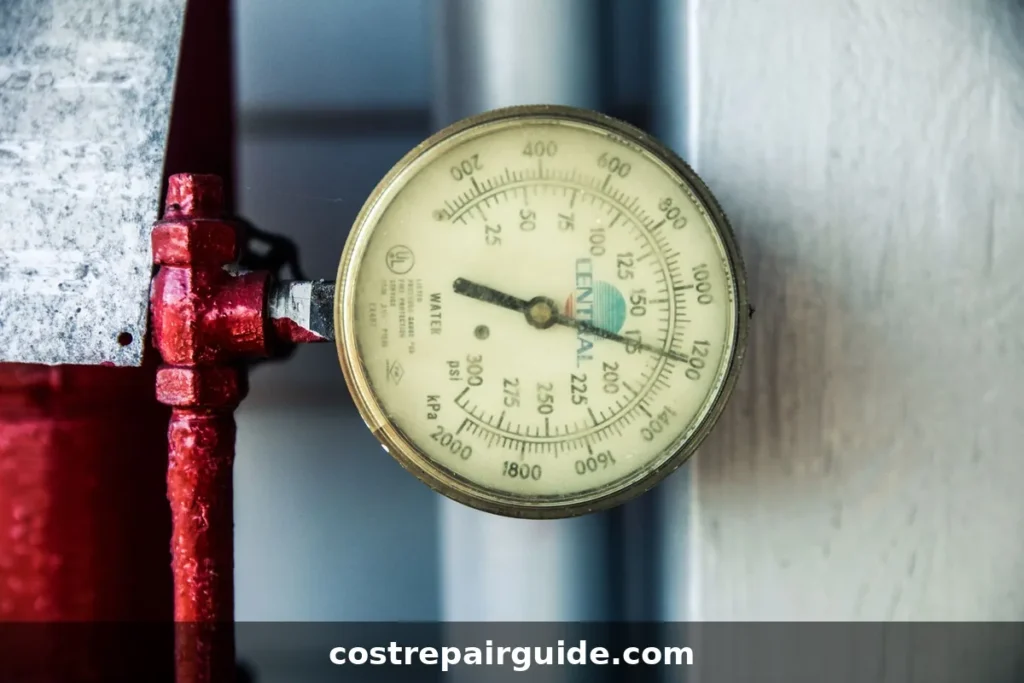
How Low Water Pressure Affects Other Plumbing Systems
Low incoming pressure can also affect how well other plumbing systems perform, including water heaters that rely on adequate flow to function efficiently and irrigation or sprinkler systems that need a minimum pressure to operate correctly. If low pressure appears alongside other plumbing symptoms, such as a water heater that takes longer to produce hot water, mentioning this to the plumber can help them diagnose a shared root cause rather than treating each symptom separately.
Frequently Asked Questions
Final Thoughts
Low water pressure repair cost ranges from nearly free, for a clogged aerator, to $700 for a full pressure regulator replacement. The key first step is figuring out whether one fixture or the whole house is affected. Try the simple checks first: clean the aerator, confirm valves are open, and ask a neighbor if they have the same issue. If the problem is whole-house and persistent, a regulator test from a plumber is the logical next step.
Sources
- EPA WaterSense – Water pressure guidance
- Family Handyman – Low pressure fixes