
Evaporator Coil Replacement Cost in 2026: Complete Price Guide
You notice a musty smell near your furnace closet. The airflow feels weaker than usual. When you finally get a technician out, they open the panel and point at a coated, corroded coil. That is your evaporator coil, and it has reached the end of its life.
Unlike a condenser problem you can spot from your backyard, evaporator coil failure often hides indoors for months. By the time you notice symptoms, the coil is usually too far gone to repair. Replacement becomes the only real option.
This guide breaks down evaporator coil replacement cost for 2026. We cover pricing by brand, by system type, and by where the coil sits in your home. All three change your final number more than most cost guides mention.
Quick Answer
Evaporator coil replacement cost typically runs $650 to $2,500 if your system is out of warranty. Most homeowners land close to $1,350 to $1,400 total. If your coil is still under warranty, expect to pay closer to $400 to $1,200 for labor and refrigerant alone. Brand matters, but maybe not the way you expect. Several budget and premium brands are built in the same factories using the same core parts. The "premium" label does not always mean a pricier coil. We break down real numbers by brand below.
Out of Warranty
$650 to $2,500
Most Homeowners Pay
~ $1,350
Under Warranty (Labor)
$400 to $1,200
What This Guide Covers
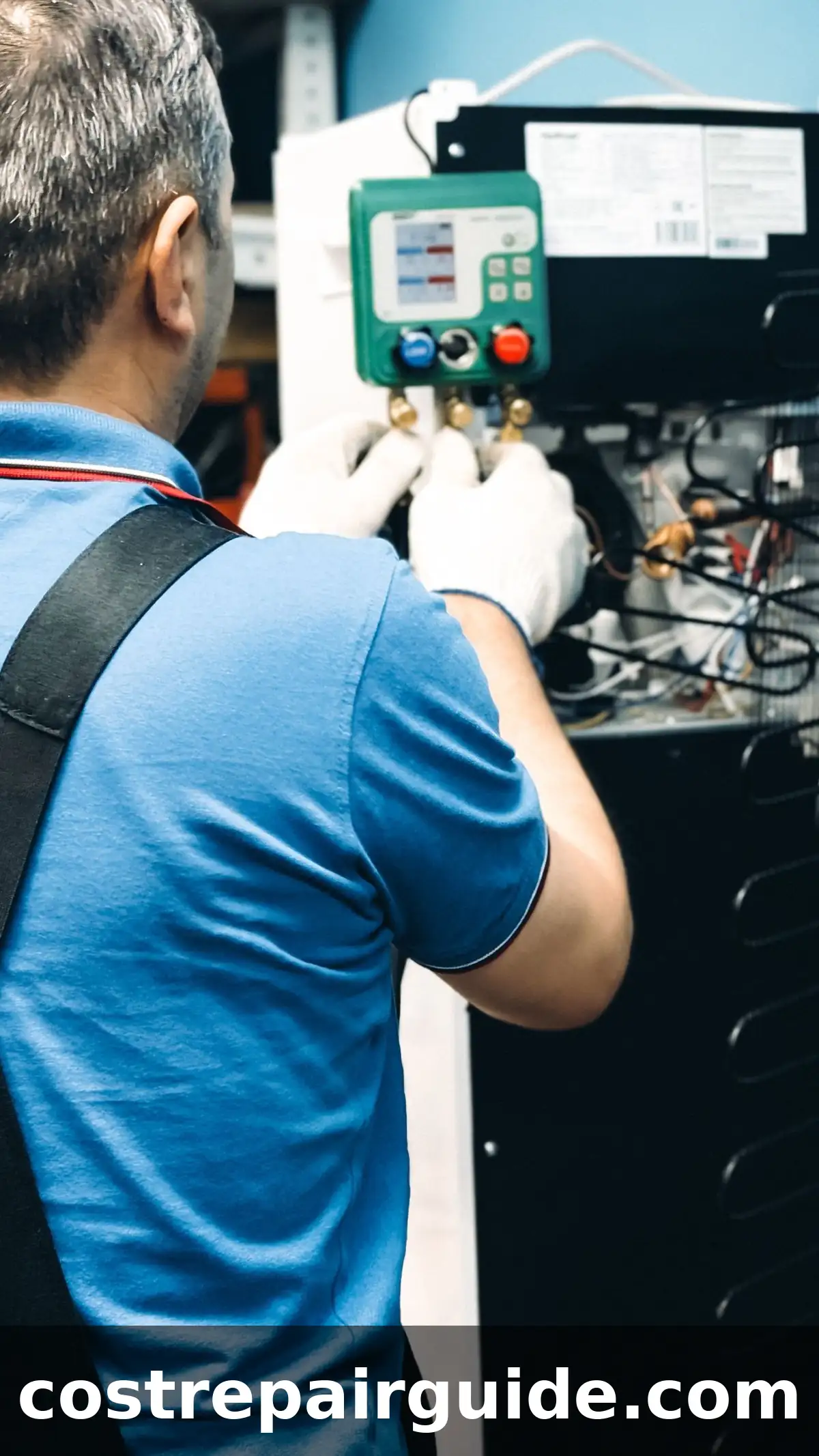
In this guide, you will find evaporator coil replacement cost broken down in ways most guides skip. We cover real pricing across ten major brands. Lennox, Trane, Carrier, Rheem, Goodman, and York coils do not all cost the same. We also cover cost by system type. A mini-split coil, a package unit coil, and a traditional split system coil each price out differently.
You will learn how much your coil's location adds to labor cost. This applies whether it sits in an easy furnace closet or a cramped attic. We also cover the TXV valve, a small part often replaced at the same time as your coil. We explain why your evaporator and condenser coils are more connected than most homeowners realize.
Beyond pricing, we cover the warning signs of a failing coil. We walk through what a replacement visit looks like step by step. We also explain when replacing the coil no longer makes sense compared to a full system swap. We close with ways to avoid overpaying and answers to the questions homeowners ask most.
By the end, you will know what a fair price looks like for your brand and system type. You will also know what to expect for your specific coil location.

What an Evaporator Coil Does and Why Replacement Costs What It Does
The evaporator coil sits inside your home, usually in the furnace or air handler. As warm air blows across it, the coil absorbs heat and pulls moisture out of the air. That process is what makes your home feel cool and dry instead of just cool.
Because this coil handles both heat and moisture, it takes real wear over time. Condensation cycles, dust, and years of temperature swings all take a toll. When it finally fails, replacing it involves recovering refrigerant, removing a sealed component, and rebuilding the seal from scratch. That complexity is why this repair costs more than a simple part swap.
What Determines Your Evaporator Coil Replacement Cost
Several factors combine to set your price. Knowing each one helps you judge whether a quote is fair.
Coil Material
Coils are made from copper or aluminum. Aluminum coils typically cost less and resist corrosion better. Copper coils are more common in older systems and are more prone to pinhole leaks as they age.
Coil Style
A-coils are the most common shape and the standard baseline price. N-coils use an extra fin for better efficiency, but they typically cost 15% to 25% more than an A-coil. Slab coils are simpler and less common, and they tend to sit at the lower end of the price range.
Cased vs. Uncased
Cased coils come in a pre-built insulated cabinet, which makes installation easier and more durable. Uncased coils are more compact but often need custom fitting. Cased coils typically cost 20% to 50% more than uncased coils for the same size system.
Labor Cost by System Size
Labor scales with system size, since larger coils take longer to remove and seal.
| System Size | Typical Labor Cost |
|---|---|
| 1.5 to 2 tons | $400 to $600 |
| 2.5 tons | $450 to $650 |
| 3 tons | $500 to $700 |
| 3.5 tons | $550 to $725 |
| 4 tons | $600 to $750 |
| 5 tons | $700 to $1,000 |
Refrigerant Type and Charge
Systems using R-410A cost less to recharge than older systems still running R-22. R-22 is being phased out, and it can run well over $100 per pound when available. Your system's charge weight, meaning how much refrigerant it needs, also affects this part of your bill.
Diagnostic Fees
Most companies charge $50 to $250 to send a technician out and confirm the coil is the actual problem. Ask whether this fee applies toward the repair if you move forward with them.
Emergency Service
A failed coil rarely picks a convenient time. Emergency and after hours calls typically add $40 to $100 per hour on top of standard labor rates. If your system is still cooling somewhat, a next-day appointment instead of an emergency call can save you real money.
Warranty Coverage
Your warranty status has a major effect on your final bill.
| Warranty Status | Typical Cost |
|---|---|
| Under manufacturer warranty, coil covered | $400 to $1,200, labor and refrigerant only |
| Out of warranty | $650 to $2,500 |
Manufacturer coil warranties commonly run five to ten years. Labor typically makes up 40% to 60% of your total bill. It is rarely covered even when the part itself is free.
Evaporator Coil Replacement Cost by System Size
Bigger systems need bigger coils, so total cost climbs with tonnage.
| System Size | Typical Installed Cost |
|---|---|
| 1.5 to 2 tons | $950 to $1,550 |
| 2.5 tons | $1,100 to $1,700 |
| 3 tons | $1,250 to $1,850 |
| 3.5 tons | $1,350 to $1,950 |
| 4 tons | $1,400 to $2,000 |
| 5 tons | $1,500 to $2,100 |
Most homes run systems between 2 and 4 tons. Check your outdoor unit's nameplate if you are not sure of your system's size.
Evaporator Coil Replacement Cost by Brand
This is where most cost guides stop short, and it is worth doing right. Here is what homeowners typically pay by brand, including both the part and full installed cost.
| Brand | Typical Installed Cost |
|---|---|
| Trane or American Standard | $600 to $2,000 |
| Lennox | $600 to $2,300 |
| Carrier | $700 to $2,300 |
| Rheem or Ruud | $700 to $2,400 |
| Goodman or Amana | $700 to $1,900 |
| York or Coleman | $650 to $2,300 |
| Bryant or Heil | $650 to $2,000 |
Here is the part most homeowners never hear. Several of these brand pairs are built in the same factories on the same platforms. Trane and American Standard share components. Goodman and Amana do too, and so do Rheem and Ruud, and York and Coleman. If your HVAC company only quotes the premium-badge version, it is fair to ask about a sibling-brand part instead.
Evaporator Coil Replacement Cost by System Type
Your system type changes coil pricing as much as size does.
| System Type | Typical Cost Range |
|---|---|
| Mini-split wall fan coil | $1,900 to $2,300 |
| Package unit, all-in-one | $2,200 to $3,000 |
| Split system, cased coil | $2,300 to $2,700 |
| Split system, uncased coil | $2,500 to $2,900 |
| Split heat pump air handler | $2,100 to $2,500 |
Package units cost more because replacing the coil often means partly disassembling the whole cabinet. Heat pump air handlers need careful matching between the indoor coil and outdoor unit. Mismatches can cause efficiency problems, covered more below.
Where Is Your Evaporator Coil? Location and Access Cost Impact
Not every evaporator coil is easy to reach. Location can add meaningful cost.
- A coil in an open furnace closet is the easiest and cheapest to access
- A coil in a tight utility closet may add extra labor time for maneuvering tools and parts
- A coil in an attic or crawlspace is the most difficult, sometimes adding 2 to 3 extra hours
- Difficult access alone can add $150 to $450 to your total bill
Attic jobs bring their own challenges beyond just space. Summer attic temperatures can exceed 130 degrees, which slows down careful work like brazing and pressure testing. Crawlspace jobs often mean working in awkward positions for hours at a time. Both situations justify a real labor premium, so do not assume a higher quote for a hard-to-reach coil is automatically padded.
If your technician's quote does not mention accessibility, ask directly whether your coil's location was factored into the price.

The TXV Valve Connection
The thermostatic expansion valve, or TXV, controls how much refrigerant enters your evaporator coil. It sits right at the coil's inlet, and it is often replaced at the same time as the coil itself. A TXV replacement typically adds $150 to $500 to your bill. If your technician recommends replacing both together, that is common practice, not an upsell. The two parts work as a matched pair.
Why Your Evaporator and Condenser Coils Are Linked
Your evaporator and condenser coils need to match in tonnage and efficiency rating. A mismatched pair forces your system to run longer to reach the same temperature. That raises your energy bill and stresses other parts.
The two coils also tend to share a similar lifespan. If your evaporator coil is failing from age or corrosion, your condenser coil is often not far behind. It is worth asking your technician to inspect both, even if only one is causing symptoms right now.
What a Typical Itemized Quote Looks Like
Ranges help, but a real sample makes it easier to judge your own quote. Here is a fair, out of warranty replacement for a 3-ton split system with a cased A-coil.
| Line Item | Typical Amount |
|---|---|
| Diagnostic and system check | $100 |
| Evaporator coil, cased, 3-ton, A-coil | $850 |
| Labor, 3 hours at $180 per hour | $540 |
| Refrigerant recharge, 3 lbs of R-410A | $240 |
| Total | $1,730 |
If your quote skips the itemized breakdown, ask for it. A vague single number is the easiest place for a padded bill to hide.

Signs Your Evaporator Coil Needs Replacing
Watch for these warning signs.
- Warm air coming from the vents despite the system running
- Frost or ice building up on the coil
- Frequent starting and stopping without proper cooling
- Hissing, banging, or other unusual sounds from the indoor unit
- A musty or moldy smell near the furnace or air handler
- Water leaking near the indoor components
- A steady rise in your energy bill with no change in habits
Some of these signs point to cheaper problems, like a dirty filter or a failing capacitor. Have a technician confirm the coil is the actual issue before you approve a full replacement.
Step by Step: What Happens During a Coil Replacement
Knowing the process helps you follow along and ask informed questions.
1. Diagnosis. The technician confirms the coil has failed and checks for related refrigerant loss.
2. Quote. You should receive a written estimate with coil cost, labor, and refrigerant listed separately.
3. Recovery. Remaining refrigerant is safely recovered before any parts come out.
4. Removal. The old coil and any damaged tubing are disconnected and removed.
5. Installation. The new coil is mounted, connected, and sealed at every joint.
6. Pressure test. The system is pressure tested using nitrogen to confirm there are no new leaks.
7. Recharge and check. Refrigerant is added back in, and proper cooling is confirmed.
Replacement typically takes 2 to 4 hours. Attic or crawlspace jobs can stretch to 5 to 10 hours.
Repair vs. Replace: Coil vs. Whole System
A coil replacement is a serious repair, so it is worth stepping back before you approve it. Consider replacing the whole system instead if:
- Your system is more than 10 years old and still uses R-22 refrigerant
- The repair cost is at least 50% of the price of a new
- Your repair cost multiplied by your system's age in years exceeds $5,000
- Both coils are showing signs of failure around the same time
If your system is newer and this is an isolated coil issue, replacement alone is usually the smarter financial move.
Can You Replace an Evaporator Coil Yourself
No. Coil replacement requires recovering and recharging refrigerant, which by federal law requires an EPA Section 608 certification. It also requires brazing, pressure testing, and specialized tools most homeowners do not own. For the full legal and safety details, see our and our . A failed DIY attempt often costs more to fix than the original problem.
How to Avoid Overpaying for Evaporator Coil Replacement
A few habits protect you from an inflated bill.
- Ask whether a sibling-brand part fits your system, since several brands share the same manufacturing platform
- Get an itemized quote that separates coil cost, labor, and refrigerant
- Confirm your system's tonnage and coil style so you can compare quotes against real ranges
- Ask whether accessibility, like attic or crawlspace work, is already included in the price
- Get a second quote for anything over $1,000
- Check your warranty before assuming this repair costs full price
A technician confident in their pricing will walk through these questions without pushback.
Related HVAC Cost Guides
Compare this repair against other common HVAC costs on CostRepairGuide.com:
You can also browse every category from the .
For refrigerant handling rules see the EPA Section 608 guide, and for efficiency context the Energy.gov heating and cooling guide.
Frequently Asked Questions
How much does evaporator coil replacement cost?
Most homeowners pay $650 to $2,500 out of warranty, with a typical total around $1,350 to $1,400. Under warranty, expect closer to $400 to $1,200 for labor and refrigerant.
Does brand affect evaporator coil replacement cost?
Yes, though some premium and budget brands share the same manufacturing platform. Trane and American Standard, Goodman and Amana, and Rheem and Ruud are examples of sibling brands using similar parts.
How much does an evaporator coil cost by system size?
A 2-ton system typically runs $950 to $1,550 installed, while a 5-ton system runs $1,500 to $2,100. Larger coils need more material and more refrigerant.
Is evaporator coil replacement covered by warranty?
Often the part itself is covered under a five to ten year manufacturer warranty. Labor and refrigerant usually are not, so expect some out of pocket cost either way.
What is a TXV valve and does it affect coil replacement cost?
The TXV controls refrigerant flow into the evaporator coil and is often replaced alongside it. Expect an added $150 to $500 if your technician recommends replacing both together.
Why does my evaporator coil location affect the price?
Coils in attics or crawlspaces take longer to access and replace than coils in an open furnace closet. Difficult access can add $150 to $450 to your total bill.
Should I replace just the evaporator coil or the whole system?
Replacing just the coil makes sense if your system is newer and otherwise healthy. Replacing the whole system usually makes more sense if your unit is over 10 years old or uses R-22 refrigerant.
Can I replace an evaporator coil myself?
No. Federal law requires an EPA Section 608 certification to handle refrigerant, so this repair legally requires a licensed technician.
Does system type affect evaporator coil replacement cost?
Yes. Mini-split coils, package unit coils, and traditional split system coils all price differently, with package units often costing the most due to more complex disassembly.
Why do my evaporator and condenser coils need to match?
A mismatched pair forces your system to run longer to reach the same temperature, which increases energy use and stresses other components. Matching also protects your system warranty.
Final Thoughts
Evaporator coil replacement cost typically falls between $650 and $2,500. Brand, system type, and coil location all play a real role in your final number. Knowing these factors before you get a quote is the best protection against overpaying.
Ask for an itemized quote, ask about sibling-brand parts, and confirm whether your coil's location was already factored into the price. A little homework before you approve the repair can save you hundreds of dollars, especially on a job this size.
Have you had an evaporator coil replaced recently? Share what you were quoted in the comments below, including your brand and system size. It helps other homeowners know what a fair price looks like. It also keeps this guide accurate as prices shift over time.