AC Capacitor Replacement Cost: What Homeowners Should Expect in 2026
It was the second week of a heat wave when the AC started making a low humming sound from the backyard. The fan was not spinning. The house was climbing past 80 degrees by mid-afternoon.
The technician showed up within a few hours, popped open the outdoor unit, and pointed to a small black cylinder about the size of a soda can. Bad capacitor, he said. Quoted $310 for the fix.
Three hundred and ten dollars for a part that, it turns out, costs about fifteen dollars online. That number sat uncomfortably for a minute. Was this a scam? Was the part really that expensive, or was the labor doing all the work in that quote?
Neither, really. The part is genuinely cheap. The bill is not really about the part. It is about the diagnosis, the safe handling of a component that can still shock you after the power is off, the labor, and the testing that confirms the system runs correctly afterward.
This guide breaks down exactly where that money goes, what a fair AC capacitor replacement cost looks like in 2026, and what to ask before you approve any quote.
Quick Answer
Most homeowners pay $150 to $400 for professional AC capacitor replacement in 2026, with $175 being the most commonly cited average across HVAC pricing data. Simple jobs with easy access can run as low as $80. Emergency or peak-summer service can push the total to $500 or more. The capacitor itself costs $8 to $50. Labor and the service call fee account for most of the bill.
If your quote sits well outside this range, ask what specifically is driving the cost. A higher number is not automatically unfair, and a lower number is not automatically a deal. The
breakdown tells you more than the total.
Where to Buy a Replacement Capacitor: If you’re buying the part yourself, expect $10 to $50 for most residential capacitors. Common brands: Carrier ($15–$40), Trane ($20–$50), Goodman ($10–$30), Lennox ($15–$45). Check the microfarad (µF) rating on your old capacitor and match it exactly. Buying online (Amazon, SupplyHouse) is usually cheaper than a local HVAC supply house, but confirm the specs match before ordering.
AC Capacitor Replacement Cost by Type
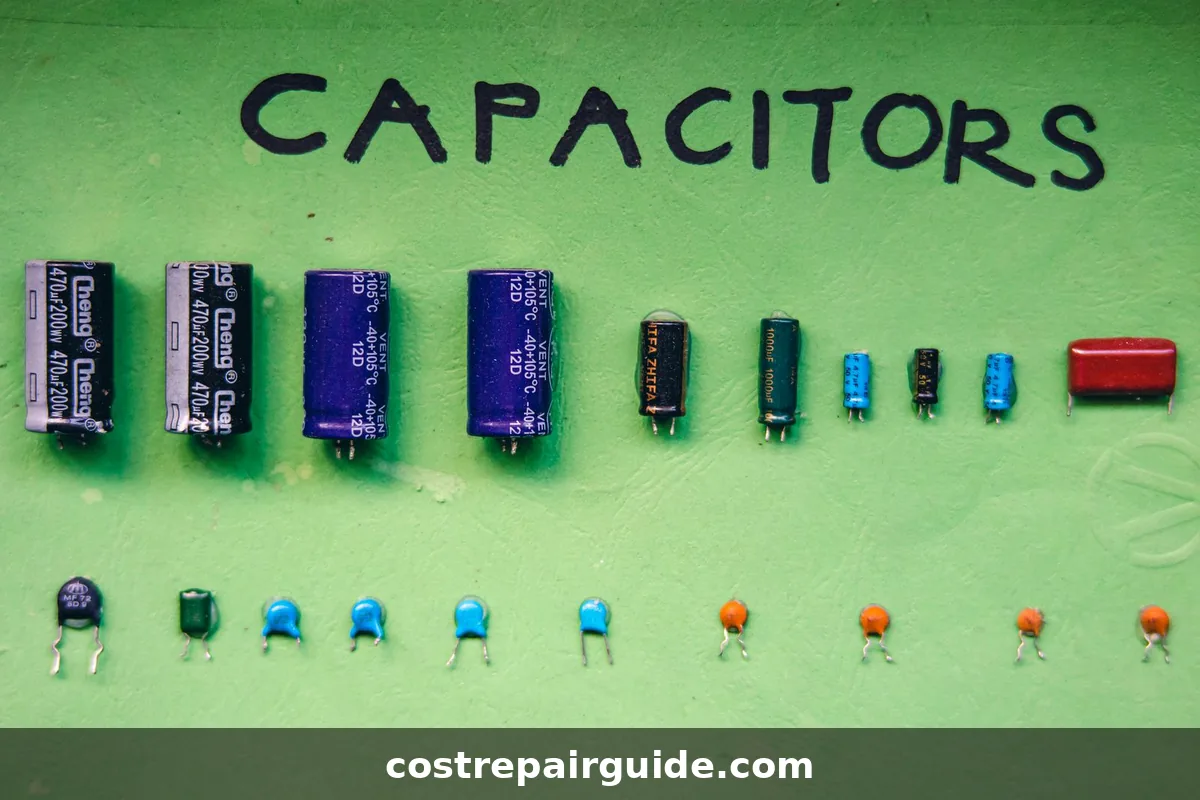
Different AC systems utilize different capacitors, and the technician must match the replacement to the exact rating of the failed part. The rating is measured in microfarads, written as MFD or µF. Installing the wrong rating can damage the motor or cause the new capacitor to fail early.
This table shows part prices only. The installed cost is higher because the technician has to diagnose the failure, safely discharge the old capacitor, install the matched replacement, and confirm the system runs correctly before leaving.
Capacitor Type | Typical Part Cost | Common Use |
Run capacitor | $8 to $30 | Keeps a motor running smoothly after startup |
Start capacitor | $9 to $25 | Gives the motor a burst of power to start |
Dual run capacitor | $15 to $50 | Runs both the compressor and fan motor together |
Blower capacitor | $9 to $20 | Helps the indoor blower motor circulate air |
Brand-matched / OEM capacitor | $30 to $100+ | Required for specific equipment, often premium brands |
What an AC Capacitor Does
Think of the capacitor as a small battery pack built into your AC. It stores electrical energy and releases it in a quick burst when the compressor or fan motor needs to start. Your home’s regular electrical supply provides the motor with a steady current, but starting a heavy motor from a dead stop requires more than a steady current can provide. That extra push comes from the capacitor.
Once the motor is running, the capacitor’s job shifts to keeping the current steady so the motor does not overheat or strain. When the capacitor weakens, the motor has to work harder to start and run, and that extra strain shortens the life of the motor itself.
This is the real reason a weak capacitor should not sit unfixed for weeks. A $175 capacitor swap is a fraction of what a compressor replacement costs.
See: AC Compressor Replacement Cost
Signs Your AC Capacitor May Be Bad
A failing capacitor can look like a much bigger AC problem. These are the signs that usually point back to the capacitor specifically.
Safety note: Do not touch the capacitor to check it. Capacitors store electrical charge and can deliver a serious shock even after the unit is powered off. This is a job for a trained technician who knows how to discharge it safely.
Why the Final Price Changes So Much
Two homeowners can call about the same symptom and get quotes that are a hundred dollars or more apart. Here is what actually drives that difference.
Labor Rate
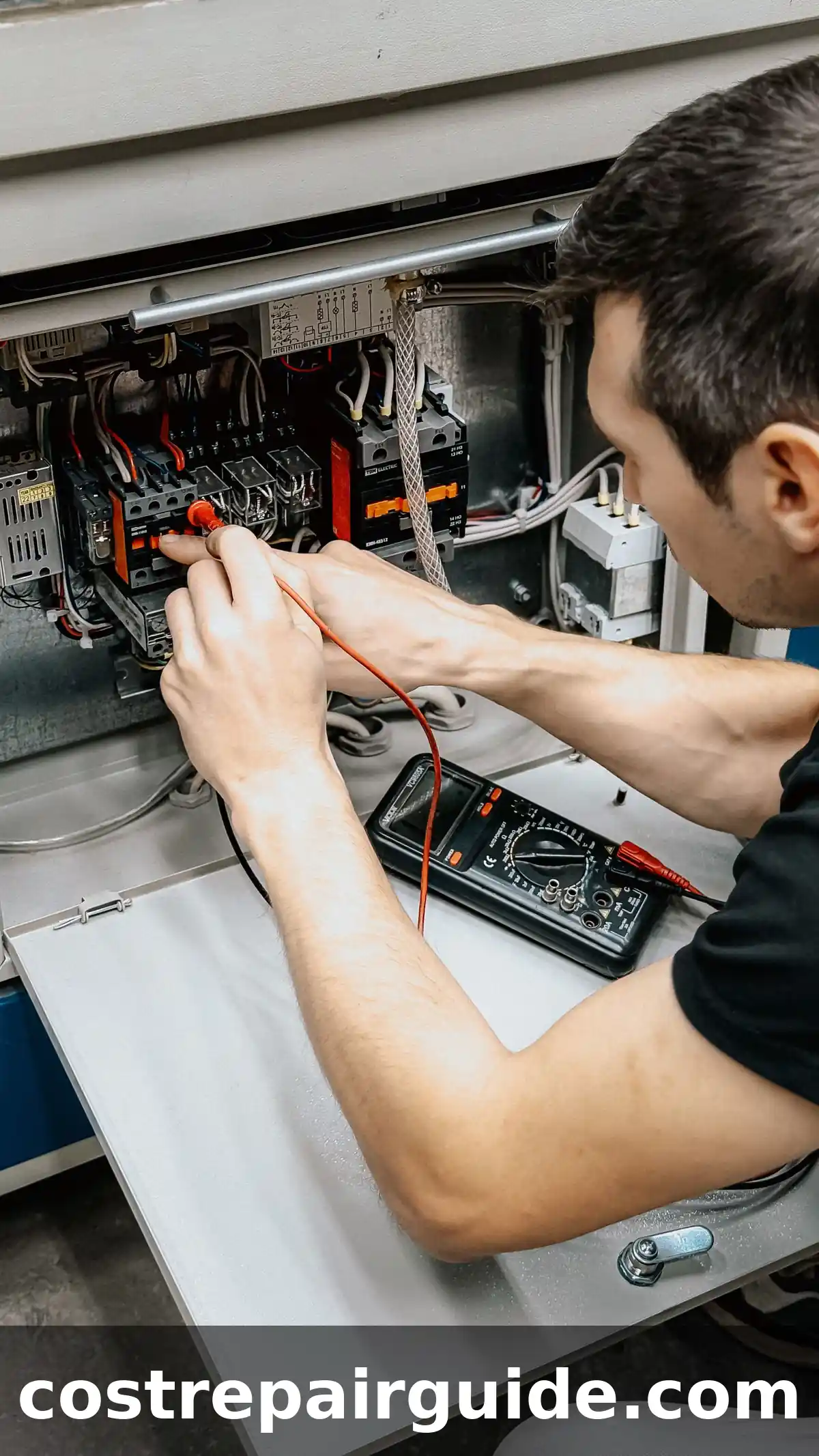
HVAC labor runs $60 to $150 per hour, depending on your region. A capacitor swap itself usually takes 30 to 60 minutes once the technician is on site, but that time includes shutting off power, safely discharging the old capacitor, removing wires, installing the correct part, and testing the system.
Service Call or Diagnostic Fee
Most HVAC companies charge $90 to $150 just to send a technician out and diagnose the problem. Some companies apply this fee toward the repair if you move forward. Others keep it as a separate charge no matter what. Ask before booking.
Capacitor Type and Rating
A basic single-run capacitor costs less than a dual-run capacitor that powers both the compressor and fan. Brand-matched parts for premium systems like Trane and Lennox tend to cost more than parts for budget-friendly brands like Goodman and York.
Season and Timing
Capacitors fail more often in extreme heat because the system runs harder and longer. Summer demand pushes HVAC companies to raise prices, and weekend or after-hours calls during a heat wave can cost 1.5 to 2 times the standard labor rate. Scheduling non-emergency repairs in spring or fall, when demand is lower, often gets better pricing.
Other Parts That Tested Weak
Sometimes the capacitor is not the only problem. A weak capacitor stresses the fan motor and compressor every time the system starts, and a thorough technician may find early signs of wear on those parts, too. Ask directly whether anything else was tested weakly during the diagnosis.
Cost Breakdown Example
Here is a simple way to see where a typical $250 bill actually goes.
|
Charge |
Typical Range |
What It Covers |
|
Diagnostic / service call |
$90 to $150 |
Technician travel, inspection, and confirms the cause |
|
Capacitor part |
$8 to $50 |
The actual replacement component |
|
Labor |
$60 to $150 per hour |
Safe discharge, installation, wiring, and system testing |
|
Emergency or peak-season surcharge |
1.5x to 2x normal rate |
After-hours, weekend, or heat-wave demand pricing |
|
Typical total bill |
$150 to $400 |
Most common range for a complete, professional fix |
This is not a fixed quote for your specific home. It shows why a part that costs less than dinner for two becomes a few-hundred-dollar professional bill once diagnosis, labor, and safety steps are factored in.
AC Capacitor Replacement Cost Near Me
Local labor rates move the price more than almost anything else. A homeowner in a major metro area will typically pay more than someone in a smaller market, and demand during a regional heat wave can push prices up across an entire area at once.
Searching for local quotes is useful for comparison, but do not judge offers on the total number alone. Compare what each quote includes: the diagnostic process, the capacitor brand and rating, labor time, and any warranty on the repair. A $250 quote that includes a clear diagnosis and a warranty can be a better deal than a $150 quote with no explanation of what was tested.
Should You Replace an AC Capacitor Yourself?
The part is cheap, so the idea of doing it yourself is tempting. Here is the honest answer.
This repair looks simpler than it actually is. The real danger is not the screwdriver work. It is the stored electrical charge inside the capacitor, which can deliver a serious shock even after the unit is completely powered off, and the risk of installing the wrong microfarad rating, which can damage the motor or cause early failure of the new part.
If you have real electrical training, the right tools, and you understand how to safely discharge a capacitor, this job is mechanically straightforward. For most homeowners, this is one repair where hiring a licensed technician is worth the labor cost. Saving a hundred dollars is not worth a serious shock or a damaged compressor that costs ten times more to fix.
Repair the Capacitor or Replace the AC Unit?
A bad capacitor by itself rarely means you need a new AC system. In most cases, capacitor replacement is the right call because the part is inexpensive and the repair is one of the most common in HVAC service.
Before approving any repair bigger than a simple capacitor swap, ask one question:
How much life should I expect from this system after this repair?
For a deeper breakdown of that decision, see HVAC Repair Cost.
|
Situation |
Better Choice |
Why It Matters |
|
AC is under 10 years old |
Replace the capacitor |
The system likely has useful life remaining |
|
Only the capacitor failed |
Replace the capacitor |
This is a common, affordable, isolated repair |
|
The fan motor was also tested weakly |
Compare repair costs |
The total bill can rise quickly with two parts |
|
The compressor also failed |
Get a second opinion |
Major repair may not be worth it on an older unit |
|
The system is 15+ years old |
Compare replacement |
More part failures tend to follow on aging systems |
Questions to Ask Before Approving the Quote
A clear quote protects you from confusion later. Ask these questions before any work begins.
A good technician will not mind answering any of these. If the answers feel rushed or vague, pause before approving the repair.
A Confession About Capacitor Quotes
A lot of homeowners get genuinely angry when they find out the part price. That reaction makes sense.
You see a fifteen-dollar capacitor listed online, then a company quotes you three hundred dollars for the same part installed. That feels unfair in the moment.
But the real question is not the part price by itself. The real question is what the full visit actually includes. Did the technician correctly diagnose the failure instead of guessing? Did they test the fan motor and compressor while they were already in there? Did they install the correct rating for your specific system? Did they explain the fee structure before starting the work, or did the number just appear on the invoice at the end?
That last question matters more than any other. The actual problem most homeowners run into is not the price itself. It is being handed a number with no explanation and no chance to ask anything before the work is already done.
How to Avoid Overpaying
Do not let a confirmed bad capacitor sit for weeks while you shop around. A weak capacitor stresses expensive parts every single time the system cycles on. The longer it runs in that condition, the higher the odds it takes the compressor down with it, and that repair costs far more than the capacitor itself.
One Habit That Prevents This Repair From Becoming Bigger
If a technician is already at your home replacing a capacitor, it costs you almost nothing extra to ask them to check the contactor, the refrigerant level, and the cleanliness of the condenser coils while they are there. The contactor is often the next part to fail after a capacitor, and catching it during the same visit means one service call instead of two.
Annual HVAC maintenance plans often include a discounted or free diagnostic visit along with 10 to 20 percent off parts. If you expect to need any other HVAC work in the next year, a maintenance plan frequently pays for itself.
See: HVAC Maintenance Cost
Frequently Asked Questions
What is a capacitor for an AC unit?
A capacitor is a small cylindrical electrical component that stores and releases energy to start the compressor and fan motors in your AC system. When it fails, the system may hum but not start, or the fan may not spin. Replacement typically costs $100 to $400 including labor.
How much is an AC capacitor?
The part itself costs $10 to $50 depending on brand and specs. With professional installation, most homeowners pay $100 to $400 total. The labor and diagnostic fee make up most of the bill, not the part.
Final Thoughts
AC capacitor replacement is usually one of the more affordable AC repairs you will run into. Most homeowners pay $150 to $400 for a complete professional fix in 2026, with the part itself making up only a small piece of that total.
The part is cheap. The service visit is not just a part. It includes diagnosis, labor, safe handling of a component that can shock you even when powered off, and testing to confirm the system runs correctly afterward.
Get the full price before work starts. Confirm the replacement part matches your system’s rating. And if a quote jumps well past major-repair territory, get a second opinion before approving anything.