
Thermostat Replacement Cost: What Homeowners Should Expect in 2026
The heating system was running constantly but the house was never quite reaching the set temperature. Not a dramatic failure, just a slow, persistent sense that something was slightly off. The energy bill was higher than it should have been. The house felt a degree or two cooler than what the thermostat said.
When the HVAC technician came out, the diagnosis was not the furnace. It was the thermostat. A twenty-year-old unit that had drifted in accuracy, was no longer switching reliably, and had been quietly adding to the heating bill for at least two winters.
The replacement itself took forty minutes. The new programmable thermostat cost $65. The installation was $130. The total bill was $195, and the technician mentioned the upgrade would likely pay for itself in energy savings within the first year.
That is the honest picture of home thermostat replacement cost in most cases. This guide explains the full range, from a simple basic swap to a full smart thermostat installation with C-wire work, so the quote you get makes sense before you approve it.
Cost Repair Guide does not sell HVAC services. We help homeowners understand the numbers before calling a technician.
Quick Answer
Thermostat replacement cost in 2026 ranges from $100 to $500 for most home installations, including the thermostat unit and professional labor. The average cost of thermostat replacement is $184 to $200 based on 2026 contractor data from eight sources. A basic programmable thermostat with installation runs $100 to $400. A smart thermostat installation runs $185 to $600, with additional costs for C-wire installation ($90 to $135) if your home does not already have one. Labor alone runs $80 to $200 for most installations.
This guide covers home HVAC thermostats only. If you are looking for a car engine thermostat, water heater thermostat, oven thermostat, or appliance thermostat, those are separate products with different repair processes. This page covers the thermostat that controls your home heating and cooling system.
Typical Range
$100 to $500
National Average
$184 to $200
Smart Thermostat + Install
$185 to $600
Thermostat Replacement Cost by Type: 2026
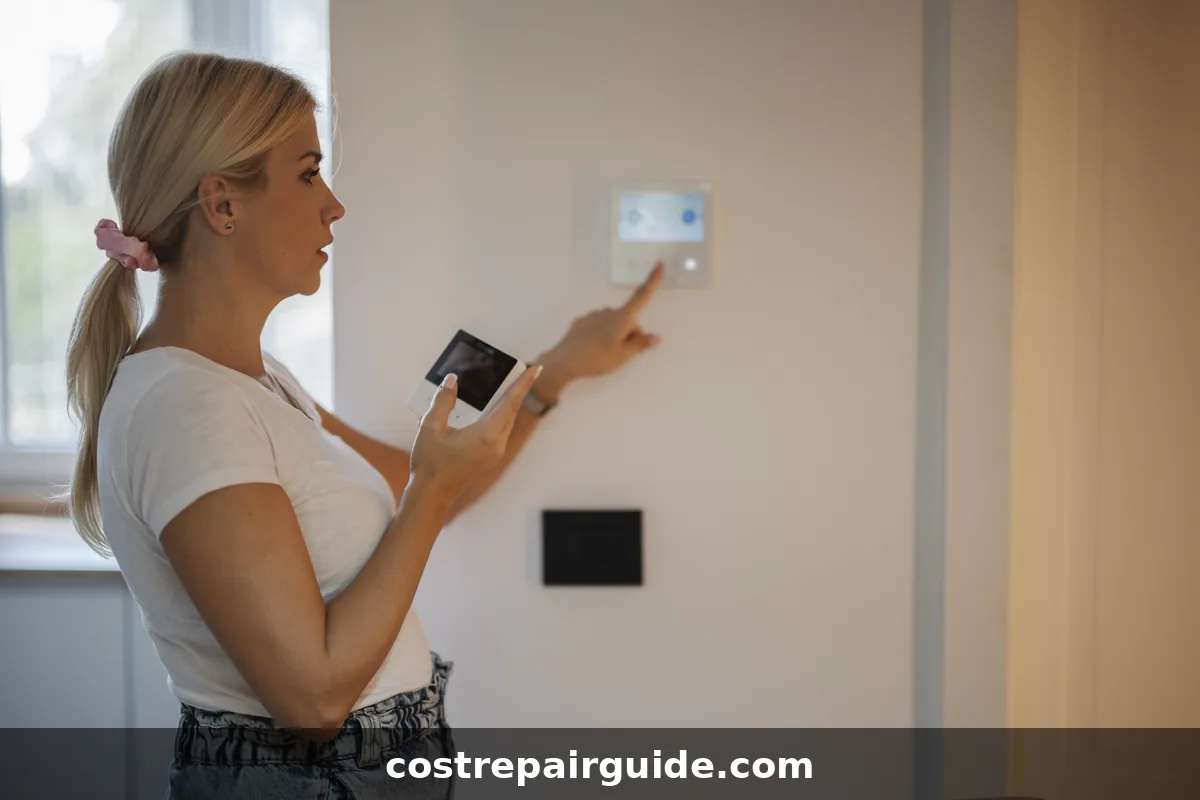
The type of thermostat you choose has the biggest impact on the total cost to replace thermostat in home. Here is a full breakdown of unit prices plus installed cost.
| Thermostat Type | Unit Price | Labor | Total Installed | Best For |
|---|---|---|---|---|
| Manual / mechanical | $15 to $50 | $50 to $100 | $50 to $150 | Simple systems, rentals, budget |
| Basic digital (non-programmable) | $20 to $70 | $65 to $130 | $85 to $200 | Upgrade from old manual dial |
| Programmable | $30 to $150 | $80 to $200 | $100 to $400 | Most homeowners, best value |
| Wi-Fi / connected | $70 to $200 | $100 to $200 | $150 to $400 | App control from phone |
| Smart (Nest, Ecobee) | $130 to $320 | $100 to $250 | $185 to $600 | Energy savings, learning features |
| Premium learning / whole-home | $200 to $500+ | $150 to $300 | $350 to $800+ | Multi-zone, full automation |
All costs above assume the existing wiring is compatible. If your home needs a C-wire for a smart thermostat installation, add $90 to $135 to the total. If the thermostat needs to be relocated, add $135 to $450.
Thermostat Replacement Labor Cost
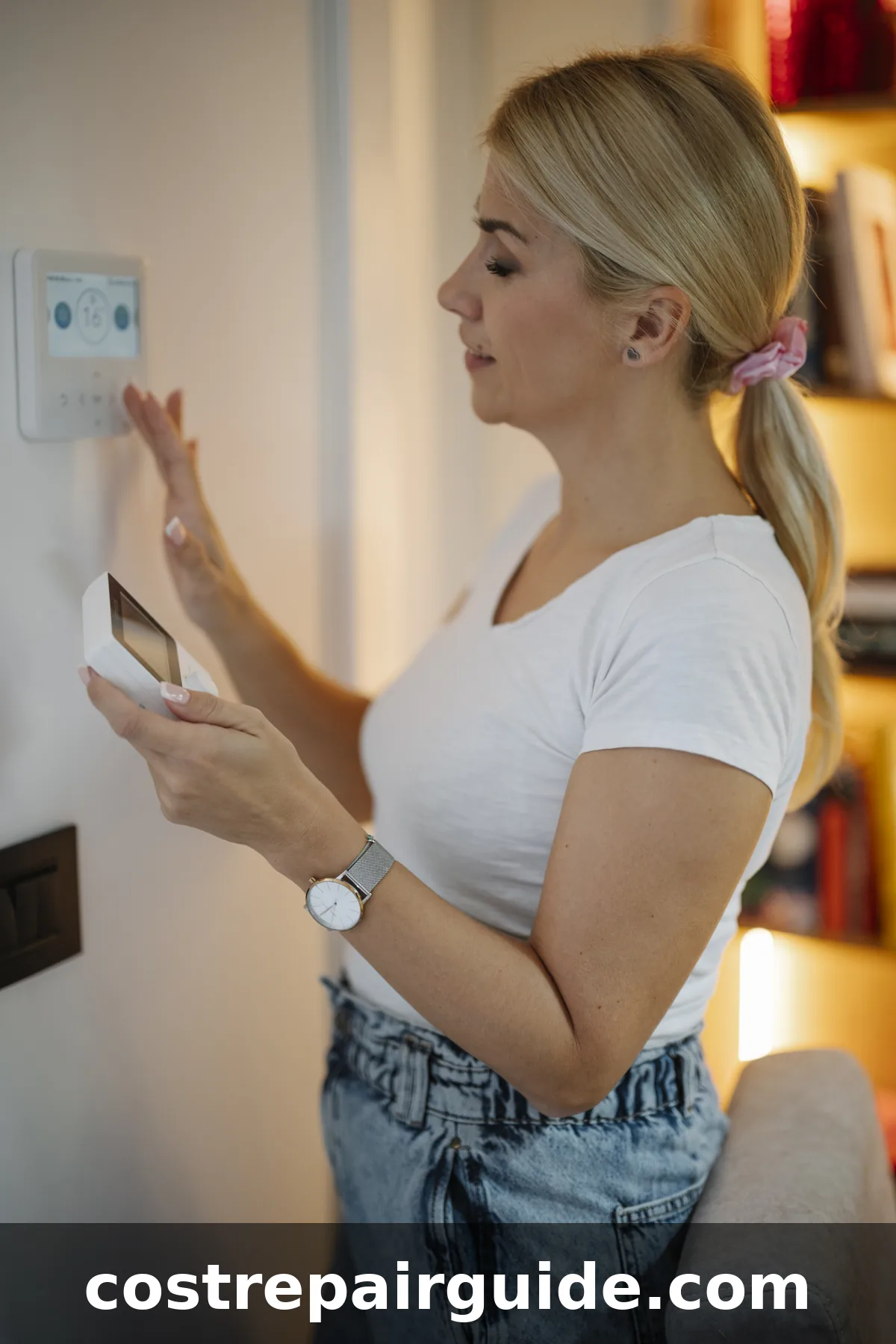
Thermostat replacement labor cost runs $80 to $200 for a straightforward swap with no wiring changes. HVAC technicians typically charge $50 to $150 per hour and most installations take 30 minutes to two hours.
| Labor Scenario | Additional Cost | Notes |
|---|---|---|
| Simple swap, same type, same wires | $80 to $150 | 30-60 minutes; most common |
| Upgrade to smart, existing C-wire | $100 to $200 | 60-90 minutes; programming included |
| Smart upgrade, no C-wire, add wire | $200 to $335 | Wire installation adds $90-$135 |
| Relocate thermostat to better position | $135 to $450 | New wiring route, possible drywall work |
| Multi-zone, per additional thermostat | $80 to $200 per zone | Discounts sometimes available for multiple |
HVAC thermostat replacement cost is typically quoted as a flat fee rather than strictly by the hour. Always confirm whether the technician charges hourly or flat rate, and whether the service call fee is included in the installation quote or billed separately. See: HVAC Service Call Cost [/hvac/hvac-service-call-cost/].
The C-Wire: The Hidden Cost Most Homeowners Miss
This is the single most common reason a thermostat installation costs more than expected. The C-wire (common wire) provides continuous 24-volt power to the thermostat. Basic older thermostats did not need it. Smart thermostats almost always do, the screen, Wi-Fi connection, and learning features all require continuous power.
Older homes often do not have a C-wire in the thermostat wiring bundle. If yours does not, you have three options: install a new C-wire ($90 to $135), use a C-wire adapter kit ($15 to $30, but may cause compatibility issues), or choose a battery-powered smart thermostat that does not require a C-wire.
How to check if you have a C-wire: Turn off your HVAC system at the breaker. Remove the thermostat faceplate. Look at the wiring connections on the back. If you see a wire connected to a terminal labeled C, you have a C-wire. If not, ask your installer about the best option before purchasing a smart thermostat.
Thermostat Replacement Cost by HVAC System Type
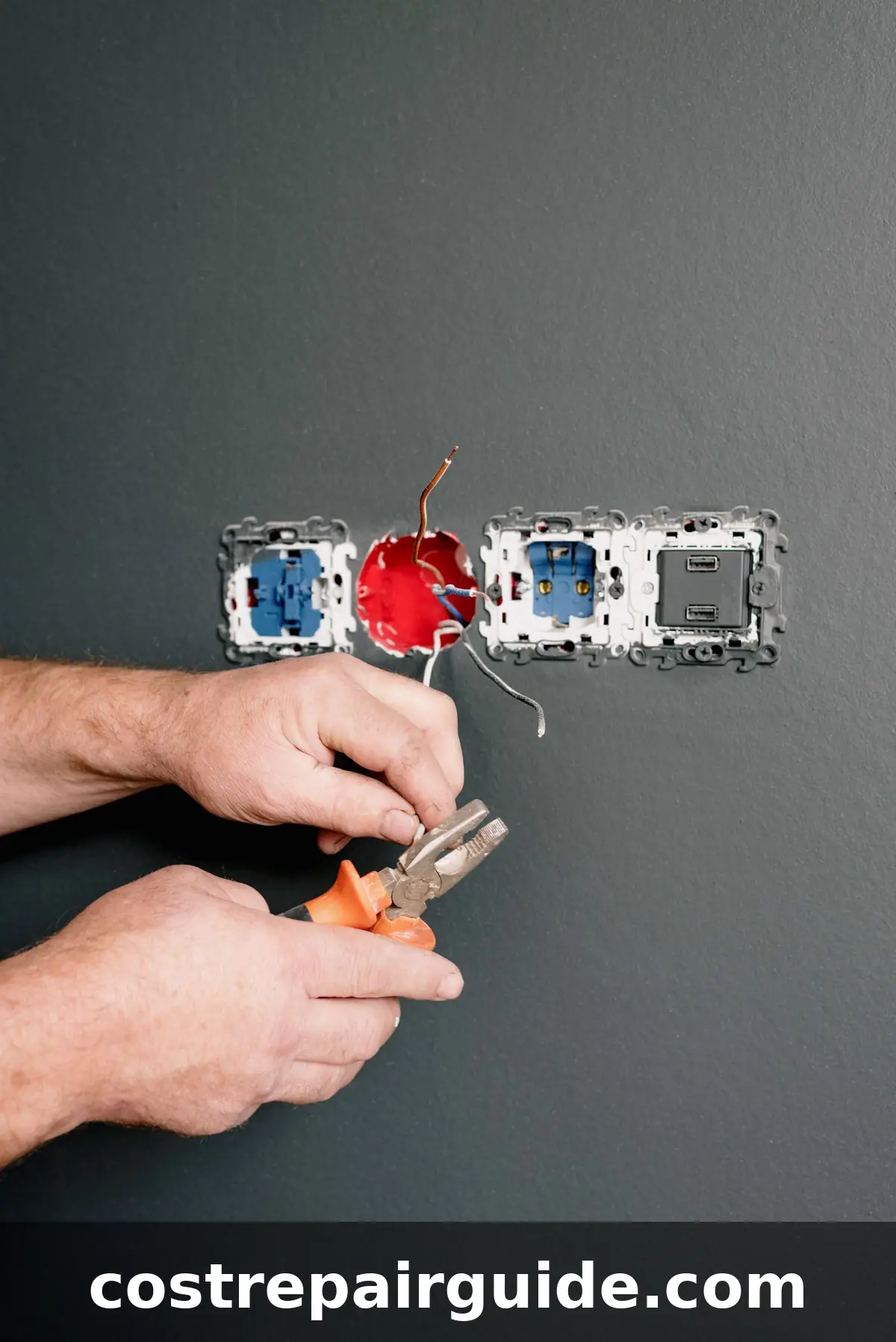
HVAC thermostat replacement cost varies by system type because different heating and cooling systems have different wiring requirements and compatibility constraints.
Furnace Thermostat Replacement Cost
Furnace thermostat replacement cost runs $100 to $400 for most residential installations. Gas furnaces use standard low-voltage thermostats. The replacement is straightforward when the thermostat type stays the same. Upgrading from a basic to a smart thermostat on a furnace-only system may need a C-wire if the furnace does not have one already.
AC Thermostat Replacement Cost
AC thermostat replacement cost follows the same range, $100 to $400 for most homes. Central AC systems use the same low-voltage thermostat as the furnace, so a single thermostat replacement covers both. The most common issue: if you have a two-stage AC or a variable speed system, not all smart thermostats are compatible. Confirm compatibility before purchasing.
Heat Pump Thermostat Replacement
Heat pump systems require a thermostat with an O/B wire terminal, which controls the reversing valve that switches between heating and cooling. Many standard thermostats do not include this. Always confirm heat pump compatibility before purchasing any replacement thermostat.
Water Heater Thermostat: Separate Product
Water heater thermostat replacement cost, if you searched for this, note it is a completely different product from a home HVAC thermostat. A water heater thermostat controls the temperature of your hot water tank. Replacement costs $40 to $200 for most electric water heaters and is handled by a plumber, not an HVAC technician.
Signs Your Thermostat Needs Replacement
Not every thermostat problem requires replacement. A dead battery, a wrong mode setting, or loose wiring can all look like thermostat failure. Check these simple things first before calling anyone.
- Display is blank, check batteries and power first
- Settings change on their own, often a sign of sensor drift or age
- HVAC system turns on and off too frequently (short cycles)
- System does not reach the set temperature despite running normally
- Uneven temperatures between rooms that cannot be explained by duct issues
- Thermostat is more than 10 years old and has been unreliable
- Physical damage, cracked screen, stuck buttons, moisture
Thermostats typically last 10 years. Mechanical drift, sensor wear, and circuit board aging all reduce accuracy over time even when the unit appears to be functioning. An old thermostat that seems to be working may still be costing you money through reduced accuracy.
Should You Replace Like-for-Like or Upgrade to Smart?
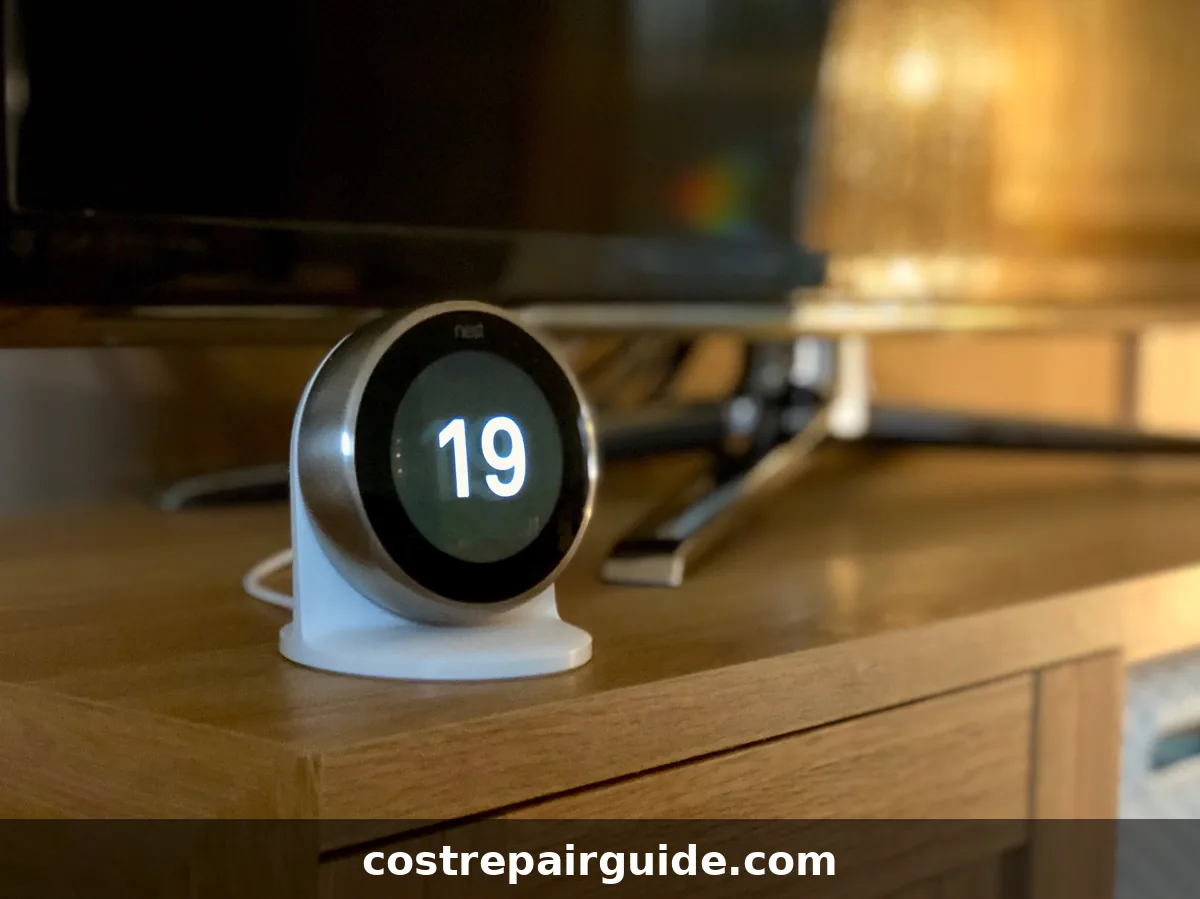
This is the decision that matters most when you need a thermostat replacement. Here is a simple way to think through it.
| Your Situation | Recommendation | Why |
|---|---|---|
| Rental property, simple system | Basic programmable | Low cost, tenant-proof, easy to replace |
| Owner-occupied home, own it 5+ more years | Smart thermostat | Pays back in 1-2 years from energy savings |
| HVAC system being replaced anyway | Smart thermostat | Bundle installation for better pricing |
| Heat pump or variable speed system | Compatible smart or programmable | Not all thermostats support these systems |
| Multi-zone home | Zoning-capable smart | Per-zone control saves more energy |
| Older home without C-wire | Ask installer first | C-wire cost adds to smart thermostat total |
According to the U.S. Department of Energy, a programmable thermostat saves up to 10 percent on heating and cooling bills. Smart thermostats that learn your schedule save $140 to $180 per year on average. At a total installed cost of $185 to $400 for a smart thermostat, the investment pays back within two years for most homeowners. See: energy.gov/energysaver/thermostats
See Energy.gov thermostat savings data for official efficiency numbers.
Utility Rebates: Real Money Most Homeowners Miss
Many utility companies and state programs offer rebates of $50 to $100 for installing a qualifying smart or programmable thermostat. These rebates can meaningfully reduce the out-of-pocket cost of an upgrade.
Before purchasing any thermostat, check your utility company's website or the DSIRE database (dsireusa.org) for rebate programs in your area. Some utility programs even provide qualified smart thermostats for free or at a steep discount.
Rebates are available at the time of installation, not retroactively. Ask your installer about available programs before the work is done.
Check the DSIRE utility rebates database for incentives in your state.
DIY vs Professional: When Each Makes Sense
When DIY Is Reasonable
Replacing a like-for-like thermostat, same type, same wire count, same location, is a manageable DIY project if you are comfortable with basic wiring. You photograph the existing wiring, label each wire before removing it, connect the same wires to the same terminals on the new unit, and restore power.
This works for simple swaps with compatible units. It does not require a permit in most areas. The risk is manageable when the system type stays the same and no new wiring is needed.
When Professional Installation Is Worth the Cost
- Installing a smart thermostat that requires a C-wire your home does not have
- Upgrading from a manual to a programmable or smart thermostat with different wiring
- Heat pump systems or multi-stage systems with complex wiring
- Relocating the thermostat to a better position in the home
- Any installation where the warranty requires professional setup
- If DIY installation goes wrong, damage to thermostat or HVAC system is possible
Thermostat replacement labor cost of $80 to $200 is a reasonable insurance cost against a miswired system or a voided warranty on a $200 to $300 smart thermostat. For simple swaps, DIY saves real money. For complex upgrades, professional installation protects a larger investment.
Check These Before Calling a Technician
A service call costs $75 to $200 before any work begins. These quick checks can save you that cost entirely.
- Replace thermostat batteries, blank or dim display is often just dead batteries
- Check the breaker for the HVAC system, a tripped breaker cuts thermostat power
- Confirm mode setting, make sure it is set to HEAT or COOL, not OFF or FAN ONLY
- Check the temperature setpoint, confirm it is set above current room temp (heat) or below (cool)
- Let the system cycle, some thermostats have a 5-minute delay before calling for heat or cool
If none of these resolve the problem and the system is more than 10 years old, thermostat replacement is usually the right call.
Questions to Ask Before Approving Thermostat Installation
- Does my home already have a C-wire, and if not, what are my options?
- Is this thermostat compatible with my specific HVAC system type?
- Is the service call fee included in the installation quote?
- How long will installation take, and what is your labor rate?
- Are there utility rebates available for this model?
- Does the thermostat require professional installation to maintain the warranty?
- Can you program the schedule during installation?
- What happens if the installation is more complex than expected?
A Confession About Thermostat Quotes
Thermostat replacement is one of the more confusing home repair bills for homeowners because the unit itself is visibly inexpensive. You walk past thermostats at the hardware store for $40. Then an HVAC company quotes $300 for the installation.
That reaction is understandable. But the quote usually breaks down like this: the unit costs $60 to $100 for a basic programmable model. The technician drives out, inspects the existing wiring, removes the old unit, connects the new one to the correct terminals, tests the system in both heating and cooling modes, programs your schedule, and walks you through the features. That process takes about an hour and a half. At $100 per hour, plus a $75 service call fee, the math produces a $250 bill.
That is not padding. That is what an hour and a half of skilled labor actually costs when someone carries liability insurance and arrives with the knowledge to handle whatever the wiring situation turns out to be.
The quote only feels wrong when there is no context for what it includes. Use this guide as your context.
Thermostat Replacement Cost: FAQs
How much does thermostat replacement cost in 2026?
Thermostat replacement cost in 2026 averages $184 to $200 for a basic programmable installation. The full range is $100 to $500 for most home installations. Simple manual or basic digital swaps run $50 to $200. Smart thermostat installations run $185 to $600. If a C-wire needs to be added, expect $90 to $135 on top of the base installation cost.
What is the cheapest way to replace a thermostat?
DIY installation of a compatible basic programmable thermostat is the cheapest option, the unit costs $30 to $100 and there is no labor fee. This works for like-for-like replacements with compatible wiring. If the wiring is different, the system is a heat pump, or you are upgrading to a smart thermostat, professional installation is worth the cost.
How much does smart thermostat replacement cost?
Smart thermostat replacement cost runs $185 to $600 including the unit and professional installation. The unit itself costs $130 to $320 for popular models like Nest or Ecobee. Labor adds $100 to $250. If a C-wire installation is needed, add $90 to $135. Most smart thermostat installations pay back their cost in energy savings within 1 to 2 years.
How much does a furnace thermostat replacement cost?
Furnace thermostat replacement cost runs $100 to $400 for most residential installations. Gas furnaces use standard low-voltage thermostats. The cost depends on the thermostat type you choose and whether any wiring changes are needed.
How much does an AC thermostat replacement cost?
AC thermostat replacement cost runs $100 to $400, the same as furnace replacement since central air systems use the same thermostat. If your AC is a heat pump or variable-speed system, confirm compatibility before purchasing any replacement thermostat.
What is the thermostat replacement labor cost?
Thermostat replacement labor cost runs $80 to $200 for a standard installation. HVAC technicians charge $50 to $150 per hour and most installations take 30 minutes to two hours. Complex jobs involving C-wire installation, system relocation, or multi-zone programming take longer.
Do I need a professional to replace a thermostat?
Not always. A simple like-for-like replacement of the same thermostat type with compatible wiring is a reasonable DIY project. Smart thermostat upgrades that require C-wire installation, heat pump compatibility wiring, or complex programming are better handled by a professional to protect the system warranty and avoid wiring errors.
Can a thermostat make my HVAC system fail?
A failed or miscalibrated thermostat can cause the HVAC system to short cycle, run constantly, or fail to start at all, none of which are mechanical failures in the system itself. These problems often look like major HVAC issues but resolve completely with thermostat replacement. Always have the thermostat evaluated before approving a larger HVAC repair for symptoms like short cycling or failure to reach temperature.
Are there rebates for thermostat replacement?
Yes. Many utility companies and state energy programs offer $50 to $100 rebates for installing qualifying programmable or smart thermostats. Check dsireusa.org or your utility company's website for programs available in your area. Rebates must be claimed at installation, not retroactively.
How long does a thermostat last?
Most thermostats last 10 years before accuracy declines or components fail. Some last 15 to 20 years. Mechanical drift, dusty coils, and sensor wear gradually reduce accuracy even when the thermostat appears to be functioning. If your thermostat is over 10 years old and you notice unexplained temperature inconsistency or higher energy bills, replacement is worth considering.
Final Thoughts
Thermostat replacement cost in 2026 runs $100 to $500 for most home installations, with a national average of $184 to $200. A basic programmable thermostat installed professionally costs $100 to $400. A smart thermostat installation costs $185 to $600, with an additional $90 to $135 if a C-wire needs to be added.
Home thermostat replacement cost is one of the more affordable HVAC upgrades, and it is one of the few repairs that can pay for itself in energy savings within two years. Get an itemized quote showing the unit cost and labor separately. Check for utility rebates before purchasing. And if your thermostat is over 10 years old, replacement now is often cheaper than a service call to diagnose the same problems again next season.
What thermostat problem are you pricing today? Share it in the comments below.
Document prepared: June 2026 | CostRepairGuide.com | Slug: /hvac/thermostat-replacement-cost/ | Sources: Angi, Fixr, HomeGuide, HomeAdvisor, Networx, HomeWyse, Trane, Keemeet, 2026 data