
Whole House Rewiring Cost: 2026 Prices by Home Size
Imagine a breaker that trips every time the microwave and toaster run together. A light dims when the dryer starts. One dining room outlet feels warm, and its faceplate has a faint brown tint. You replace a few switches and reset the panel, yet the problems keep returning. Then an electrician asks a question that stops the conversation: how old is the wiring behind these walls?
That question can change a budget fast. Rewiring touches every room, and every room has finished walls and ceilings. The whole house rewiring cost depends on home size, wall access, panel condition, and local labor. Published guides disagree widely, because some price open framing and others price finished homes.
This guide explains those differences in plain numbers. You will see cost by home size, a labor and materials breakdown, room-by-room prices, and permit costs. You will also see warning signs, timelines, and ways to avoid overpaying.
Each figure comes from a named source with its date, and older data is flagged. Use the ranges to judge bids, then get written local quotes.
Quick Answer: The whole house rewiring cost in a finished home often runs $6 to $10 per square foot. SoFi (January 2026) and This Old House agree on that rate. It puts a 2,000 square foot house near $12,000 to $20,000. Open framing costs far less, about $3 to $5 per square foot. Wall repair, panel upgrades, and permits add to the total.
How Much Is the Whole House Rewiring Cost?
Published numbers fall into two groups. Guides that price new wiring in open framing report a lower rate of $3 to $5. Guides that price finished homes report $6 to $10. The gap comes from wall access.
HomeAdvisor (June 2026) lists that same open-framing rate and an average project near $1,567 for its wiring page. That average covers small jobs, so it does not describe a full rewire. SoFi and This Old House put finished homes between $6 and $10 per square foot. Angi lists a broad range of $1,500 to $10,000.
For a wider view of electrical pricing, read our electrical repair cost guide .
Whole House Rewiring Cost by Home Size
Size sets the baseline because wire length, boxes, and labor hours all scale with square footage. SoFi prices a 1,300 square foot house at $7,800 to $13,000. It prices a 2,500 square foot home at $15,000 to $25,000.
The table multiplies each per-square-foot range across common sizes. It is an illustration from the sourced rates, not a quote.
| Home Size | Open Framing ($3 to $5) | Finished Walls ($6 to $10) |
|---|---|---|
| 1,000 sq ft | $3,000 to $5,000 | $6,000 to $10,000 |
| 1,500 sq ft | $4,500 to $7,500 | $9,000 to $15,000 |
| 2,000 sq ft | $6,000 to $10,000 | $12,000 to $20,000 |
| 3,000 sq ft | $9,000 to $15,000 | $18,000 to $30,000 |
Most owners of existing homes fall in the right-hand column. Fixr (January 2025) lists $3,312 to $6,026 for 1,000 square feet and $7,286 to $13,257 for 2,200 square feet. Those lower figures sit between the two columns.
Why Finished Walls Cost More
Old wire runs inside walls, ceilings, and floors. An electrician must fish new cable through those cavities or open the surfaces. Opening a wall adds roughly $4 to $8 per square foot, according to SoFi.
Block Renovation (July 2026) lists drywall repair at $1,000 to $5,000 in a full replacement. Bob Vila (page updated January 2023) says wall repairs can add 25% to 30% of the project cost. Treat the Bob Vila figure as older.
Plaster walls, brick, and finished basements raise the effort. Ask each bidder how they plan to reach the cavities. Ask who patches and paints afterward.
Cost Breakdown: Materials, Labor, Panel, and Permits
A full rewire has five main cost groups. Block Renovation’s guide gives the clearest line items for a replacement of old wiring. The table reflects its figures.
| Cost Item | Typical Range |
|---|---|
| Wire, boxes, devices, and supplies | $1,500 to $4,000 |
| Electrician labor | $50 to $130 per hour over 60 to 120 hours |
| Panel replacement or upgrade | $1,500 to $4,000 |
| Drywall repair and paint | $1,000 to $5,000 |
| Permits and inspections | $200 to $900 |
SoFi lists a basic panel upgrade at $2,000 to $4,000. HomeAdvisor lists $500 to $4,000 for panels overall. Our electrical panel replacement cost guide and 200 amp service upgrade cost guide cover that part in detail.
Labor Rates and Time on Site
Labor is the largest share of most rewires. HomeAdvisor lists electricians at $40 to $100 per hour. Block Renovation lists $50 to $130. HomeAdvisor lists total labor for a full rewire from $1,000 to $5,000 and up.
Time depends on size and access. HomeAdvisor says most rewiring projects take three to seven days. Angi reports three to ten days, according to SoFi. Fixr says a full rewire typically takes about a week.
Larger homes take longer. Block Renovation lists two to three weeks for large houses. Fixr says big projects can run up to three weeks. Our electrician cost per hour guide explains minimums and call fees.
Partial Rewiring: Priced Room by Room
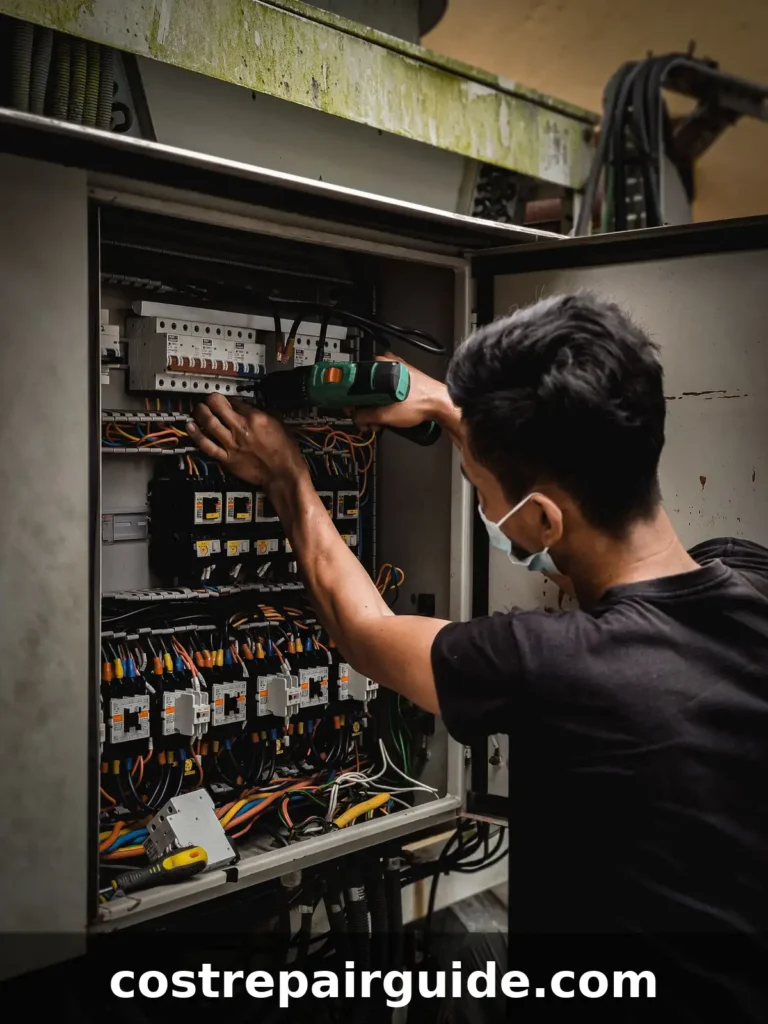
You do not always need a full rewire. If only one area has trouble, an electrician may redo that circuit or room. HomeAdvisor prices room work at its standard per-square-foot rate.
| Area | HomeAdvisor Range |
|---|---|
| Kitchen | $450 to $750 |
| Bedroom | $600 to $1,000 |
| Garage | $865 to $1,440 |
| Living room | $1,440 to $2,400 |
| Basement (1,000 sq ft) | $3,000 to $5,000 |
Partial work only helps when the rest of the wiring is sound. Ask the electrician to test other circuits before you decide. Replacing a single breaker costs $250 to $400 in the same guide. See our circuit breaker replacement cost guide .
Materials Cost Per Foot
Wire itself is a small part of the bill. SoFi lists nonmetallic cable at $0.40 to $0.80 per linear foot and THHN or THWN wire at $0.80 to $1.60. Outlets, switches, boxes, and breakers add to the supply total.
Block Renovation puts total materials at $1,500 to $4,000 for a full job. Outlets and switches may be worth upgrading while walls are open. See our outlet replacement cost guide and GFCI outlet installation cost guide .
Permits, Inspections, and Code Updates
Rewiring nearly always requires a permit and an inspection. HomeAdvisor lists permits at $250 to $900. This Old House lists $75 to $900. Block Renovation lists $200 to $900. Fixr says a permit and an inspection each cost a few hundred dollars.
Bankrate lists inspections at $100 to $400, with an average near $200. The page carries no date, so check local fees. Your electrician usually pulls the permit and schedules the inspection.
Code updates may change the scope. New circuits, ground fault protection, and arc fault protection can apply to rewired areas. Ask your electrician which rules your city enforces. Our electrical inspection cost guide explains what an inspection covers.
Signs Your House May Need Rewiring
Some warning signs point to old or damaged wiring. SoFi lists these:
- Flickering lights, popping outlets, or frequently tripped breakers
- Warm switches or a burning smell from an outlet
- Knob and tube wiring, common through the mid-1900s
- Aluminum wiring, common in the 1970s
- Round fuses in the panel instead of breaker switches
One symptom does not prove a full rewire is needed. A licensed electrician can test circuits and find the cause. See our aluminum wiring repair cost guide and knob and tube wiring replacement cost guide .
Insurance and Resale Effects
Old wiring can affect your insurance. SoFi says most carriers will deny coverage for a home with knob and tube wiring. Block Renovation says insurers may add a surcharge, require replacement within a set window, or decline.
Rewiring may also help when you sell. Buyers and inspectors flag old wiring. We found no reliable published figure for resale value, so treat any promised return with caution.
Panels from certain makers draw safety attention too. The CPSC advises against simply resetting a breaker that keeps tripping in an FPE panel.

Why Published Guides Disagree
Each guide defines a rewire in its own way. HomeAdvisor’s wiring page averages about $1,567, which mixes small circuit jobs with larger work. Bankrate’s page, which carries no date, cites $5 to $17 per square foot and $10,000 to $30,000 overall. Fixr’s figures sit between the two groups.
Match your project to the right definition before you use a number. A new addition resembles open framing. An old plaster house resembles the finished-wall case. Mixing the two leads to a whole house rewiring cost that is too low or too high.
Steps in a Typical Rewire
Knowing the sequence helps you read a bid. Most projects follow the same order, though crews vary.
- Walkthrough, load check, and written scope
- Permit filing and scheduling
- Power shutoff by section and removal of old wire
- Rough-in of new cable, boxes, and panel work
- Rough inspection by the building department
- Wall patching, texture, and paint
- Device and fixture installation
- Final inspection and testing
Ask who handles each step. A bid that skips patching or painting can look cheaper than it is.
Hidden Costs to Plan For
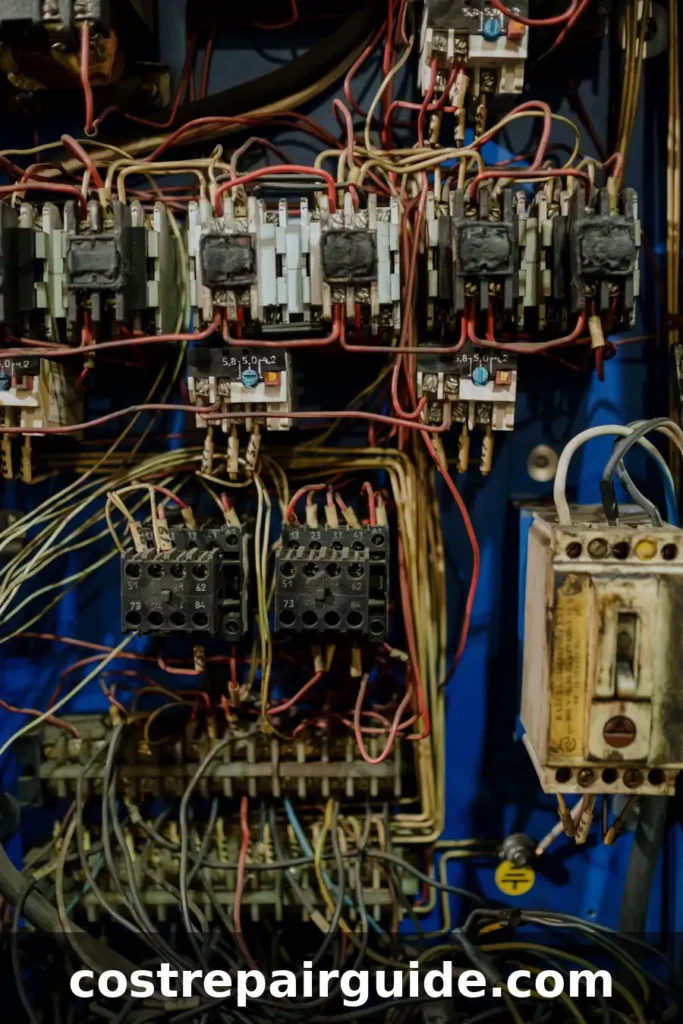
Surprises often appear once walls open. Damaged framing, old splices, and missing fire blocking can add time and materials. Insulation may need to be moved and replaced. These items are hard to price before work begins.
Code updates can add scope too. Your inspector may require extra circuits, protective devices, or smoke alarm changes in rewired areas. A quick call to the building department clarifies what applies. A contingency fund protects the budget when these items appear.
Smart-Home and Upgrade Add-Ons
A rewire is a good time to add features. SoFi lists smart-home upgrades at $2,000 to $7,000 for a basic setup. It also lists outdated wiring upgrades at $200 to $2,300 and replacing an outlet at $125 to $200.
Add-ons raise the total quickly. Decide which ones you want before you sign, since adding them later means opening walls again. Dedicated circuits for EV charging, a home office, or a workshop are common choices.
Rewire or Repair? A Quick Decision Guide
Use this checklist to frame the conversation with your electrician.
- Repair a single circuit if only one area shows symptoms and the rest tests sound.
- Plan a partial rewire if one wing or floor has old wiring.
- Plan a full rewire if the home has knob and tube wiring, aluminum branch wiring, or widespread failures.
- Replace the panel first if it overheats, rusts, or trips without cause.
A written evaluation settles the question. It also protects your whole house rewiring cost budget from scope creep.
Cost Examples for Three Common Homes
Real projects combine several cost groups. The examples below stack sourced figures. They are illustrations, not quotes.
| Home | Scope | Estimated Range |
|---|---|---|
| 1,300 sq ft house | Finished walls at SoFi’s range | $7,800 to $13,000 |
| 2,000 sq ft house | Finished walls at the same rate | $12,000 to $20,000 |
| 2,500 sq ft home | Finished walls at SoFi’s range | $15,000 to $25,000 |
Block Renovation advises a contingency of 10% to 20%. Surprises behind walls are common, such as damaged framing or hidden splices. High-cost metro areas can add 30% to 50%, according to the same guide.
Your whole house rewiring cost will land within these bands. Access, the panel, and local labor decide where.
Can You Rewire a House Yourself?
Most homeowners should not rewire a whole house. The work involves hidden connections, load calculations, and code rules. Many cities require a licensed electrician for the main work.
The risk is real. The U.S. Fire Administration counted 23,700 residential building fires from electrical malfunctions in 2023. Poor connections cause trouble that may not show for years.
Homeowners can still help. Clear furniture, remove wall hangings, and protect floors. You might also paint after the walls are patched. Those steps reduce labor time.
Whole House Rewiring Near Me: Hiring a Licensed Pro
Choose a licensed electrician with rewiring experience. Ask for proof of license and insurance. Get at least three written bids so you can compare scope.
Ask these questions before you sign:
- Does the bid include the permit and inspection?
- Who opens, patches, and paints the walls?
- Does the price include the panel or only the wire?
- How many days will power be off in each area?
- What happens if you find damage behind the walls?
A clear written scope prevents disputes. Compare bids line by line, since one bid may price a partial job.
Living in the House During a Rewire
Power will go off in sections. Many crews rewire room by room and keep a few circuits live. Ask about a schedule before work starts.
Plan for dust and noise. Move valuables, cover furniture, and seal off areas. Some owners stay elsewhere for several days. Ask your electrician how long each phase takes.
Refrigerators, medical devices, and sump pumps need special planning. Ask about temporary power. If a storm outage worries you, see our whole house generator installation cost guide .
When an Electrical Problem Cannot Wait
Some symptoms need quick action. A hot outlet, sparks, or a burning smell calls for an immediate shutoff at the breaker. Then call an electrician. Do not wait for a convenient appointment.
After-hours calls cost more. Our emergency electrician cost guide explains when the premium is worth paying. Some owners also add surge protection during a rewire. See our whole house surge protector cost guide .
How to Save Money on a Rewire
Small decisions keep the total down. Use these steps before you book.
- Rewire only the circuits that need it, if the rest tests sound.
- Schedule the work with a remodel while walls are open.
- Choose standard devices instead of specialty fixtures.
- Ask for itemized bids so you can compare each line.
- Keep access clear to save labor hours.
- Plan for a 10% to 20% contingency.
Pair the rewire with other electrical upgrades to share permits and trips. If you plan to add an EV charger, see our EV charger installation cost guide .
Frequently Asked Questions
A Note on How to Read These Numbers
Rewiring prices vary more than almost any home repair cost. Some sources price new wiring in open walls, while others price finished houses, so the ranges look contradictory. We split them into two groups instead of averaging them.
Bankrate quotes a $162 to $535 hourly rate that sits far above every other source, so we left it out. Bob Vila’s page is dated January 2023 and shows inconsistent averages. We used it only for the wall repair share. This site does not refer contractors, so we have no reason to nudge numbers up or down. Use these ranges to test a bid, and then get a local written quote.
Final Thoughts
For a finished home, the whole house rewiring cost typically lands around $6 to $10 a square foot. At 2,000 square feet, expect roughly $12,000 to $20,000. Existing homes rarely have open framing, so the lower rate seldom applies.
The key takeaway is that wall access and panel condition drive the total. Labor is the largest line, and patching and paint come close behind. Add a 10% to 20% contingency, since hidden damage is common.
Your next step is to book a licensed electrician for a written evaluation. Ask them to test each circuit and list which ones need work. Then compare itemized bids that spell out permits, panel work, and wall repair.
If the wiring is old but sound, a partial rewire may solve the problem for far less. If it is knob and tube or aluminum, plan for a full project.
Which room gives you the most trouble today, and could fixing that circuit come first?
Related Electrical Cost Guides
Keep planning your project with these related electrical cost guides from our library.