
Light Fixture Installation Cost: 2026 Prices by Fixture Type
You buy a pendant light that looks perfect over the kitchen island. It arrives in a heavy box, and the instructions show four wires and a bracket. The old fixture hangs from a single cord, and the ceiling has no obvious place to anchor anything heavier. Suddenly the installation looks like a bigger decision than the purchase.
That moment is common. The fixture is only part of the budget, and the work around it often costs as much. Wiring, mounting hardware, ceiling height, and fixture weight all change the price. The light fixture installation cost for a basic ceiling light sits far below a chandelier in a new spot.
This guide shows what electricians charge in 2026 for every common fixture type. You will see prices for ceiling lights, wall lights, pendants, track lighting, and chandeliers. You will also see wiring costs, dimmer switch prices, and tips for keeping the total reasonable.
Each figure comes from a published cost guide, and older sources are flagged. Your local quote will differ, so use these ranges to judge a bid before you agree to the work.
Quick Answer: The light fixture installation cost typically runs $70 to $300 for a standard ceiling, wall, or pendant fixture. Chandeliers start near $220 and can pass $3,400. HomeAdvisor reports an overall average of $589. Electricians charge $50 to $100 per hour, and new wire is billed by the foot.
How Much Is the Light Fixture Installation Cost?
Most homeowners spend between $158 and $1,020 on a replacement, according to HomeAdvisor (June 2026). The average sits at $589. That figure blends cheap ceiling lights with expensive chandeliers, so it overstates the cost of a basic swap.
Other guides run lower for simple jobs. Angi lists $155 to $955 for a typical fixture. This Old House lists $150 to $900 for work on a fixture. TaskRabbit lists $75 to $250 for a ceiling light.
An older InchCalculator page, last updated in 2023, puts the national average at $400. Treat that figure as a floor, since prices have moved since then. For a wider view of electrical pricing, read our electrical repair cost guide .
Light Fixture Installation Cost by Fixture Type
Fixture type is the biggest driver. A flat ceiling light takes minutes, while a heavy chandelier can take hours. HomeAdvisor and TaskRabbit publish separate ranges for each type.
| Fixture Type | HomeAdvisor (Jun 2026) | TaskRabbit (Oct 2026) |
|---|---|---|
| Ceiling light | $70 to $250 | $75 to $250 |
| Wall-mounted light | $100 to $250 | $50 to $250 |
| Pendant light | $100 to $300 | $150 to $300 |
| Track lighting | $100 to $300 | $200 to $500 per fixture |
| Recessed light | $130 to $300 per fixture | $150 to $300 per fixture |
| Chandelier | $220 to $3,400 or more | $400 to $2,000 |
| LED strip | $70 to $400 | Not listed |
| Light bar | $200 to $500 | Not listed |
| Outdoor lighting | Not listed | $100 to $500 per fixture |
The two guides overlap on most rows. Where they differ, use the wider range as your planning band. Recessed lights have their own guide. See recessed lighting installation cost .
Replacement or New Location: What Changes the Price
Replacing a fixture in the same spot is the cheapest case. The wiring and box already exist, so the electrician mostly disconnects the old light and connects the new one. HomeAdvisor says a typical two-hour installation costs $100 to $200.
Adding a fixture in a new location costs more. The electrician must run wire, cut into drywall, and install a box. HomeAdvisor lists new wiring at $7 to $10 per linear foot.
InchCalculator draws a similar line for chandeliers. It puts a chandelier in a new location at $300 to $3,000. The box, wire, and support must all be added. Always ask whether your quote assumes an existing box or a new one.
Wiring, Boxes, and Hidden Extras
Extras often explain why one quote is higher than another. Ask your electrician about each one before work begins. HomeAdvisor lists these items:
- New wiring: billed per foot, as noted above
- Fixture removal: $50 to $250
- Permit: $30 to $50
- Box upgrade or brace: priced by the electrician
Removal and disposal matter most for large or old fixtures. A heavy chandelier can take two people to lower safely. Ask whether the quote includes hauling away the old unit.
If the wiring behind your old fixture is damaged, repairs add to the quote. Our whole house rewiring cost guide covers the larger case.
Labor, Time, and Hourly Rates
Labor is the main cost for most fixtures. HomeAdvisor lists electricians at $50 to $100 per hour. Angi lists $50 to $130, and This Old House lists $40 to $120. TaskRabbit reports a $44 average for its electrical help category, which reflects a gig marketplace.
This Old House says installing a light fixture takes about two hours. It lists $80 at the low end and $240 at the high end. Service calls typically run $100 to $200 and often cover the first hour.
Ask each company whether the quote is flat or hourly. A flat quote protects you if the job runs long. Our electrician cost per hour guide explains how minimums and service calls work.
Chandeliers and Pendants: The Expensive Cases
Heavy fixtures cost more because they need extra support and extra hands. A chandelier may require a reinforced box, a ladder or scaffold, and a second worker.
The table above shows how wide the chandelier range is. The low end covers a small, light fixture over an existing box. The high end covers crystal or multi-tier pieces that need assembly, hoisting, and careful leveling. A chandelier in a tall foyer may also need scaffolding.
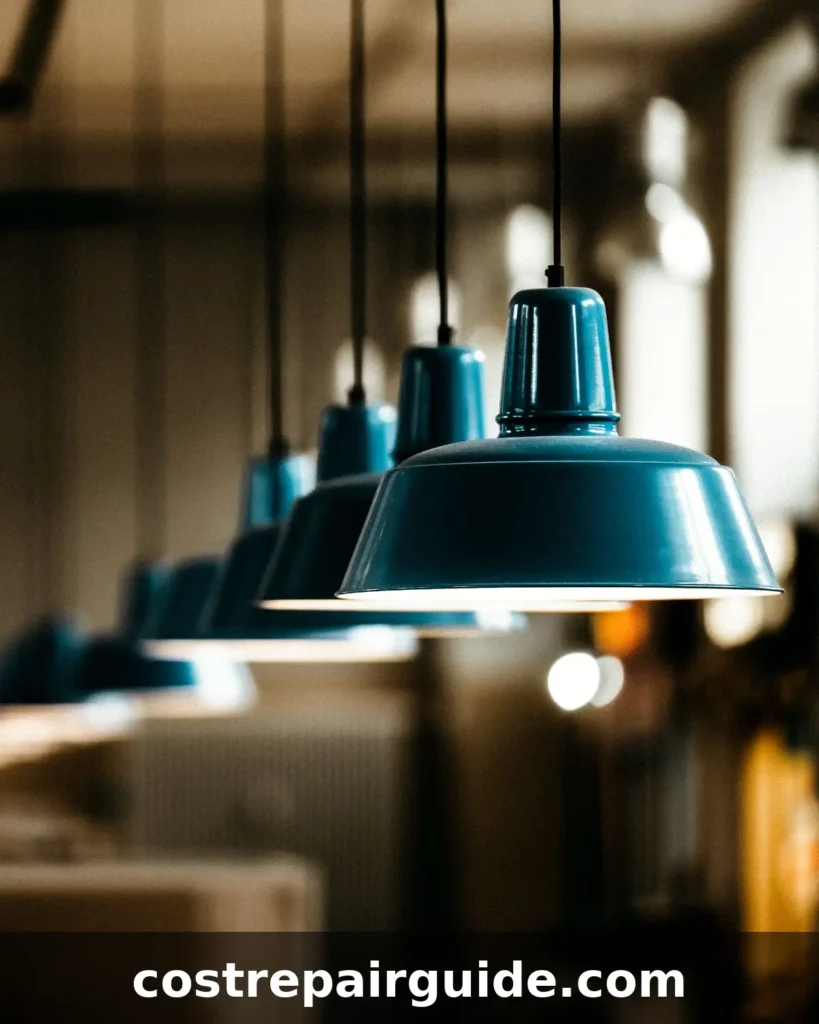
Pendants cost less but still need care. Height adjustment, a cluster over an island, and decorative canopies all add time. Each pendant in a group needs its own drop length. Ask whether the quote prices each pendant or the whole cluster.
Weight matters for safety. Ask the electrician to confirm that the box can support your fixture. A loose heavy fixture can fall.
Track, Strip, and Under-Cabinet Lighting
Track and strip lighting behave differently from a single ceiling light. The table above lists the published ranges. A track needs a power feed, a mounting rail, and several heads. The quote depends on how the electrician counts those pieces.
InchCalculator lists track or strip lights at $500 to $700 per fixture, which appears to count full runs. Ask whether a quote prices each head or the entire run.
Under-cabinet strips often need wiring through cabinets or walls, so access matters. Hardwired strips may cost more than plug-in versions, but they look cleaner.
Dimmer Switches and Smart Controls
A dimmer adds control and comfort. HomeAdvisor lists dimmer switch materials at $6 to $40. Labor adds to that, so the installed price is higher.
Most electricians charge their hourly rate or a minimum visit fee for the swap. Bundle it with a fixture job to share one trip.
Match the dimmer to the bulbs. Many dimmers work best with specific LED types, and a mismatch can cause flicker or buzzing. Ask your electrician to confirm compatibility before you buy.
Cost Examples: Three Common Jobs
Real projects combine several prices. The table stacks the low ends together and the high ends together. This is an illustration from the ranges above, not a quote.
| Job | What It Includes | Estimated Range |
|---|---|---|
| Replace three ceiling lights | Three installs at HomeAdvisor’s ceiling light range | $210 to $750 |
| Replace one chandelier | HomeAdvisor’s chandelier range | $220 to $3,400 |
| Add a wall light in a new spot | Install plus ten feet of new wire | $170 to $350 |
The third row adds $70 to $100 for ten feet of wire at the per-foot rate above. A bid below the low end may skip the box, the wiring, or the permit.
Your light fixture installation cost will land inside one of these bands. Where it lands depends on fixture weight, wiring, and ceiling access.
Ceiling Height, Access, and Fixture Weight
Access shapes the light fixture installation cost more than most buyers expect. A fixture over a staircase or a vaulted ceiling needs a tall ladder or scaffold. The electrician may bring a second person, and the visit takes longer.
Weight comes next. Many standard ceiling boxes are rated only for lighter fixtures. A heavy piece may need a stronger box and a brace between joists. Check the fixture weight on the product page and share it before the visit.
Finished ceilings add one more step. If the electrician must cut a hole for a new box, someone has to patch and paint it. Ask who handles that work.

Smart Fixtures and Compatibility
Smart bulbs and smart switches add convenience and a few questions. Some smart switches need a neutral wire, and older homes often lack one at the switch box. An electrician can check this before you buy.
Dimmer compatibility works the same way. Match the control to the bulb type and the fixture’s rated load. Test each smart fixture before the electrician leaves.
When a Fixture Swap Reveals a Bigger Problem
Sometimes the old fixture hides trouble. Brittle or cloth-covered insulation, a warm ceiling box, or scorch marks need attention. Inspect the circuit before a new light goes up. A swap that turns into rewiring changes the budget fast.
Older homes may have knob and tube wiring. See knob and tube wiring replacement cost for that case. Lights that dim when large appliances start can point to an overloaded circuit or panel. See electrical panel replacement cost for that case.
Marketplace Helpers or Licensed Electricians
Booking through a marketplace works differently from hiring a licensed firm. TaskRabbit’s guide mentions tips of 10% to 20%. Marketplace helpers suit simple swaps. Licensed electricians suit new wiring and anything behind the wall.
Confirm the license and insurance before any work that touches the circuit. Rules differ by state, so check yours.
Outdoor and Wet-Location Fixtures
Outdoor fixtures face weather, so they need weather-rated parts and sealed boxes. TaskRabbit lists outdoor lighting at $100 to $500 per fixture. Costs rise if the electrician must run wire through exterior walls or soffits.
Moisture can cause tripping and shorts. Outdoor circuits usually need ground fault protection. See GFCI outlet installation cost for how that protection works and what it costs.
Soffits and exterior walls often hide old wiring. Have the electrician check the circuit before you add fixtures to it. Surges may shorten the life of LED drivers and dimmers. Some owners price whole house surge protector cost alongside a large lighting project.
Energy Savings From LED Fixtures
LED fixtures can lower your electric bill. The U.S. Department of Energy says residential LEDs use at least 75% less energy than incandescent lighting. They also last far longer, which means fewer bulb changes on tall ceilings.
Choose integrated LED fixtures or high-quality LED bulbs. The savings depend on how many hours you run the lights. A fixture in a hallway used all day saves more than one in a closet.

Light Fixture Installation Near Me: Hiring a Licensed Pro
Start with a licensed electrician. Some handyman services also install fixtures, but rules vary by state. Wiring work often requires a license.
Ask these questions before you book:
- Does the quote include removal of the old fixture?
- Is the junction box included, and is it rated for my fixture’s weight?
- Is the service call fee included?
- Who handles the permit, if one is needed?
- Do you test every fixture and switch before leaving?
Permits are rarely needed for a like-for-like swap. HomeAdvisor lists permits at $30 to $50. New wiring more often triggers one.
Can You Install a Fixture Yourself?
Many homeowners replace simple ceiling lights. The task is manageable when the wiring is in good shape and the fixture is light. The risks rise with weight, height, and old wiring.
If you try it, follow these steps:
- Turn off the breaker, not just the wall switch.
- Confirm with a tester that power is off.
- Support the fixture while you connect the wires.
- Use the mounting hardware that comes with the fixture.
- Test the light and switch before you close up.
The stakes are real. The U.S. Fire Administration counted 23,700 residential building fires from electrical malfunctions in 2023. Skip the project if you see brittle insulation, aluminum wire, or scorch marks. See aluminum wiring repair cost .
Emergency Lighting Problems
Some fixture problems cannot wait. A fixture that smells hot, buzzes, or flickers with scorch marks needs quick attention. Turn off the switch and the breaker, and call an electrician.
After-hours calls cost more. Angi says emergency work can run about double the standard rate. Our emergency electrician cost guide explains when a premium call is worth it.
A flickering light is not always the fixture. Loose connections, overloaded circuits, or a failing breaker can cause it. See circuit breaker replacement cost .
What to Compare Between Two Quotes
Two bids can look far apart because they cover different work. To compare light fixture installation cost quotes fairly, line up these items first.
| Item | Ask This | Why It Matters |
|---|---|---|
| Fixture removal | Is hauling away the old light included? | Removal can add cost |
| Junction box | Is the box new or existing, and what is its weight rating? | A weak box is a safety issue |
| Wiring | How many feet of new wire are priced? | Wire is billed per foot |
| Ceiling repair | Who patches and paints? | Patching often sits outside the base price |
| Permit | Who pulls it, and who pays? | Fees vary by city |
How to Save Money on Fixture Installation
Small steps keep the total down. Use these before you book.
- Replace fixtures in the same location to avoid new wiring.
- Buy fixtures that match the weight your box can hold.
- Bundle several fixtures into one visit.
- Pair the work with a fan or outlet job.
- Clear access and cover furniture before the electrician arrives.
- Collect two or three written quotes.
Bundling is the largest saving. One service call can cover fixtures, fans, and outlets. See ceiling fan installation cost and outlet replacement cost .
If your home has many outdated fixtures and switches, a safety check may help. See electrical inspection cost .
Frequently Asked Questions
A Note on How to Read These Numbers
Lighting prices vary widely because fixtures vary widely. HomeAdvisor’s average of $589 blends cheap ceiling lights with high-end chandeliers. Angi lists $155 to $955 in its text, while a table on the same page runs up to $6,000. We used the narrower text range.
InchCalculator’s page is dated 2023 even though its title says 2026, so we treated it as an older benchmark. We found no reliable published prices by state. This site does not refer contractors, so we have no reason to nudge numbers up or down. Use these ranges to test a bid, and then get a local written quote.
Final Thoughts
For most homes, the light fixture installation cost lands between $70 and $300 per fixture. Chandeliers and new-location wiring can push the total much higher. The fixture itself is a small piece of the total. Labor, boxes, wiring, and removal often decide the final number. A bid far below these ranges usually leaves something out, so ask what is excluded.
The key takeaway is to keep the job simple when you can. Replace fixtures in the same spot, match weight to the box, and bundle several jobs into one visit. Those three habits cut cost without cutting safety.
Your next step is to list every fixture you plan to change. Note its type, its height, and whether it replaces an existing light or goes in a new spot. Share that list when you request quotes so each electrician prices the same job.
Which fixture are you most excited to install, and does it replace one that already hangs there?
Related Electrical Cost Guides
Keep planning your project with these related electrical cost guides from our library.