Heat Pump Repair Cost: 2026 Price Guide
The first cold night of the year arrives, and you switch the heat pump from cooling to heating. The house stays chilly. Warm air never comes, or it blows lukewarm and then stops. Outside, the unit is coated in frost, and a thin cloud of vapor drifts from the top.
Now the question is whether this is normal winter behavior or a failing part. That matters, because the heat pump repair cost can range from the price of a dinner out to the price of a used car. The spread comes from the part, the season, and the age of the system.
This guide explains the heat pump repair cost in 2026 with named sources and dates. You will see prices by part, labor and call-out fees, and what winter frost and steam usually mean. You will also see where sources disagree, since two key prices conflict across pages.
Treat each range as a starting point. A written local quote is the number that counts.
Quick Answer: A typical heat pump repair cost runs about $150 to $660, with averages near $400 to $410 per HomeAdvisor (June 2026) and Fixr (January 2026). Big parts can cost $1,000 to $4,000. Labor adds about $75 to $150 per hour after the call-out fee.
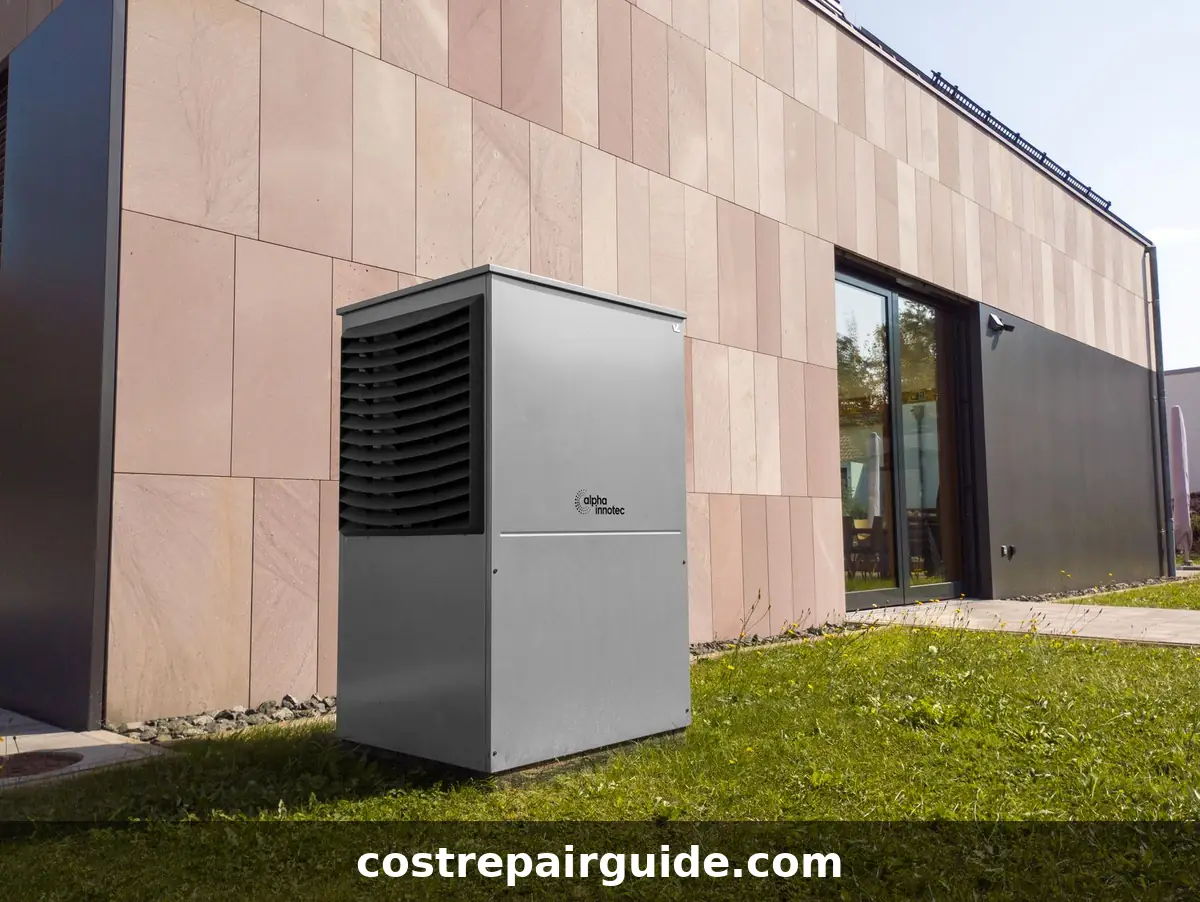
How Much Does Heat Pump Repair Cost?
Most heat pump repairs cost between $150 and $660. HomeAdvisor’s June 2026 page reports a $410 average, with a typical range of $161 to $661. Fixr’s January 2026 page reports a $400 average, with most repairs between $150 and $650.
Extremes run well beyond those figures. HomeAdvisor lists jobs from $69 to $2,500. PickHVAC says homeowners commonly pay between $150 and $3,500 for typical fixes. The spread reflects different assumptions about which parts are included.
| Source | Date | Typical Range |
|---|---|---|
| HomeAdvisor | Jun 2026 | $161 to $661 (average $410) |
| Fixr | Jan 2026 | $150 to $650 (average $400) |
| PickHVAC | May 2026 | $150 to $3,500 for typical fixes |
| HomeServe, citing HomeGuide | Mar 2026 | $150 to $650 for minor repairs |
| HVAC.com | Nov 2024 | Parts listed from $50 to $2,500 |
Our overall HVAC repair cost guide compares heat pumps with furnaces and air conditioners.
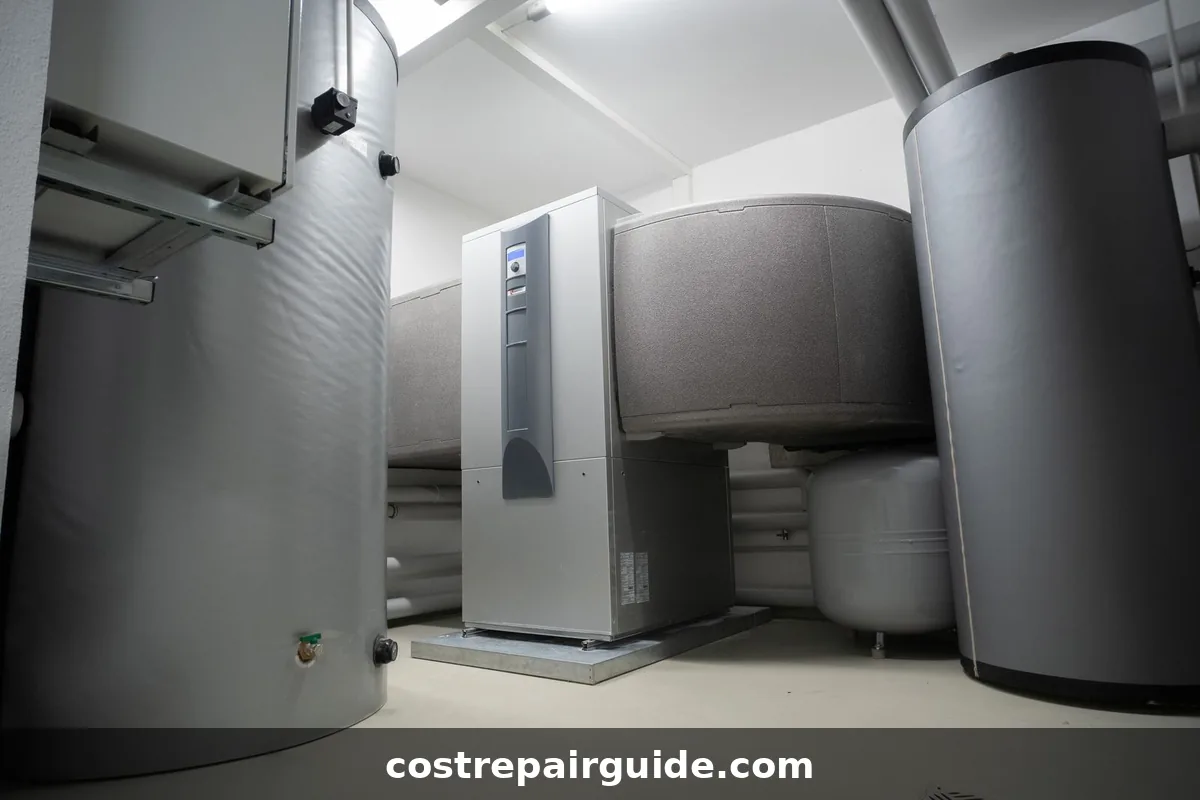
Heat Pump Repair Cost by Part
The failed part explains most of the price. Electrical parts and thermostats cost the least. The reversing valve, compressor, and coils cost the most. The table below sets four sources side by side. Some include labor and others list parts only, so compare with care.
| Part | HomeAdvisor | Fixr | PickHVAC | HVAC.com |
|---|---|---|---|---|
| Capacitor | $150 to $250 | $100 to $400 | $100 to $300 | $120 to $250 |
| Thermostat | $100 to $300 | $85 to $300 | Not listed | $50 to $200 |
| Refrigerant recharge | $100 to $350 | $100 to $600 | $75 to $600 | $200 to $500 |
| Fan motor | $250 to $650 | $300 to $1,000 | $200 to $1,000 | $150 to $400 |
| Defrost control board | $200 to $650 | $150 to $700 | Not listed | $200 to $500 |
| Reversing valve | Not priced | $350 to $700 | $350 to $1,200 | $400 to $700 |
| Compressor | $800 to $3,500 | $800 to $2,500 | $1,200 to $4,000 | $1,000 to $2,500 |
Fixr lists its board row as a general circuit board, and its fan row as a blower motor. HomeAdvisor lists a condenser fan motor. HVAC.com prices its blower motor as a repair.
Where the Sources Disagree
The sources agree on the order of cost but split on specific parts. The reversing valve shows the largest gap. Fixr, PickHVAC’s parts guide, and HVAC.com put it between $350 and $1,200. PickHVAC’s dedicated guide says most homeowners pay $1,500 to $3,500, with simple jobs near $900.
That gap likely reflects labor. PickHVAC’s dedicated page lists four to ten labor hours for the valve. The other pages may price only part of that. Use the higher figure when the system is hard to reach. Read every figure as a range and not a promise.
Replacement prices also conflict. Fixr cites an $8,350 average for a new heat pump, while HomeAdvisor lists $4,200 to $7,900. Check local quotes before you use either number in a repair-or-replace test.
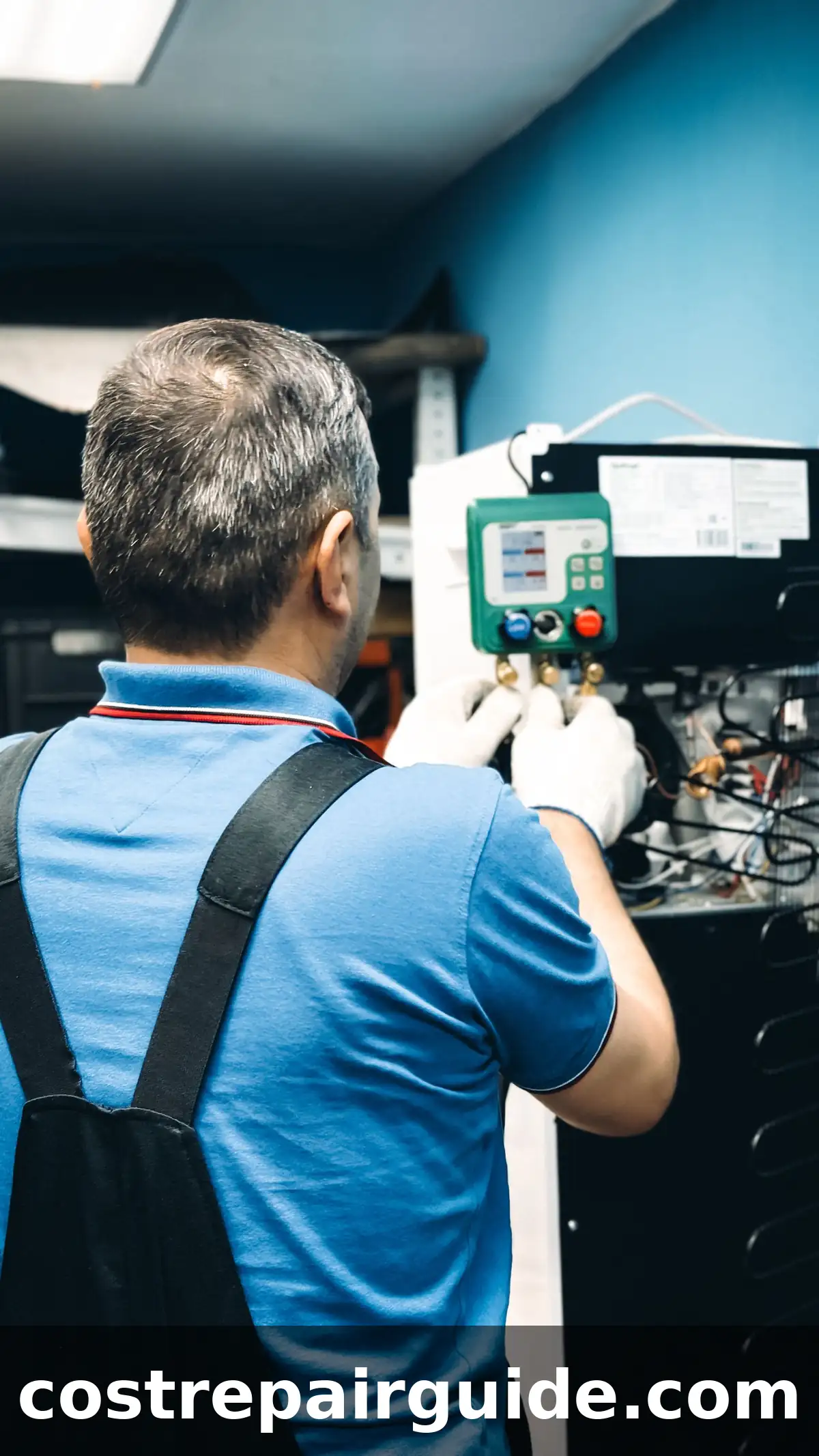
The Reversing Valve and Why It Costs More
The reversing valve switches the system between heating and cooling. Only heat pumps have one, and it is hard to reach. Technicians typically recover the refrigerant before swapping the valve, then recharge afterward.
PickHVAC names a system stuck in one mode as a classic symptom. Others include warm air when cool air is expected and a clicking solenoid with no valve movement. It expects four to eight hours on an accessible split and six to twelve on difficult installs. Confirm which labor hours your quote includes.
What a Heat Pump Diagnostic Includes
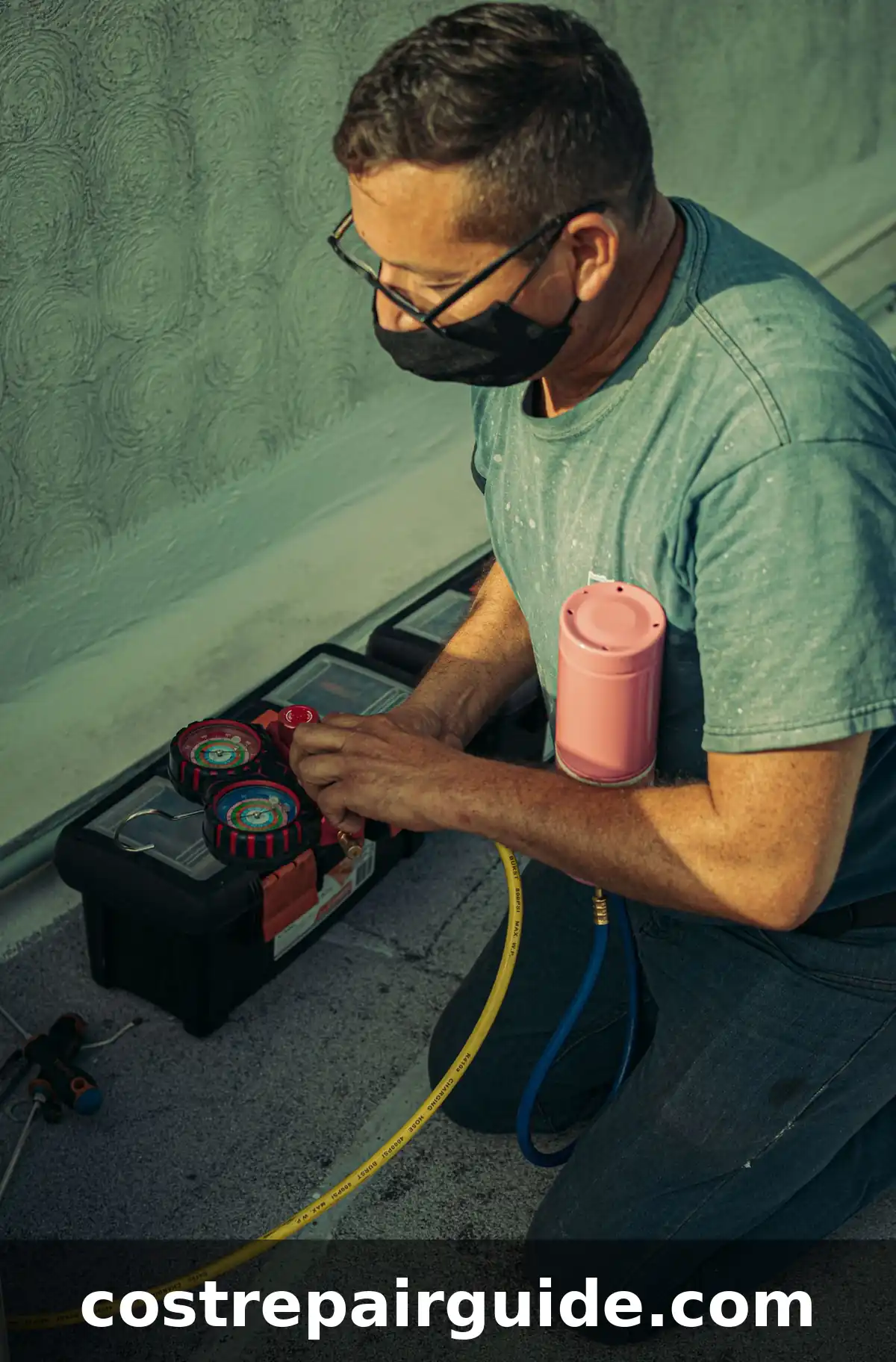
A diagnostic visit usually starts with the thermostat and the outdoor unit. The technician typically checks power, filters, and airflow, then looks at the coil and the defrost behavior. For refrigerant faults, they may measure pressures and temperatures.
The Department of Energy says a technician should verify the refrigerant charge and check for leaks during yearly service. Ask for readings in writing, plus a plain explanation of which part failed. That evidence helps you compare the quote with a second company. Coil problems have their own pages, including our evaporator coil replacement cost guide and condenser coil replacement cost guide .
Compressor and Refrigerant Problems
The compressor is the heart of the system and the costliest single part. HomeAdvisor lists replacement at $800 to $3,500. PickHVAC lists $1,200 to $4,000. PickHVAC says a rebuilt compressor can cost $400 to $1,200, and warns that rebuilt parts need a warranty check.
Low refrigerant means a leak, because the system is sealed. EPA advises asking technicians to find and fix leaks instead of topping off a leaking system. Older R-22 systems cost far more to charge. PickHVAC says a recharge can leap from about $200 into the $800 to $2,000 range. See our AC compressor replacement cost guide and refrigerant leak repair cost guide .
Defrost Problems and Winter Behavior
Some winter behavior is normal. When frost builds on the outdoor coil, the system briefly reverses to melt it. PickHVAC says visible vapor during that thaw is expected in humid cold, and short, regular defrost cycles are normal.
Other signs need service. PickHVAC says frequent long defrosts can signal airflow or sensor faults. Ice that encases the outdoor unit is not normal. Shut the unit off, clear any obstructions, and ring a technician. HomeAdvisor lists a unit that will not defrost at $90 to $650, usually from a bad defrost timer or reversing valve.
Backup Heat and Your Energy Bill
Many heat pumps use electric strip heat as a backup. The Department of Energy says strip heaters are usually more expensive to run. It advises avoiding thermostat setbacks that trigger them. PickHVAC agrees that large setbacks can trigger auxiliary heat.
PickHVAC’s sample calculation uses $0.15 per kilowatt-hour. It puts electric resistance heat at $44 per million Btu and a heat pump near $17.60. Those figures rest on assumptions about efficiency and rates. Your bills may differ. A sudden jump in winter bills can hint at a failed part forcing backup heat.
Electrical and Airflow Parts
Capacitors, fan motors, control boards, and thermostats cause many service calls. A capacitor helps the fan and compressor start. A fan motor moves air across the outdoor coil. A control board coordinates defrost and staging.
These parts sit in the middle of the price scale. HomeAdvisor lists a defrost control board at $200 to $650 and a condenser fan motor at $250 to $650. Related pages cover each part. See our AC capacitor replacement cost guide and AC fan motor replacement cost guide . Our thermostat replacement cost guide covers the control.
Parts Warranty and Labor Coverage
A warranty can change the bill sharply. Many heat pumps carry a manufacturer warranty on major parts, though terms depend on the brand and on registration. Labor coverage varies, and owners often pay for it.
Find the model and serial number on the outdoor unit before you call. Ask the technician to confirm what the maker will cover and who pays for labor. A covered compressor can turn a very large heat pump repair cost into a labor charge.
Labor Rates and Call-Out Fees
Labor and the first visit form the base of every bill. Fixr lists a flat call-out fee of $75 to $250, which often serves as the diagnostic charge. If the job runs past an hour, it adds $75 to $150 per hour.
PickHVAC lists $75 to $125 per hour. It prices overtime or weekend work at 1.25 to 1.5 times the standard rate. Housecall Pro lists $75 to $150 and emergency rates of $140 to $250. Our HVAC service call cost guide explains how to ask for a fee credit.
Emergency and After-Hours Heat Pump Repair
Cold snaps fill repair schedules, and night or weekend calls cost more. The rates above show the pattern. Ask any company how it prices evenings, weekends, and holidays before you book.
A no-heat call is urgent when temperatures are dangerous, especially for infants, older adults, and anyone with a health condition. Many homes can wait one day with space heaters used safely. Our emergency HVAC repair cost guide explains the premium.
Repair or Replace a Heat Pump
Several tests guide the decision. Fixr says repair is usually better under ten years for minor problems. It also gives the age-times-quote test, with $5,000 as the line, and the 50 percent rule. HVAC.com says to consider replacement when a repair exceeds half the price of a new unit on a system ten to fifteen years old.
PickHVAC’s valve guide adds age bands. Under eight years, repair usually makes sense. Between eight and twelve, weigh the costs. Over twelve, replacement often wins. It adds that R-22 units usually fare better when replaced. HomeAdvisor says the average heat pump lasts about 14 years, and newer models can last 20 or more.
Maintenance That Prevents Repairs
Routine care lowers the odds of a breakdown. The Department of Energy advises a professional service visit at least once a year. It also advises keeping the outdoor coil clean and the filters fresh.
Between visits, watch the outdoor unit during cold spells. Keep snow, leaves, and debris away from the coil. A short walk-around costs nothing and can catch a frozen unit early. Our AC repair cost guide covers the cooling side of the same equipment.
Signs a Quote May Be Too High
A quote deserves a second look in several cases. It may name no specific part or show labor as one lump sum. A company may also ask for full payment before the diagnosis is complete.
Compare the quote with the table above. Ask the technician to show you the failed part and the readings. If the number sits far above published ranges, call another company before you agree.
Six Stacked Cost Examples
Stacked ranges show how a bill builds from a call-out fee plus a part. The figures combine sourced ranges with our own addition. Many firms credit the fee, so totals may run lower.
| Situation | What It Combines | Estimated Range |
|---|---|---|
| Weak start, bad capacitor | HomeAdvisor capacitor $150 to $250 | $150 to $250 |
| Thermostat fault | HomeAdvisor thermostat $100 to $300 | $100 to $300 |
| Fan motor failure | Fixr call-out $75 to $250 plus HomeAdvisor motor $250 to $650 | $325 to $900 |
| Will not defrost | HomeAdvisor defrost repair $90 to $650 | $90 to $650 |
| Stuck in one mode | PickHVAC valve guide $1,500 to $3,500 | $1,500 to $3,500 |
| Compressor failure | Fixr call-out $75 to $250 plus Fixr compressor $800 to $2,500 | $875 to $2,750 |
The last two rows approach the low end of a new system on an older unit.
Warning Signs Worth a Service Call
Early symptoms usually cost less to fix than late ones. Call a technician when you notice any of these.
- Warm air in cooling mode or cool air in heating mode
- Ice that fully covers the outdoor unit
- Long, frequent defrost cycles
- Hissing or clicking from the outdoor unit
- Short cycling or a unit that will not start
- A sudden rise in winter energy bills
None of these signs proves a specific fault alone. A short visit can separate a minor fix from a major one.
Checks to Make Before You Call
A few checks cost nothing. The Department of Energy advises cleaning or replacing filters about every three months and clearing plants and debris around the outdoor unit. Turn off power to the fan first.
Confirm the thermostat is in the right mode and look at the breaker. If it trips again, stop and call a professional. Our circuit breaker replacement cost guide explains why. Never open sealed panels or handle refrigerant yourself.
Heat Pump Repair Near Me: Choosing a Contractor
Choose a licensed and insured company with recent reviews. Licensing rules differ by state, so check yours. The Department of Energy suggests technicians certified through an Energy Skilled-recognized program. EPA says refrigerant work requires Section 608 certification.
- Is the call-out fee credited to the repair?
- Does the quote list parts, labor hours, and refrigerant?
- What warranty covers the part and the work?
- Will you share readings or photos of the fault?
Be wary of pressure to replace the system after a short look. PickHVAC suggests asking for commissioning data such as pressures and temperatures.
How to Read an Estimate
A fair heat pump repair cost appears as itemized lines. You should see the call-out fee, each part, the labor hours, and any refrigerant by pound. Check whether the price is flat or hourly. Housecall Pro says flat-rate pricing suits known repairs, while hourly pricing suits unclear diagnostics.
Compare bids on the same basis. A low headline number can hide a fee that shows up on the final invoice. Keep the dated invoice, because it records the work and the warranty.
Ways to Save on Heat Pump Repairs
Small habits trim the bill. Use these steps.
- Change filters on a regular schedule
- Book yearly service, since the Department of Energy recommends it
- Avoid large thermostat setbacks that trigger backup heat
- Ask about rebuilt parts and their warranty
- Compare two itemized quotes for any large repair
Our HVAC maintenance cost guide lists typical visit prices. Our mini split repair cost guide covers ductless systems.
Planning Your Budget
Plan your heat pump repair cost in layers. Start with the call-out fee, add the likely part, and then add the labor hours. Leave a cushion for a second fault that the technician finds during the visit.
If the system is old, request a replacement quote as well. A repair that works today may be followed by another next winter. Our furnace repair cost guide helps if a dual-fuel system uses both. Write both totals down and decide with the numbers in view.
Frequently Asked Questions
A Note on How to Read These Numbers
Heat pump prices rest on mixed evidence. HomeAdvisor, Fixr, and PickHVAC publish 2025 and 2026 figures with only partly visible methods, and some list parts while others include labor. The reversing valve and full replacement prices conflict between pages, and we flagged both. HVAC.com dates from 2024 and runs a service platform.
HomeServe sells repair plans, and Housecall Pro sells software to contractors. We read each page through an automated summarizer, so spot-check key figures against the originals. The stacked examples are our own addition. This site takes no referral fees, and a written local quote is your real budget.
Final Thoughts
Heat pump repair cost for most homeowners falls between about $150 and $660. Electrical parts and thermostats sit at the bottom of the scale. Fans and control boards come next. A reversing valve or compressor can reach the thousands. Labor and a call-out fee come on top of any part.
The key takeaway is to separate normal winter behavior from real faults. Brief defrost cycles and vapor are routine. Ice that covers the whole unit, long defrosts, and a mode that will not switch all deserve a technician. Early action usually costs less than waiting.
Your next step is to note the age of the system and the symptoms, then call two licensed firms. Ask whether the call-out fee is credited and request itemized quotes. Run any large quote through the age bands and the half-price rule before you commit, and compare the total with a new unit.
What does your outdoor unit look like this morning?
Related HVAC Cost Guides
Keep planning your project with these related HVAC cost guides from our library.