Furnace Repair Cost: 2026 Price Guide
The house was warm when you went to bed. By morning the thermostat reads sixty-one, and the vents are silent. You can hear a click from the furnace, then nothing. The bedroom is cold and the kids need breakfast. You have no idea whether this is a small fix or a large bill.
That worry is common, and the furnace repair cost you find online can look confusing. One page lists a few hundred dollars. Another lists thousands. Both can be right, because a dirty sensor and a cracked heat exchanger sit at opposite ends of the scale.
This guide explains the furnace repair cost in 2026 with named sources and dates. You will see prices by part, labor and trip fees, and the point where repair stops making sense. You will also see a short safety section, because some furnace faults involve carbon monoxide.
Treat every range as a starting point. A written local quote is the number that counts.
Quick Answer: A typical furnace repair cost runs about $130 to $650, per HomeAdvisor (June 2026) and Fixr (August 2025). Small parts such as sensors and ignitors sit near the bottom. A heat exchanger can pass $1,500. Labor adds roughly $75 to $150 per hour.
How Much Does Furnace Repair Cost?
Most furnace repairs cost between $130 and $650. HomeAdvisor’s June 2026 page reports a $318 average, with most jobs between $133 and $505. Fixr’s August 2025 page reports a $485 average, with most jobs between $349 and $650.
The gap between those averages is real. Fixr states that its part prices fold in the service call, which may lift its numbers. Both pages also report extremes. HomeAdvisor shows a range from $64 to $1,475, and Fixr shows $66 to $2,673.
| Source | Date | Typical Range |
|---|---|---|
| HomeAdvisor | Jun 2026 | $133 to $505 (average $318) |
| Fixr | Aug 2025 | $349 to $650 (average $485) |
| PickHVAC | Sep 2025 | $150 to $600 |
| Trane, a furnace maker | Feb 2026 | $150 to $3,000 |
| HomeServe, citing This Old House | Mar 2026 | $140 to $400 |
| InchCalculator, gas furnaces | Sep 2023 | $300 to $1,200 (average $450) |
Our overall HVAC repair cost guide compares furnaces with air conditioners and heat pumps.
Furnace Repair Cost by Part
The failed part explains most of the price. Ignition parts and small switches cost the least. Heat exchangers and inducer motors cost the most. The table below sets four recent sources side by side. Remember that Fixr’s figures already include the trip.
| Part | HomeAdvisor | Fixr | PickHVAC | Trane |
|---|---|---|---|---|
| Ignitor | $150 to $500 | $96 to $178 | $100 to $350 | $100 to $250 |
| Flame sensor | $150 to $250 | $68 to $127 | $80 to $250 | $80 to $240 |
| Limit switch | $150 to $300 | $66 to $122 | $100 to $250 | $100 to $375 |
| Gas valve | $200 to $600 | Not listed | $150 to $750 | $200 to $800 |
| Control board | $200 to $600 | $390 to $725 | $200 to $600 | $300 to $650 |
| Blower motor | $150 to $2,000 | $562 to $1,045 | $400 to $1,200 | $300 to $900 |
| Inducer motor | $200 to $1,500 | Not listed | $300 to $900 | $400 to $1,100 |
| Heat exchanger | $100 to $1,500 | $1,346 to $2,673 | $1,000 to $2,500 | $1,000 to $3,000 |
HomeAdvisor lists its switch row as relay or high-limit switch. PickHVAC splits blower motors into PSC and ECM types, so its row spans both. For detail on that part, see our HVAC blower motor replacement cost guide .
Where the Sources Disagree
The sources agree on the order of cost but split on specifics. The heat exchanger shows the largest gap. HomeAdvisor lists $100 to $1,500, while Fixr, PickHVAC, and Trane all start near $1,000 or higher. HomeAdvisor’s low end probably reflects minor work, so use the higher figures for a full replacement.
Blower motors also vary. HomeAdvisor stretches from $150 to $2,000, and the other three pages sit in the hundreds. Ignitors differ by a factor of three between Fixr and HomeAdvisor. When ranges conflict, the overlap is a safer guide than either extreme.
What a Furnace Diagnostic Visit Includes
A diagnostic visit usually starts at the thermostat and moves to the furnace cabinet. The technician typically checks power, watches the startup sequence, and reads any error code on the control board. They inspect the filter, the burners, the vent, and the blower.
PickHVAC says technicians may also use a combustion analyzer to measure oxygen, carbon monoxide, and stack temperature. Ask for readings or photos in writing. Clear evidence helps you compare the quote with a second company and with the ranges in this guide.
Ignition Problems: Ignitor and Flame Sensor
Ignition faults are among the most common reasons a furnace clicks and then quits. The ignitor lights the burners. The flame sensor confirms that a flame exists and keeps the gas valve open. A dirty or worn part can shut the furnace down within seconds.
These repairs sit at the low end of the scale. PickHVAC lists flame sensor cleaning or replacement at $80 to $250 and ignitor replacement at $100 to $350. Both jobs usually finish within a single visit. A technician can often clean a sensor and avoid a part charge.
Airflow Problems: Blower, Capacitor, and Inducer
Airflow parts move heated air through the home and exhaust gases outdoors. The blower motor pushes air through the ducts. The inducer motor draws combustion gases through the vent. A capacitor helps these motors start.
Blower and inducer motors cost far more than a capacitor. PickHVAC lists a blower capacitor at $150 to $300 and a draft inducer motor at $300 to $900. Fixr’s blower motor range tops $1,000. Our AC capacitor replacement cost guide and AC fan motor replacement cost guide explain similar parts on cooling systems.
Control and Safety Parts
Modern furnaces use sensors and switches to protect themselves. A limit switch shuts the burners off if the unit overheats. A pressure switch confirms the vent is moving air. The control board coordinates the whole sequence.
These parts cost less than motors but more than sensors. PickHVAC lists a pressure switch at $150 to $350 and a limit switch at $100 to $250. A repeated limit trip usually points to an airflow problem and not a bad switch. Ask the technician to find the cause before you pay to replace the part.
The Heat Exchanger: The Costly One
The heat exchanger is the metal chamber that separates burning gas from the air you breathe. It is the single costliest furnace component. PickHVAC puts heat exchanger replacement between $1,500 and $3,500 or more. It says the job can take six to twelve labor hours.
PickHVAC advises against patching a cracked exchanger, since patches can fail and void safety certification. Check your warranty paperwork before you accept any quote for this part.
Carbon Monoxide Safety
A cracked exchanger can allow combustion gases, including carbon monoxide, into the living space. If you suspect a crack, PickHVAC says to turn the furnace off at the thermostat and power switch. Then call a licensed technician. It also advises working carbon monoxide alarms on every level.
A 2002 CPSC staff memo reviewed 28 gas furnace carbon monoxide investigations from 1987 to 2001. Heat exchanger problems appeared in 14 of them. Cracks appeared in 6. The sample is small and old, but it shows that the risk is real. In 12 of the 18 cases that mention an alarm, the alarm sounded.
Parts Warranty and Labor Coverage
Parts warranties can change the bill sharply. Many furnaces carry a manufacturer warranty on major components, though terms differ by brand and by registration status. PickHVAC says the heat exchanger often has a long parts warranty, yet labor typically falls to the owner.
Find the model and serial number on the furnace data plate before you call. Ask the technician to confirm what the maker will cover and who pays for labor. A covered part can turn a large furnace repair cost into a labor-only charge.
Cost by Furnace Type
Fuel type changes the price pattern. InchCalculator’s 2023 page lists electric furnace repairs at $50 to $300 and gas or propane at $100 to $1,200. It lists oil furnaces at $400 to $1,500. Those figures are older, so use them for relative scale only.
PickHVAC lists an electric heating element at $150 to $400 and an oil nozzle, filter, and tune at $150 to $350. Electric units have no flame, ignitor, or heat exchanger, which removes the costliest repairs. Trane notes that some furnaces share an indoor coil with an air conditioner. Our evaporator coil replacement cost guide explains the coil.
Labor Rates, Trip Fees, and Regional Differences
Labor varies by region and by company. HomeAdvisor lists $50 to $150 per hour, and Fixr lists $87 to $162. Trane lists $75 to $150. PickHVAC adds regional ranges, from $80 to $130 in the South to $100 to $160 in the Mountain and West Coast regions.
A trip fee usually comes first. HomeAdvisor says to expect at least one hour of labor. Trane lists service calls at about $50 to $200. Sears Home Services, quoted by Liberty Home Guard, lists $90 to $150 and waives it when you proceed. Our HVAC service call cost guide covers the fee in detail.
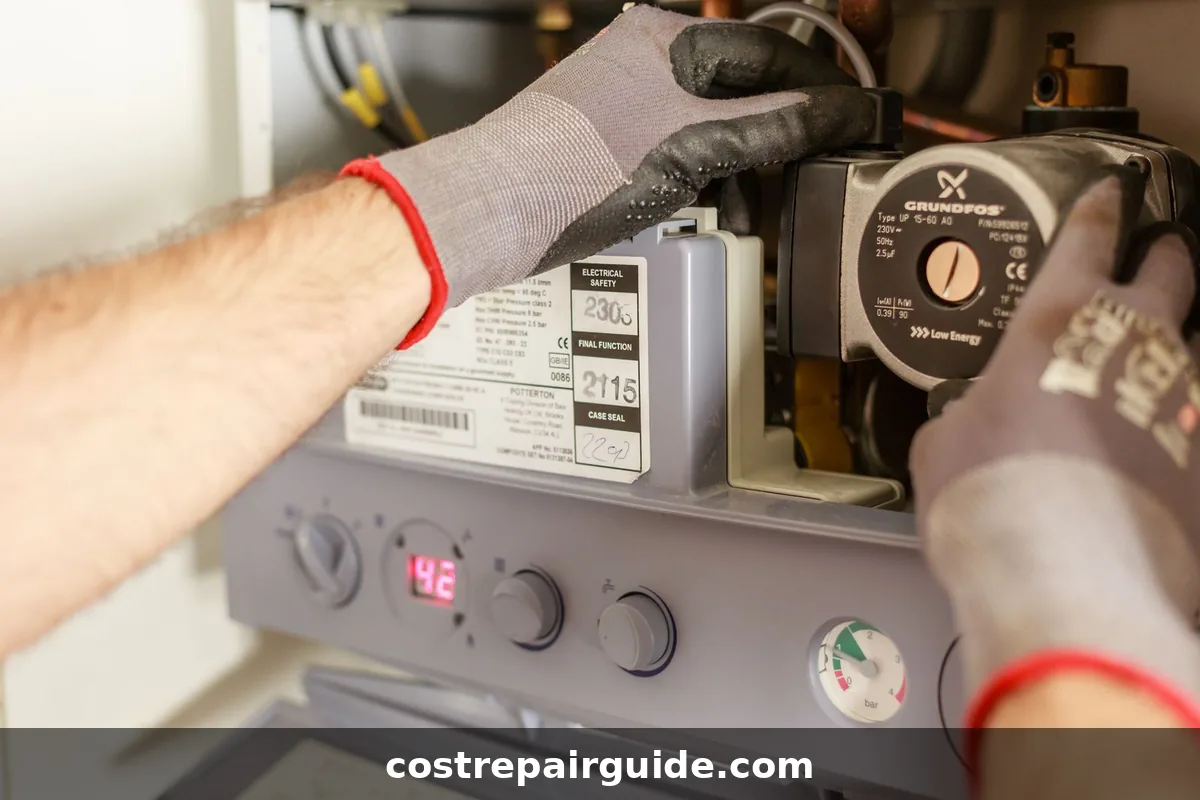
Emergency and After-Hours Furnace Repair
Cold snaps fill repair schedules, and night or weekend calls cost more. PickHVAC says after-hours, holiday, or emergency service may add $100 to $250 or raise hourly rates by half. Housecall Pro lists emergency rates of $140 to $250 per hour. HomeAdvisor mentions surcharges without giving a number.
Treat a no-heat call as urgent when temperatures are dangerous. Infants, older adults, and anyone with a health condition face the most risk. If you smell gas, leave the home and call your gas utility or 911. Our emergency HVAC repair cost guide explains the premium.
Repair or Replace a Furnace
Three tests guide the decision. The first is the 50 percent rule. HomeAdvisor says to start shopping when a quote exceeds half the price of a new furnace. The second multiplies the quote by the furnace’s age. Liberty Home Guard says a result above roughly $4,500 to $5,500 suggests replacement.
The third is age. Trane and Fixr say gas furnaces typically last 15 to 20 years. ENERGY STAR says to consider replacing a unit older than 15 years. HomeAdvisor suggests pricing replacements near 10 years. PickHVAC prices a standard gas furnace installation at $3,000 to $8,000.
A cracked heat exchanger can justify replacement at any age.
Efficiency and Replacement Planning
An old furnace may cost more to run as well as to repair. ENERGY STAR says a qualified furnace is 15 percent more efficient than a conventional one. Frequent repairs combined with rising energy bills can signal lost efficiency.
Trane notes that replacing the furnace and an air conditioner of similar age together can produce a matched system. It also points to federal, state, and utility rebates for some heat pump systems. Rebate rules change, so check current programs before you buy. Our heat pump repair cost guide and AC repair cost guide cover related equipment.
Six Stacked Cost Examples
Stacked ranges show how a bill builds from a service call plus a part. The figures combine sourced ranges with our own addition. Many firms credit the trip fee, so totals may run lower.
| Situation | What It Combines | Estimated Range |
|---|---|---|
| Dirty flame sensor | PickHVAC sensor work $80 to $250 | $80 to $250 |
| Failed ignitor | PickHVAC ignitor $100 to $350 plus trip fee $50 to $200 | $150 to $550 |
| Bad blower capacitor | PickHVAC capacitor $150 to $300 | $150 to $300 |
| Failed blower motor | Trane blower $300 to $900 plus trip fee $50 to $200 | $350 to $1,100 |
| New control board | Trane board $300 to $650 plus trip fee $50 to $200 | $350 to $850 |
| Cracked heat exchanger | PickHVAC exchanger $1,500 to $3,500 | $1,500 to $3,500 |
The last row nears the cost of a new furnace on an older unit. That explains why safety faults often lead to replacement.
Warning Signs of Furnace Trouble
Early symptoms usually cost less to fix than late ones. Call a technician when you notice any of these.
- No heat or weak heat from the vents
- Clicking without ignition, or short cycling
- Yellow or flickering burner flames
- Rattling, banging, or squealing noises
- Soot or scorch marks near the burner
- A burning smell or rising energy bills
Several of these signs also appear with a cracked exchanger, though none proves it alone. Act on any carbon monoxide alarm at once. Leave the home and call emergency services.
Checks to Make Before You Call
A few checks cost nothing. Confirm the thermostat is set to heat with a temperature above the room reading. Replace a clogged filter, since restricted airflow can trip the limit switch. Look at the furnace power switch and the breaker panel.
If a breaker trips again after a reset, stop and call a professional. Our circuit breaker replacement cost guide explains why. Our thermostat replacement cost guide covers a failed control. Never open sealed panels or work on gas parts yourself.
Furnace Repair Near Me: Choosing a Contractor
Choose a licensed and insured company with recent reviews. Licensing rules differ by state, so check yours. Call at least two firms and request itemized written quotes.
- Is the trip fee credited to the repair?
- Does the quote list parts, labor, and any permit charge?
- What warranty covers the part and the labor?
- Will you share photos or readings of the failed part?
PickHVAC says reputable contractors provide photos or video, readings, and written recommendations, and suggests a second opinion when stakes are high. Be wary of pressure to replace the furnace after a short look.
How to Read an Estimate
A fair furnace repair cost appears as itemized lines. You should see the trip fee, each part, the labor hours, and any permit or disposal charge. Check whether the price is flat or hourly. Housecall Pro notes that flat-rate pricing suits known repairs, while hourly pricing suits unclear diagnostics.
Compare bids on the same basis. A low headline number can hide a large fee that shows up on the final invoice. Keep the dated invoice, because it records the work and the warranty.
Ways to Save on Furnace Repairs
Small habits trim the bill. Use these steps.
- Change the filter on a regular schedule
- Book yearly service before the heating season
- Choose a weekday slot when the problem can wait
- Ask about the part warranty before you approve work
- Compare two itemized quotes for any large repair
Our HVAC maintenance cost guide lists typical visit prices. Leaky ducts can also strain a furnace, so see our HVAC duct repair cost guide .
Planning Your Budget
Plan your furnace repair cost in layers. Start with the trip fee, add the likely part, and then add labor hours. Leave a cushion for a second fault that the technician finds during the visit.
If the furnace is old, request a replacement quote as well. A repair that works today may be followed by another next winter. Our electrical repair cost guide can help if the fault traces to wiring. Write both totals down and decide with the numbers in view. A calm comparison beats a rushed choice made in a cold house.
Frequently Asked Questions
A Note on How to Read These Numbers
Furnace prices rest on mixed evidence. HomeAdvisor, Fixr, and PickHVAC publish figures with only partly visible methods, and Fixr includes the service call in its part prices. Trane makes furnaces, Liberty Home Guard and HomeServe sell repair plans, and Housecall Pro sells software to contractors.
InchCalculator dates from 2023, and the CPSC memo dates from 2002 and covers a small sample. We read each page through an automated summarizer, so spot-check key figures against the originals. The stacked examples are our own addition. This site takes no referral fees, and a written local quote is your real budget.
Final Thoughts
Furnace repair cost for most homeowners falls between about $130 and $650. Sensors, ignitors, and small switches sit at the bottom of the scale. Motors and control boards come next, and a heat exchanger can reach the low thousands. Labor and a trip fee come on top of any part.
The key takeaway is to treat safety faults differently from comfort faults. A weak ignitor is an inconvenience. A suspected crack in the heat exchanger is a reason to shut the furnace off and call a technician. Working carbon monoxide alarms are cheap protection.
Your next step is to note the furnace age and the symptoms, then call two licensed firms. Ask whether the trip fee is credited and request an itemized quote. Run any large quote through both replacement tests before you commit, and compare the total with a new unit.
Do you know how old your furnace is today?
Related HVAC Cost Guides
Keep planning your project with these related HVAC cost guides from our library.