
A dripping faucet always sounds like a small job until the plumber hands you the bill. The part costs five dollars. The visit does not. Most homeowners search for a faucet repair cost right after they notice a drip that will not stop, a handle that spins loosely, or water that trickles instead of flows. The actual repair is usually simple. The price depends more on the visit, the brand, and the type of faucet than on the size of the problem itself.
A lot of guides quote one flat number for faucet repair and leave it there. That number hides more than it explains, since a worn washer and a seized cartridge on a ten-year-old designer faucet are not the same job, and they should not cost the same either.
Quick Answer: The average faucet repair cost is $100 to $300, with most simple fixes like a worn washer or O-ring landing around $100 to $150. Cartridge replacements on higher-end faucets can push the total past $300.
Faucet Repair Cost at a Glance
| Repair Type | Typical Cost Range |
|---|---|
| Washer or O-ring replacement | $100 – $150 |
| Cartridge replacement | $150 – $300 |
| Handle replacement | $100 – $200 |
| Aerator cleaning or replacement | $75 – $125 |
| Supply line or shutoff valve fix | $100 – $250 |
| Pull-down kitchen faucet spray hose repair | $125 – $275 |
| Touchless or sensor faucet repair | $200 – $450 |
| High-end or designer faucet repair | $250 – $400+ |
Most plumbers charge a flat service fee that covers the visit plus the first 30 to 60 minutes of work. That fee is why even a five-minute fix rarely comes in under $100. A second part or a longer diagnosis adds to that base rate rather than replacing it.
Faucet Repair Cost by Brand
Brand matters more with faucets than with almost any other plumbing fixture, since every manufacturer uses its own cartridge design, and parts are rarely interchangeable between brands.
| Faucet Brand | Typical Repair Cost |
|---|---|
| Moen | $100 – $250 |
| Delta | $100 – $250 |
| Kohler | $125 – $300 |
| American Standard | $100 – $275 |
| Pfister | $125 – $275 |
| Grohe or Hansgrohe (imported) | $200 – $450 |
| Discontinued or vintage faucets | $250 – $500+ |
Common U.S. brands like Moen and Delta keep replacement cartridges in production for years, which is why plumbers often carry them on the truck and can finish the job in a single visit. Imported European brands and older, discontinued models usually require a special-order part, which adds a second trip and extra labor cost on top of the part itself.
What Affects the Price of a Faucet Repair
Faucet Brand and Age
Standard faucets from Moen, Delta, or Kohler use common parts that most plumbers carry on the truck. Older or imported faucets often need a special-order cartridge, which adds a second trip and extra cost.
Type of Faucet
A single-handle kitchen faucet with one cartridge is usually cheaper to fix than a two-handle bathroom faucet with separate hot and cold valves, since the plumber may need to service two mechanisms instead of one. Pull-down kitchen faucets add a spray hose and diverter that can also fail, and touchless faucets add a battery-powered sensor module that a standard plumber may need extra time to diagnose.
Where the Leak Is Coming From
A drip at the spout usually points to a worn cartridge or washer. A leak under the sink repair, around the supply lines, points to a different repair and often a different part cost.
Access and Location
A faucet in an open kitchen takes less time to reach than one buried behind a pedestal sink repair or a tight bathroom vanity. Tight access adds labor time, which adds to the bill.
Where You Live
Labor rates vary by region. Plumbers in large metro areas on the coasts often charge 15 to 30 percent more per hour than the national average, while rural areas and smaller cities tend to run closer to or below that average. A $150 repair in a midwestern town can easily run $200 to $225 in a high-cost coastal city for the same exact job.
Faucet Problems and Their Fixes
Constant Dripping
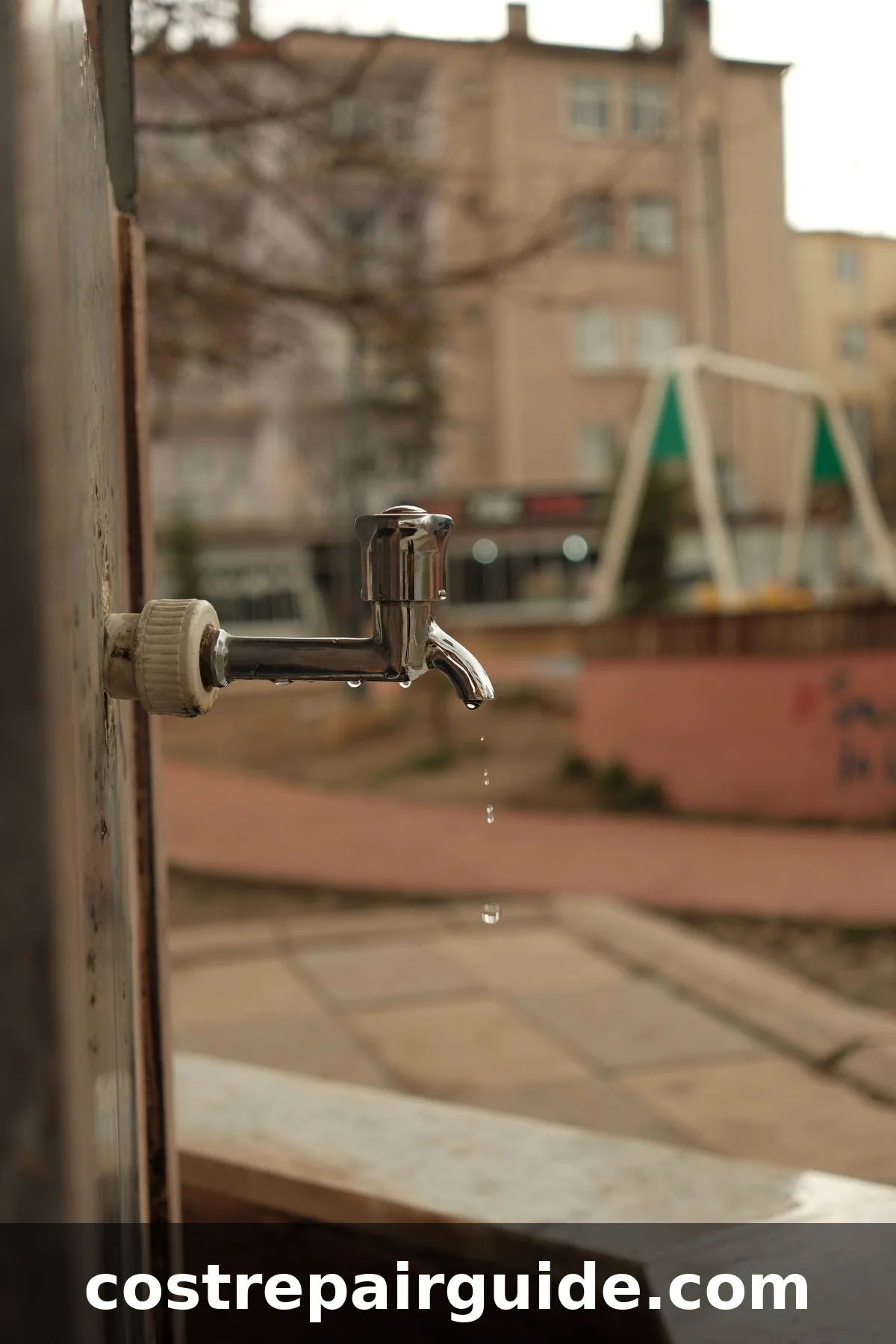
This is almost always a worn washer, O-ring, or cartridge inside the faucet body. It is the single most common faucet repair call, and usually the cheapest to fix.
Low Water Pressure From the Faucet
A clogged aerator is the first thing a plumber checks. If cleaning or replacing the aerator does not fix it, the cartridge or supply line may be restricted.
Loose or Spinning Handle
This usually means a stripped set screw or a worn handle adapter. It is a quick fix and rarely requires replacing the whole faucet.
Faucet Leaking at the Base
Water pooling around the base of the faucet usually means a worn gasket or a loose mounting nut. Left alone, it can damage the countertop or cabinet underneath.
Pull-Down Sprayer Not Retracting or Leaking
On kitchen faucets with a pull-down or pull-out sprayer, the weight or dock mechanism can wear out, and the hose itself can develop a slow leak inside the cabinet that is easy to miss until it stains the wood below.
Touchless Faucet Not Responding
Sensor faucets can fail for reasons that have nothing to do with plumbing, including a dead battery, a dirty sensor eye, or a wiring issue at the solenoid valve. A plumber familiar with the specific brand can usually isolate the cause within the first 20 to 30 minutes.
What Happens During a Faucet Repair Visit
- The plumber tests the faucet to confirm where water is escaping and under what conditions.
- Water to the fixture is shut off at the supply valves under the sink, not at the home’s main valve.
- The faucet handle and body are opened to access the cartridge, washer, or valve seat.
- The worn part is replaced, and the faucet is reassembled and tested under full pressure.
- If a special-order part is needed, the plumber will quote the return trip cost upfront rather than leaving you to guess.
Faucet Repair vs. Faucet Replacement
A repair almost always costs less than a full faucet replacement, which typically runs $200 to $600 installed. Repair makes sense when the faucet body is sound and only one part has failed. Replacement usually makes more financial sense when the faucet is more than 15 years old, when parts are discontinued, or when more than one part fails in the same year. At that point, paying for repeated service calls often costs more than one new faucet.
A useful rule of thumb: if a repair quote comes in at more than half the cost of a comparable new faucet, replacement is usually the better long-term value, since a new faucet also comes with a fresh warranty.
Step-by-Step: Replacing a Washer Yourself
Many homeowners can safely replace a simple rubber washer without calling a plumber, as long as the faucet uses a compression-style design. Here is the general process a DIYer can expect:
- Shut off the water at the supply valves under the sink and open the faucet to release remaining pressure.
- Remove the decorative cap on the handle, then unscrew and lift off the handle itself.
- Unscrew the retaining nut holding the stem in place and pull the stem out.
- Remove the old rubber washer from the base of the stem and replace it with a matching size.
- Reassemble the faucet in reverse order and turn the water back on to test for leaks.
If the faucet uses a cartridge rather than a washer, which is common on most modern single-handle designs, this process is different and more brands require a specific removal tool, which is a good reason to call a plumber instead of guessing.
Regional Cost Differences
| Region | Typical Faucet Repair Cost |
|---|---|
| Northeast (NY, MA, NJ) | $150 – $350 |
| West Coast (CA, WA, OR) | $150 – $350 |
| Midwest (OH, IL, MI) | $100 – $225 |
| South (TX, FL, GA) | $100 – $250 |
| Mountain West (CO, UT, AZ) | $110 – $260 |
These ranges reflect labor rate differences more than part costs, since the washer, cartridge, or handle itself costs roughly the same no matter where you live.
How to Save Money on Faucet Repair
- Ask the plumber for a flat quote before work begins, not just an hourly rate.
- Mention the faucet brand and model when booking, so the plumber can bring the right cartridge on the first visit.
- Bundle a faucet repair with another small plumbing job, since many plumbers reduce the second service fee on the same visit.
- Replace worn aerators yourself. They screw on and off by hand and cost under $10 at most hardware stores.
- Keep the original box or a photo of the faucet model number, which speeds up ordering the correct replacement part.
Signs You Need a Professional, Not a DIY Fix
- The leak continues after you have already replaced the washer or cartridge yourself.
- Water is leaking from the supply lines or shutoff valve, not just the spout.
- The faucet handle is cracked or the body itself is damaged.
- The faucet is a touchless or smart model with electronic components you are not comfortable opening.
- You smell gas or notice water pooling near electrical outlets under the sink, which calls for immediate professional attention.
Common Mistakes That Make Faucet Repair More Expensive
Over-Tightening Parts During a DIY Attempt
Cranking a nut or cartridge too tight to stop a leak often cracks the plastic housing inside the faucet, turning a cheap washer swap into a full cartridge or faucet replacement.
Using the Wrong Replacement Washer Size
Hardware store washer kits include several sizes for a reason. Installing one that does not match the original exactly can cause the same drip to return within weeks.
Ignoring a Small Drip for Months
A faucet that drips once every few seconds can waste thousands of gallons a year. Left alone long enough, it can also damage the cabinet, countertop, or flooring beneath the fixture, turning a $150 repair into a much larger bill.
Skipping the Shutoff Valve Check
Homeowners sometimes assume a stuck shutoff valve under the sink is part of the faucet problem, when it is really a separate, simpler fix. Testing the valve first can save an unnecessary service call.
Frequently Asked Questions
Final Thoughts
A faucet repair cost of $100 to $300 is normal for most homes, and the job is usually finished in a single visit. The real decision point is not the price of the repair itself. It is whether the faucet is old enough, or has failed often enough, that a full replacement saves more money over time. Get a flat quote before work starts, mention your faucet brand when you book, and keep an eye on how often the same faucet needs attention. If you are weighing a repair against a full swap, our plumbing repair costs cost guide breaks down replacement pricing across the whole house.
Sources
- EPA WaterSense – Fix a Leak Week guidance
- Angi – Faucet repair cost data