
Home Repair Cost Guides for HVAC, Plumbing, Roofing, and More

A home repair problem can make a normal day stressful. The AC stops cooling. A drain backs up. A garage door gets stuck. A roof starts leaking after rain. Then comes the hard part.
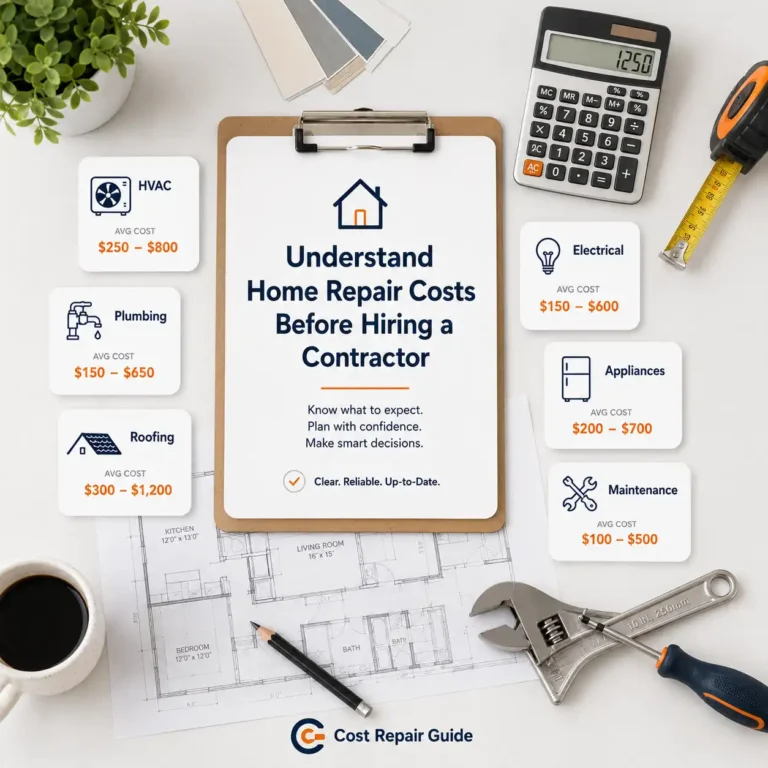
Home repair cost guide showing HVAC plumbing roofing and electrical cost categories with calculator and tools

How much should this repair actually cost?

Most homeowners do not need a perfect number before calling a contractor. They need a fair starting point. They need to know what sounds normal, what sounds high, and what questions to ask.

Is that what the Cost Repair Guide is built for?

We explain common home repair costs in simple English. You can compare price ranges for HVAC, plumbing, garage doors, roofing, electrical work, appliance repair, windows, pest control, flooring, and foundation repairs. We do not sell repair services. We help you understand the numbers before you approve the work. Use these guides before you call a technician, plumber, roofer, electrician, or repair company. You will feel more prepared. You will also spot unclear quotes faster.

Browse Home Repair Cost Guides

Begin with the repair category that best matches your issue. Each section below covers a different part of your home. Some repairs are small and simple. Others need licensed labor, special tools, permits, or urgent service.

The goal is not to scare you with high prices. The goal is to help you understand what affects the final bill. When you understand the primary cost factors, you can ask more informed questions. You can also compare quotes with more confidence.
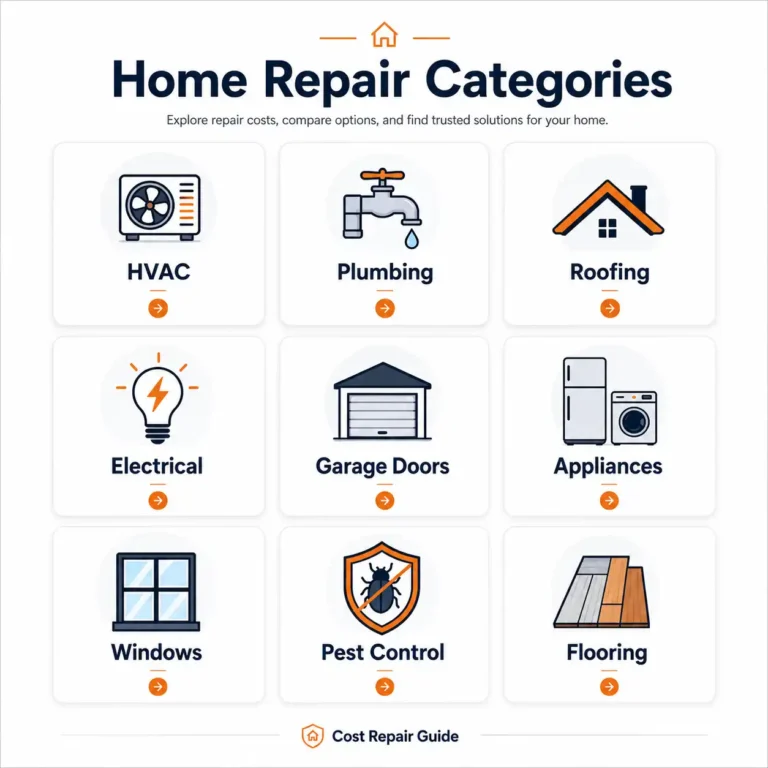
Home repair cost categories including HVAC plumbing roofing electrical and appliance repair guides

HVAC Repair Costs

Heating and cooling repairs can become expensive fast. A weak capacitor may cost much less than a bad compressor. A basic service visit may cost less than an emergency call. A furnace issue may also be more expensive when gas, wiring, or safety components are involved.

Our HVAC cost guides help you compare common repair prices by problem, part, labor, and service type. You can use these guides when your AC blows warm air, your furnace will not start, or your system keeps cycling on and off.

Popular HVAC guides:

  • AC Repair Cost
  • HVAC Repair Cost
  • AC Capacitor Replacement Cost

Plumbing Repair Costs

Plumbing problems can feel urgent because water damage spreads quickly. A clogged sink may be simple. A main sewer line issue can cost much more. A water heater leak may need a small part, but it can also point to a larger problem.

Our plumbing guides explain repair costs in plain language. They cover service calls, hourly plumber rates, drain cleaning, water heater repairs, and sewer line work. Use these guides before you approve a plumbing quote. They can help you understand what the plumber is charging for.

Popular plumbing guides:

  • Plumbing Repair Cost
  • Plumber Cost Per Hour
  • Water Heater Repair Cost

Some repair questions come up again and again. These guides are good starting points when something breaks, leaks, stops working, or needs urgent service.

AC Repair Cost

AC repairs can range from simple service calls to major part replacements. This guide explains common AC repair costs, part prices, labor charges, emergency fees, and repair versus replacement choices.

HVAC Repair Cost

HVAC repair prices depend on the system, problem, part, and labor time. This guide compares heating and cooling repair costs for common homeowner problems.

AC Capacitor Replacement Cost

A bad AC capacitor can stop your system from starting. This guide explains capacitor replacement cost, symptoms, labor, and when this repair makes sense.

Plumbing Repair Cost

Plumbing repair costs can vary from a small leak fix to major pipe work. This guide explains service fees, labor, common repairs, and cost factors.

Water Heater Repair Cost

Water heater repairs depend on the problem and the heater type. This guide covers leaks, heating issues, valves, elements, thermostats, and labor charges.

Drain Cleaning Cost

Drain cleaning prices depend on the clog location and method used. This guide explains sink clogs, tub clogs, toilet clogs, main line cleaning, and emergency visits.

How We Estimate Home Repair Costs

Repair prices are never the same for every home. That is the honest answer that many homeowners do not hear early enough. A contractor may quote one price for a simple repair. Another home may need extra labor, a harder part, or more time. That second job can cost more, even when the problem sounds similar.

The Cost Repair Guide looks at the factors that usually affect repair prices.

We focus on:
  • Average cost ranges
  • Parts and materials
  • Labor time
  • Service call fees
  • Emergency fees
  • Repair difficulty
  • Home condition
  • Repair versus replacement choices
  • Common quote questions
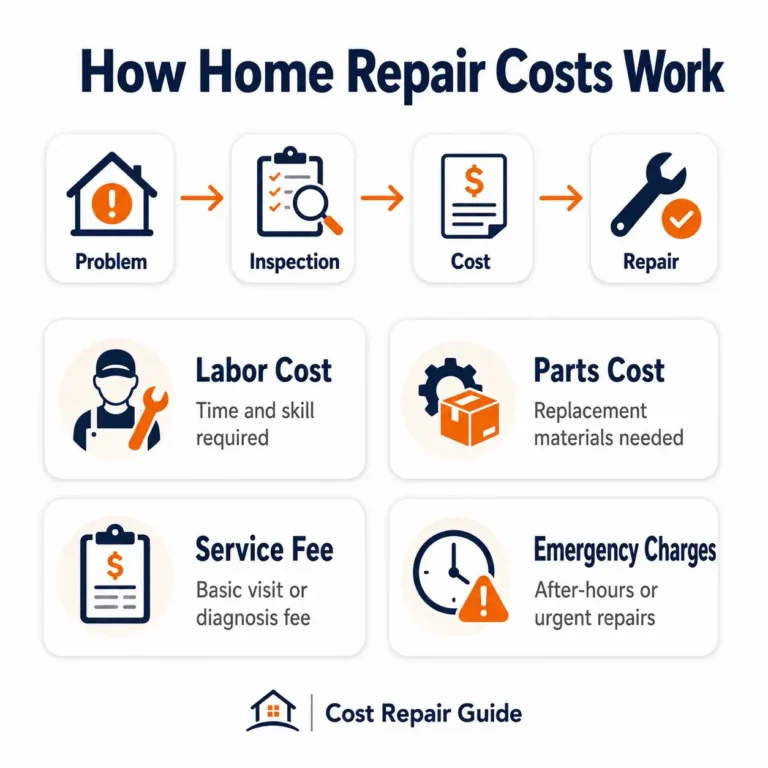
Home repair cost breakdown showing labor parts service fee and emergency charges in simple infographic

We try to keep the numbers useful, not confusing. You should still get a quote from a qualified local pro. Prices can change by city, season, and job details. But you should not go into that call blind.

A good repair guide gives you a starting point. It helps you understand why one quote may be higher than another. It also helps you ask better questions before saying yes.

What Affects Home Repair Costs?

Most home repair prices change because of a few common factors. Once you understand these factors, repair quotes become easier to read.

Labor Cost

Labor is often a large part of the bill. A quick repair may take under an hour. A harder job may need several hours, two workers, or special tools. Licensed trades can also cost more. Plumbers, electricians, HVAC technicians, and roofers often charge different rates.

Parts and Materials

Some parts are cheap. Others are expensive. An AC capacitor may cost much less than a compressor. A small plumbing part may cost less than a water heater part. A few roof shingles may cost less than structural roof repair. Always ask if the quote includes parts and labor.

Service Call Fees

Many companies charge a service call fee. This fee covers travel, inspection, and diagnosis. Some companies apply it to the repair. Others keep it separate. Ask this before booking the visit.

Emergency Service

Emergency repairs usually cost more. After-hours work, weekend calls, and holiday visits can raise the bill. This is common for plumbing leaks, AC failures, electrical issues, and garage door problems. If the repair can safely wait, scheduling during normal hours may save money.

Access and Job Difficulty

Easy access can lower labor time. Hard access can raise it. A simple outlet replacement may be quick. Rewiring inside finished walls can take longer. A roof leak near the edge may cost less than a hard-to-reach roof section. The same idea applies across many repair categories.

Home Age and Condition

Older homes can create surprise costs. Old wiring, worn plumbing, damaged framing, weak floors, or hidden leaks can change the job. A contractor may find extra issues after opening a wall, panel, floor, or roof section. This does not always mean the contractor is wrong. It means the repair had hidden conditions.

Before You Call a Contractor

You do not need to become a contractor. You only need enough information to avoid feeling rushed. Before you call, write down the problem in simple words. Take photos if you can. Note when the problem started. Also note any sounds, smells, leaks, warning lights, or safety concerns.

Then ask clear questions.

  • What is the service call fee?
  • Is the diagnosis included?
  • What part failed?
  • Does the quote include labor?
  • Does the repair include a warranty?
  • Is this repair urgent?
  • Could this problem return?
  • Is replacement a better option?
  • Can I see the cost breakdown?

These questions are not rude. They are normal. A good contractor should explain the work in a way you understand.

Repair or Replace?

This question comes up in almost every home repair category. Should you fix the problem, or replace the item? There is no one answer. But there are smart ways to think about it. A repair may make sense when the system is newer, the part is affordable, and the problem is clear. Replacement may make sense when the system is old, repairs are frequent, or the major part costs too much.

Here is a simple example.

If your AC needs a low-cost part, repair may be smart. If it needs a costly compressor and the system is old, replacement may deserve a serious look. The same logic applies to water heaters, appliances, garage doors, windows, and flooring. Do not approve a major repair without asking this question. How much life should I expect after this repair? That one question can save money.
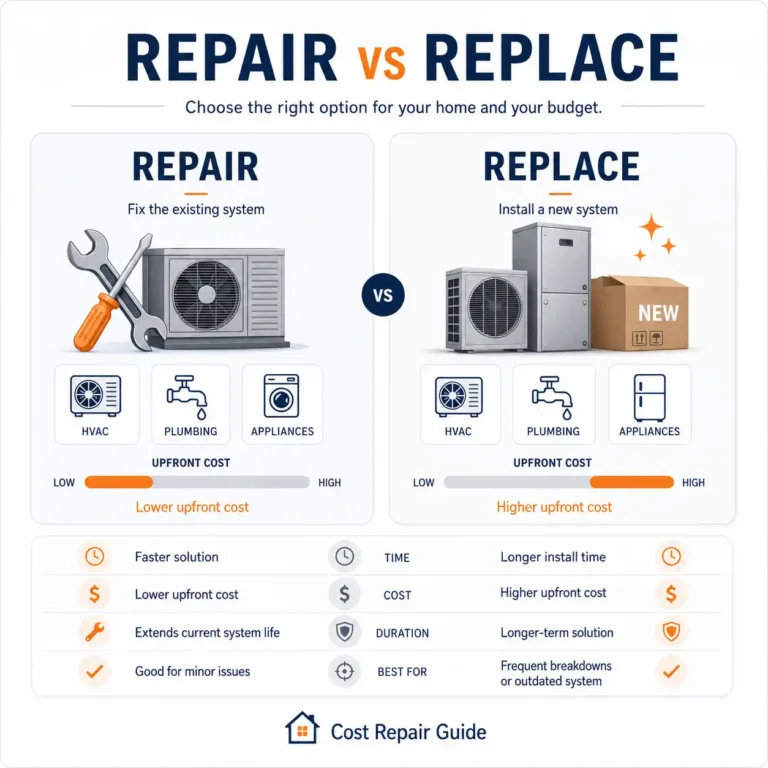
Repair vs replacement comparison for home systems showing cost differences and decision guide

A Quick Confession About Repair Quotes

Here is the part most people learn the hard way. The first quote can sound official, even when you have no idea what it includes. That does not mean the quote is wrong. It only means you need context. Many homeowners approve of the work because they feel pressured. The technician is standing there. The system is broken. The house is uncomfortable. The clock is ticking.

That is when mistakes happen. You may forget to ask about labor. You may forget to ask if the part has a warranty. You may not ask whether replacement makes more sense. The Cost Repair Guide exists for that exact moment. You can check a guide first. You can learn the normal range. You can prepare two or three questions. Then the quote feels less confusing.

How to Use the Cost Repair Guide

Use this website before and after you get a quote. Before the quote, use it to understand the likely cost range. This helps you avoid total surprise. During the quote, use it to ask better questions. You can ask about parts, labor, timing, and repair options.

After the quote, use it to compare the price with common cost factors. A higher quote may still be fair if the job is harder. A lower quote may not include everything.

Choose the Repair Category

Start with the area of your home that has the problem. Choose HVAC, plumbing, garage doors, roofing, electrical, appliances, windows, pest control, flooring, or foundation repair.

Read the Matching Cost Guide

Read the guide that matches your repair. Focus on the average range, cost table, and repair factors. You do not need every detail. You need the parts that match your situation.

Compare the Quote Details

Look at what the contractor included. Check labor, parts, service fee, emergency fee, and warranty. A quote without details can create confusion later.

Ask One More Question

Before you approve the work, ask one more useful question. What could make this repair cost more than the estimate? That answer can reveal hidden fees, extra parts, or possible next steps.

Common Mistakes Homeowners Make

Home repairs already cost enough. These mistakes can make them more stressed.

Approving Work Without a Cost Breakdown

A total price is helpful. A breakdown is better. Ask what portion covers labor, parts, diagnosis, and fees.

Waiting Too Long on Water Problems

Leaks can damage floors, walls, and ceilings. A small plumbing or roof issue may become expensive if you wait too long.

Ignoring Safety Signs

Burning smells, sparks, gas odors, smoke, and electrical buzzing need fast attention. Do not use a cost guide as a reason to delay safety work.

Choosing Only the Cheapest Quote

A low price can be helpful. It can also miss permits, warranties, quality parts, or proper diagnosis. Compare value, not just price.

Repairing an Old System Too Many Times

Repeated repairs can add up. If a system keeps breaking, compare the repair cost with the replacement cost.

Start With the Repair You Need

A repair quote feels less stressful when you understand the basics. You do not need to know everything. You only need enough information to ask clear questions and compare the price. Choose a category below and start with the guide that matches your problem.

  • HVAC Repair Costs
  • Plumbing Repair Costs
  • Garage Door Repair Costs
  • Roofing Repair Costs
  • Electrical Repair Costs
  • Appliance Repair Costs
  • Windows and Doors Costs
  • Pest Control Costs
  • Flooring Costs
  • Foundation and Basement Costs

Final question:

What repair are you trying to price before calling a pro?

Frequently Asked Questions

Home repair costs vary by repair type, labor, parts, and location. A small repair may cost under a few hundred dollars. A major repair can cost much more. Start with the guide that matches your problem.

Prices change because every home is different. Access, parts, labor time, damage level, and emergency service can all affect the final bill.

Yes, when the repair is not urgent. Two or three quotes can help you compare price, scope, and warranty. For emergency safety issues, speed may matter more.

Yes, many emergency repairs cost more. After-hours service, weekend visits, and urgent scheduling can raise the total price.

Many companies charge a service call fee. It may cover travel and diagnosis. Some companies apply it toward the repair, but others do not.

Repair may make sense when the system is newer, and the part is affordable. Replacement may be better when the system is old or when repairs happen often.

No. These guides provide common cost ranges and cost factors. A local contractor must inspect the problem for an exact quote.

Ask what failed, what parts are needed, how labor is charged, and whether the work includes a warranty. Also, ask if replacement makes more sense.

Sometimes. A cheap quote may be fine for a simple job. It may also skip important parts, permits, or warranty details. Ask what the quote includes.

Check costs whenever a major home system breaks. Prices can change by season, location, and part availability.

Start With the Repair You Need

A repair quote feels less stressful when you understand the basics. You do not need to know everything. You only need enough information to ask clear questions and compare the price. Choose a category below and start with the guide that matches your problem.

Final question:

What repair are you trying to price before calling a pro?